
Originally published on the Doxa blog.
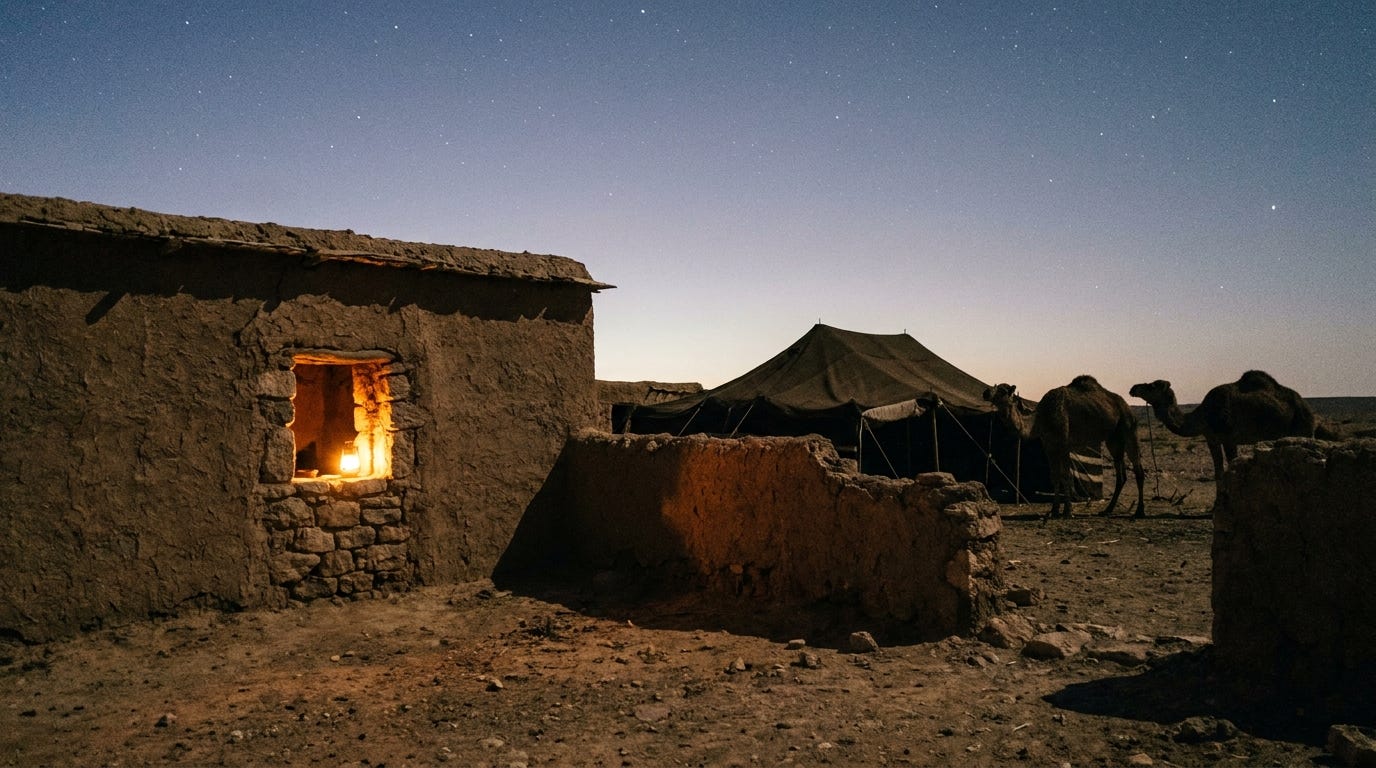
Abraham moves south again, into the dry country of the Negev, and stays for a while in Gerar. There he says of his wife what he said in Egypt years before: "She is my sister" (Genesis 20:2). So the king of Gerar, Abimelech, has Sarah brought into his house.
The timing is the hard part. God has told Abraham more than once that Sarah will bear him a son. "Your wife Sarah will indeed bear you a son, and you are to name him Isaac" (Genesis 17:19). "I will surely return to you at this time next year, and your wife Sarah will have a son!" (Genesis 18:10). The year is already running, and the mother of the promise is in another man's house because Abraham was afraid.
What happens in Genesis 20?
Then God speaks, and He speaks to the king. "One night, however, God came to Abimelech in a dream" (Genesis 20:3) and told him, "You are as good as dead because of the woman you have taken, for she is a married woman."
Abimelech argues back, which is more than most of us manage with a dream. He had not gone near her, and both of them had told him they were siblings. God answers him: "Yes, I know that you did this with a clear conscience, and so I have kept you from sinning against Me" (Genesis 20:6).
A king outside God's covenant hears Him, talks with Him, and acts on what he heard before the sun is fully up. "Early the next morning Abimelech got up and summoned all his servants; and when he described to them all that had happened, the men were terrified" (Genesis 20:8).
Then he calls Abraham in, and Abraham explains himself. "Surely there is no fear of God in this place. They will kill me on account of my wife" (Genesis 20:11). He had it backwards. A room full of frightened servants had just heard what God said in the night. The one man in Gerar acting without the fear of God was Abraham, who held God's promise about Sarah and gave her away to keep himself safe.
Why does God call Abraham a prophet?
In the same dream God tells Abimelech, "Now return the man's wife, for he is a prophet; he will pray for you and you will live" (Genesis 20:7). It is the first time the word prophet appears in the Bible, and God gives it to Abraham at the moment he looks least like one.
So Abraham prays, "and God healed Abimelech and his wife and his maidservants" (Genesis 20:17), and the closed wombs of the royal household open again. The next chapter begins, "Now the LORD attended to Sarah as He had said" (Genesis 21:1). God guarded the promise while the man carrying it had stopped trusting it.
How does Genesis 20 connect to Jesus?
Abraham prayed for a household he had put in danger himself, and God still answered him. Jesus is the prophet who put no one at risk to save Himself, and the letter to the Hebrews says He "always lives to intercede for them" (Hebrews 7:25).
God knew Abraham at his worst, kept His word to him, and still called him a prophet. Being known by a God like that is the reason we keep what He says close enough to remember when we are afraid.
Abraham made his plan in private. "I thought to myself," he tells the king (Genesis 20:11), and nobody heard the reasoning until it had already gone wrong. Abimelech told his whole household what God had said before breakfast. When you catch yourself working out how to stay safe, say out loud what God has already said to you. If it is not written down with the date, record it today in the Doxa app, where it keeps its date, and read it before the plan goes any further.
What has God already told you that you are quietly planning around this week?
Keep exploring. If this raised a question, or brought back something God has said to you, take it further. Ask Doxa. It answers from Scripture, real stories, and your own journey, free in your browser. No signup to start.
Download Doxa, the app for recording, weighing and remembering prophetic encouragement.
Also please feel free to read the Doxa Deeper Dive below where we delve into the original language and historical context.
The Doxa Deeper Dive
The Bible's First Prophet Is a Frightened Man Who Prays
Originally published on the Doxa blog.
The word prophet enters the Bible in Genesis 20:7, and God defines it in the same sentence. The Hebrew is navi (H5030), and the definition is a job: "he will pray for you and you will live" (Genesis 20:7).
What was the first prophet in the Bible for?
In this chapter God's speech goes straight to Abimelech, twice, in a dream, and the one task He gives His prophet is prayer.
The verb is palal (H6419), used in verse 7 and again in verse 17: "Then Abraham prayed to God" (Genesis 20:17). Its root is tied to judging or arbitrating, and its prayer form carries the sense of pleading a case. Eli uses it exactly that way to his sons: "If a man sins against another man, God can intercede for him; but if a man sins against the LORD, who can intercede for him?" (1 Samuel 2:25). Palal pictures a man standing between a guilty house and God, arguing for it to live.
Abimelech names the guilt himself, and he uses a legal term. "You have brought such tremendous guilt upon me and my kingdom" (Genesis 20:9) is, in Hebrew, chata'ah gedolah, a great sin, from chata'ah (H2401). In texts from Ugarit and in Egyptian marriage contracts, the great sin is a set term for adultery. A king in Gerar would have used the phrase the way a lawyer uses a charge. He knew exactly what nearly happened.
Did Abraham believe there was no fear of God in Gerar?
Abraham's defence is "Surely there is no fear of God in this place" (Genesis 20:11). Fear is yirah (H3374), from the verb yare (H3372). Three verses earlier the narrator has already used that verb about Gerar: "the men were terrified" (Genesis 20:8). With the same root, the story has answered Abraham's claim before he makes it.
Then there is the verb God uses for His own part. "I have kept you from sinning against Me" (Genesis 20:6). Kept is chasak (H2820), to hold back or withhold. And the sentence opens "Yes, I know" (Genesis 20:6), with yada (H3045), the verb for knowing a person.
Follow those three words two chapters on, to a mountain in the land of Moriah. The angel stops Abraham's hand and says, "for now I know that you fear God, since you have not withheld your only son from me" (Genesis 22:12). Know is yada, withheld is chasak, and fear comes from the same root yare. The words the story used in Gerar come back on the mountain, spoken over Abraham, so a Hebrew listener heard the second story answer the first. The man who doubted the fear of God in others learned it himself, and God named what He saw.
How did Israel first hear Genesis 20?
Genesis reached Israel as the people Moses led, and that changes how verse 7 sounded. Israel already knew how God spoke to prophets. God had told Aaron and Miriam, "If there is a prophet among you, I, the LORD, will reveal Myself to him in a vision; I will speak to him in a dream" (Numbers 12:6). In Genesis 20 the dream goes to the foreigner, and the patriarch called prophet receives nothing but the duty to pray. Israel heard that their father Abraham was first named a prophet for standing between others and God.
They also knew what that looked like, because they had needed it. At the foot of Sinai, after the golden calf, Moses turned on Aaron and asked how the people had wronged him, "that you have led them into so great a sin?" (Exodus 32:21). It is Abimelech's phrase, chata'ah gedolah, and this time Israel was the guilty house. The next day Moses told them, "You have committed a great sin. Now I will go up to the LORD; perhaps I can make atonement for your sin" (Exodus 32:30). A Philistine king had once needed Abraham to pray so that he would live. Israel had needed Moses for the same thing. Every Israelite who heard Genesis 20 read was a member of a people who had been prayed for.
Their own songs kept the story. The psalm says God "rebuked kings on their behalf" (Psalms 105:14) and gives His words: "Do not touch My anointed ones! Do no harm to My prophets!" (Psalms 105:15). Touch is naga (H5060), the same verb God used to Abimelech: "That is why I did not let you touch her" (Genesis 20:6). Israel sang Gerar back to God as proof that He guards what He has promised.
Where does the first prophet lead?
Moses promised that the line would continue: "The LORD your God will raise up for you a prophet like me from among your brothers. You must listen to him" (Deuteronomy 18:15). Abraham pleaded for Gerar. Moses pleaded for a people who had made a calf. The letter to the Hebrews names the last one in the line: Jesus "always lives to intercede for them" (Hebrews 7:25), and He stands between God and people whose great sin He did not cause.
In Genesis 20 it is God who does the knowing. He said I know to Abimelech in the dark and now I know to Abraham on the mountain, and Israel turned Gerar into a song so they would remember that He guards what He has promised. God knew Abraham well enough to see straight through his reasoning, and He still kept every word He had spoken to him. You are known by Him the same way, so do what Israel did with that song and read back to Him what He has said to you. Tonight, pray by name for someone near you, the way Abraham pleaded for Gerar.
Keep exploring. If this raised a question, or brought back something God has said to you, take it further. Ask Doxa. It answers from Scripture, real stories, and your own journey, free in your browser. No signup to start.
Questions and comments are welcome below.
Download Doxa, the app for recording, weighing and remembering prophetic encouragement.