

Originally published on the Doxa blog.
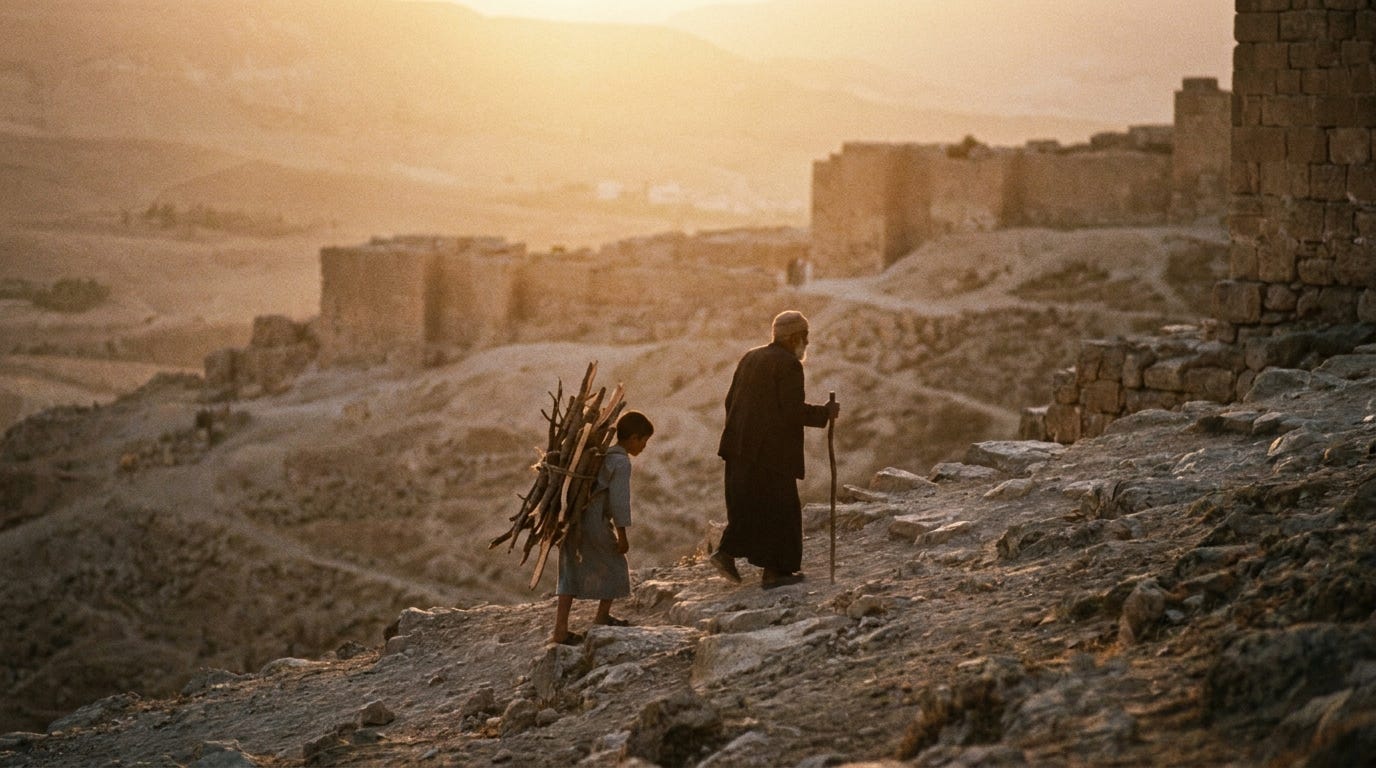
Abraham got up early. He saddled the donkey, split the wood for the fire, and set out with his son toward a mountain God had not yet shown him (Genesis 22:3).
God had called his name, and Abraham had answered, "Here I am" (Genesis 22:1). Then the command came, one phrase after another, each closer to the boy: "Take your son," God said, "your only son Isaac, whom you love, and go to the land of Moriah. Offer him there as a burnt offering on one of the mountains, which I will show you" (Genesis 22:2).
What happens in Genesis 22:1–14?
Three days of walking. Three days to turn round. On the third day Abraham saw the place in the distance and told the servants to wait: "The boy and I will go over there to worship, and then we will return to you" (Genesis 22:5). He said we before he had climbed a step.
Abraham was carrying two things God had said, and they pulled against each other. One was the command. The other was older, a promise God had made about this same boy: "through Isaac your offspring will be reckoned" (Genesis 21:12). The letter to the Hebrews tells us how Abraham held both: "Abraham reasoned that God could raise the dead" (Hebrews 11:19). He weighed the new command against the promise already on record, and kept walking up the hill.
With the wood on his back, Isaac turned to him: "My father!" "Here I am, my son," he replied. "The fire and the wood are here," said Isaac, "but where is the lamb for the burnt offering?" (Genesis 22:7). Abraham answered, "God Himself will provide the lamb for the burnt offering, my son." And the two walked on together (Genesis 22:8).
Why did God test Abraham?
At the top Abraham built the altar, bound his son and took the knife. A voice from heaven said his name twice. For the third time in the chapter Abraham answered, "Here I am" (Genesis 22:11). Then came the sentence that explains the test: "now I know that you fear God, since you have not withheld your only son from me" (Genesis 22:12).
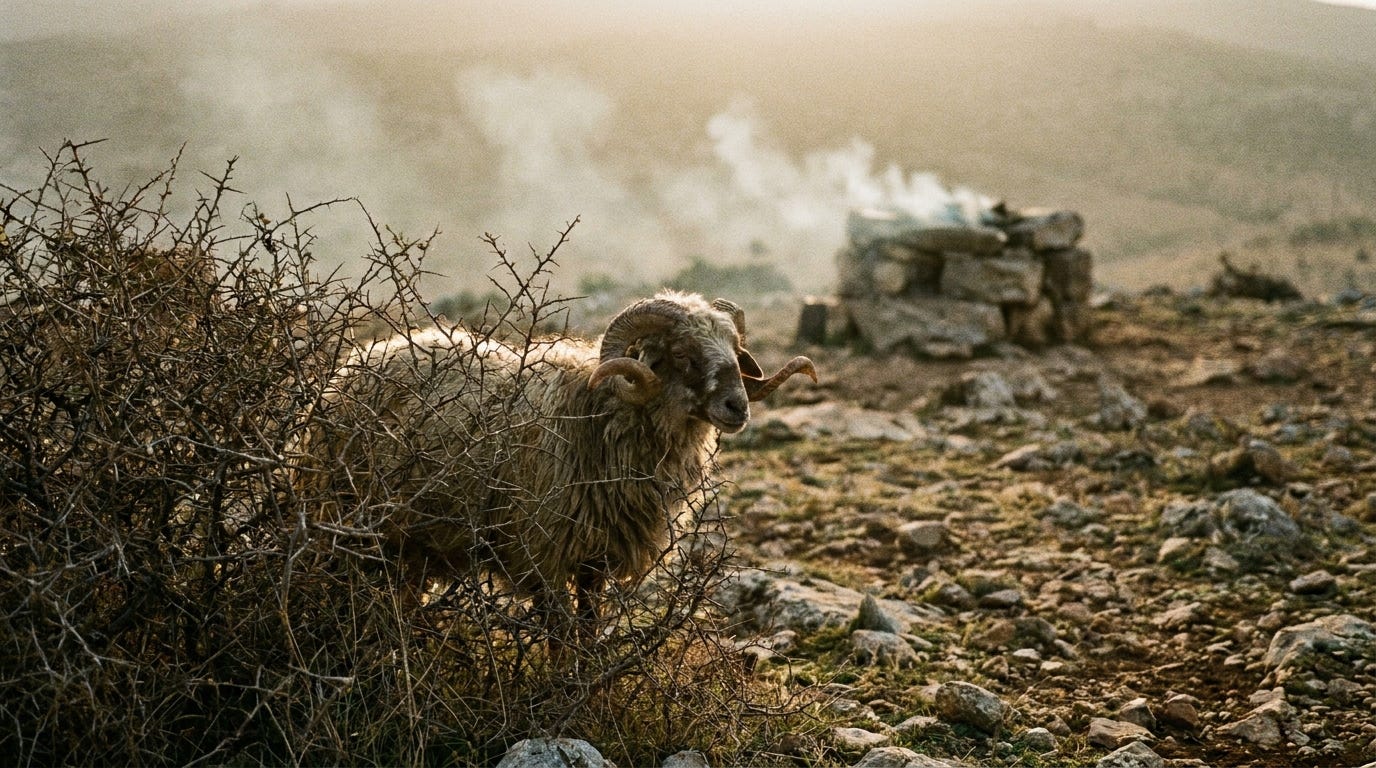
God tested Abraham to know him, and Abraham came down the mountain knowing God by a new name. A ram was caught in a thicket by its horns. Abraham offered it in place of his son and called the place The LORD Will Provide. The name stuck long after he was gone, and the narrator's own listeners still said, "On the mountain of the LORD it will be provided" (Genesis 22:14). His answer to his son became a saying a whole nation repeated.
How does Genesis 22 connect to Jesus?
Abraham told Isaac that God would provide the lamb. Around two thousand years later John the Baptist saw Jesus coming and said, "Look, the Lamb of God, who takes away the sin of the world!" (John 1:29). Isaac carried the wood up the hill, and Jesus went out "Carrying His own cross" (John 19:17). On Moriah God stopped Abraham's hand. At Golgotha He went through with what He had spared Abraham: "He who did not spare His own Son but gave Him up for us all" (Romans 8:32).
Abraham could keep climbing because he had something God had already said to hold while the command made no sense. If God has promised you something and the road in front of you seems to contradict it, write the promise down with today's date in the Doxa app and read it back before the next step. When He provides, name it the way Abraham named the mountain, so you can find it again.
What has God already said to you that you need to hold on to this week?
Keep exploring. If this raised a question, or brought back something God has said to you, take it further. Ask Doxa. It answers from Scripture, real stories, and your own journey, free in your browser. No signup to start.
Download Doxa, the app for recording, weighing and remembering prophetic encouragement.
Also please feel free to read the Doxa Deeper Dive below where we delve into the original language and historical context.
The Doxa Deeper Dive
The LORD Will Provide: Why the Hebrew Says God Will See
Originally published on the Doxa blog.
Most English Bibles have Abraham tell Isaac that God will provide the lamb. The Hebrew verb is ra'ah (H7200), the plain word for seeing, and Genesis 22 is built on it.
Why does provide mean see in Genesis 22?
Follow the verb up the mountain. On the third day "Abraham looked up and saw the place in the distance" (Genesis 22:4). Isaac asks about the lamb, and Abraham answers, word for word, God will see for Himself the lamb (Genesis 22:8). At the top, "Abraham looked up and saw behind him a ram in a thicket" (Genesis 22:13), the same words as verse 4. Then he names the place YHWH yireh, the LORD will see. The saying that grew from it, "it will be provided" in our English, uses the passive of the same verb, so the Hebrew can read it will be seen or, just as well, He will be seen (Genesis 22:14).
The English word still carries it. Provide comes from the Latin providere, to see ahead. A Hebrew listener heard one verb five times in fourteen verses. Abraham looks twice, first at the place of sacrifice and then at the ram. Between those two looks stands his sentence that God would see to it.
Abraham's household had heard this name for God before. Hagar, alone in the desert, named the LORD "the God who sees me" (Genesis 16:13), from the same verb. Abraham learned it on his own mountain, with the knife in his hand.
What did a burnt offering of a son mean in Israel's world?
The command was for an olah (H5930), from the verb for going up: the offering burned whole, nothing held back, rising as smoke. Canaan's peoples did burn children. Deuteronomy says it of them plainly: "They even burn their sons and daughters in the fire as sacrifices to their gods" (Deuteronomy 12:31). When the king of Moab was losing a war, "he took his firstborn son, who was to succeed him, and offered him as a burnt offering on the city wall" (2 Kings 3:27).
Israel's neighbours believed their gods could demand a son. The break comes on the mountain. The God of Abraham stops the knife Himself and puts the ram in the thicket. Israel's law would later forbid the practice outright: "You must not give any of your children to be sacrificed to Molech" (Leviticus 18:21).
How did Israel first hear Genesis 22?
Israel first heard Genesis as a people who had stood at Sinai. Terrified by the thunder, they heard Moses tell them not to be afraid: "For God has come to test you, so that the fear of Him may be before you, to keep you from sinning" (Exodus 20:20). The verb there is nasah (H5254), the same one that opens Genesis 22, "God tested Abraham" (Genesis 22:1). And it comes paired with the fear of God, exactly as the angel pairs them on Moriah: "now I know that you fear God" (Genesis 22:12). Deuteronomy gives the reason for testing in the same terms, to "know what was in your heart" (Deuteronomy 8:2). So Israel heard Moriah as their own wilderness years in one family: the God who speaks tests His people to know them, and their father had already walked that road, telling his servants before he climbed, "we will return to you" (Genesis 22:5).
Later listeners heard a second layer. The narrator says, "to this day it is said" (Genesis 22:14), so he expected his hearers to know the saying about the mountain of the LORD. The Chronicler then places Solomon's temple "on Mount Moriah, where the LORD had appeared to his father David" (2 Chronicles 3:1). Appeared is nir'ah, ra'ah again in the same passive stem as the saying. On the mountain of the LORD He was seen, and every sacrifice at the temple was offered on the hill where God had seen to the lamb.
Why does the Greek call Isaac the beloved son?
God's command lingers on the boy, calling him Abraham's only son. The Hebrew is yachid (H3173), the one and only. Judges uses it of Jephthah's daughter, "She was his only child" (Judges 11:34), and Zechariah uses it for the grief of looking on the pierced One: "They will mourn for Him as one mourns for an only child" (Zechariah 12:10).
When Jewish scholars translated Genesis into Greek, they rendered that phrase in Genesis 22 as your beloved son, with agapetos (G27). That is the word the voice from heaven used of Jesus at the Jordan: "You are My beloved Son; in You I am well pleased" (Mark 1:11). A Greek-speaking listener who knew Genesis heard Moriah in the Father's voice.
Paul goes one step further. The Greek Genesis has the angel say Abraham did not spare his beloved son, with pheidomai (G5339). Paul takes the same verb for the Father: "He who did not spare His own Son but gave Him up for us all, how will He not also, along with Him, freely give us all things?" (Romans 8:32).
The God who saw to the lamb on Moriah is the Father who did not spare His own Son. Abraham came to know Him on that mountain as the God who sees ahead and supplies, and God, in His own words, came to know Abraham. God still knows the people who hold on to what He has said, and they come to know Him. When He sees to something He promised you, name it and date it in the Doxa app, the way Abraham named Moriah, and read it back the next time what He asks is hard to square with what He promised. The ram was already in the thicket when Abraham looked up.
Keep exploring. If this raised a question, or brought back something God has said to you, take it further. Ask Doxa. It answers from Scripture, real stories, and your own journey, free in your browser. No signup to start.
Questions and comments are welcome below.
Download Doxa, the app for recording, weighing and remembering prophetic encouragement.