

Originally published on the Doxa blog.
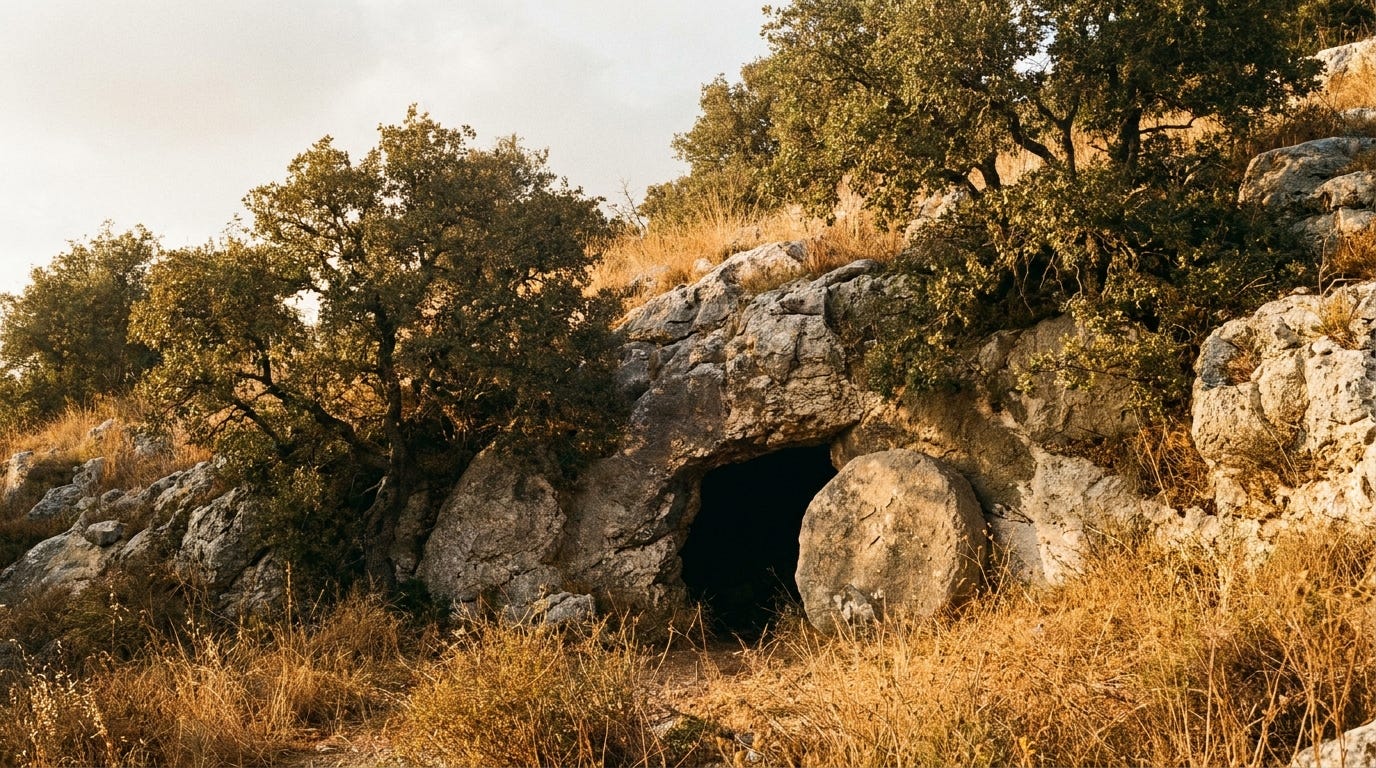
Two brothers stand at the mouth of a cave near Mamre. Isaac is seventy-five and Ishmael is eighty-nine. The last time Genesis put them in one place, Ishmael was being sent into the wilderness of Beersheba with bread and a skin of water. Now "his sons Isaac and Ishmael buried him in the cave of Machpelah" (Genesis 25:9).
The man they are burying had been told how he would die.
What does it mean that Abraham died at a ripe old age?
"And at a ripe old age he breathed his last and died, old and contented, and was gathered to his people" (Genesis 25:8). He was 175.
Set that beside an evening in Genesis 15. Abraham had asked God, "how can I know that I will possess it?" (Genesis 15:8), and God answered with a covenant and a look down the years, including the end of Abraham's own life: "You, however, will go to your fathers in peace and be buried at a ripe old age" (Genesis 15:15). He was eighty-five at most when he heard that, with no son yet and a barren wife. He carried that sentence for at least ninety years. When his life ends, Genesis uses God's words.
What did Abraham own when he died?
Before the end he settled his estate. "Abraham left everything he owned to Isaac" (Genesis 25:5), and he gave gifts to the sons of his concubines and sent them away east while he was still alive. God had told him, "through Isaac your offspring will be reckoned" (Genesis 21:12), and Abraham made sure nobody would argue it at his graveside.
Everything he owned, though, came to very little land. The cave sat in "the field that Abraham had bought from the Hittites" (Genesis 25:10), paid for thirty-eight years earlier when Sarah died. It was the only ground he ever held in the country God had promised him. They laid him there beside her, and the promise went on to the next man: "After Abraham's death, God blessed his son Isaac" (Genesis 25:11).
How does Abraham's death point to Jesus?
Abraham died with part of the promise still out of sight. Jesus, arguing with a crowd who claimed Abraham as their father, said this about him: "Your father Abraham rejoiced that he would see My day. He saw it and was glad" (John 8:56). The promise Abraham held from a distance was about Jesus.
Hebrews says of Abraham and his family, "God is not ashamed to be called their God, for He has prepared a city for them" (Hebrews 11:16). That is where knowing God leads. Abraham heard Him, held what He said for a lifetime, and was still known by Him on the far side of the grave. Jesus makes the same true for anyone who trusts Him: "I am the resurrection and the life. Whoever believes in Me will live, even though he dies" (John 11:25).
Hold it until the day comes
God told Abraham a son was coming, and Isaac came. He told him he would die at a ripe old age, and he did. He told him the land would belong to his offspring, and Abraham saw that only from far off.
Some of what God has said to you is already behind you. Some of it is for a day you have not reached yet. Record what He says in the Doxa app with the date, and read it again when that day arrives, so you can set the day beside His words and see that He meant them.
What has God said to you that is still waiting for its day?
Keep exploring. If this raised a question, or brought back something God has said to you, take it further. Ask Doxa. It answers from Scripture, real stories, and your own journey, free in your browser. No signup to start.
Download Doxa, the app for recording, weighing and remembering prophetic encouragement.
Also please feel free to read the Doxa Deeper Dive below where we delve into the original language and historical context.
The Doxa Deeper Dive
'Gathered to His People' Came Before the Burial (Genesis 25:1–11)
Originally published on the Doxa blog.
Genesis 25:8 gives Abraham's death three verbs. He "breathed his last and died, old and contented, and was gathered to his people" (Genesis 25:8). Only in the next verse do his sons carry him to the cave.
What does gathered to his people mean in Hebrew?
The verb is asaph (H622), to gather in, the word for bringing in a harvest or rounding up a flock. His people is am (H5971), kin. An English reader can take the whole phrase as a polite way of saying he was buried. Genesis will not let it mean that.
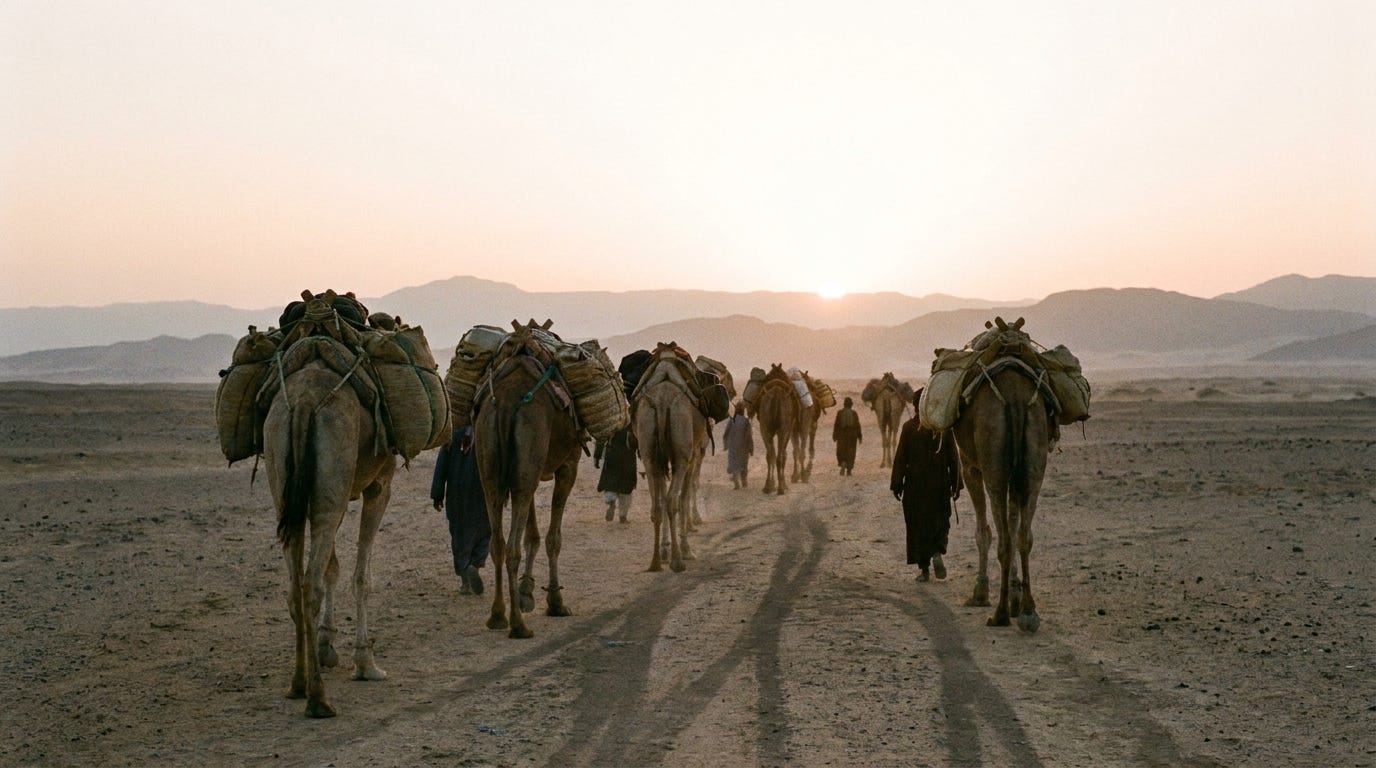
Abraham's people were nowhere near Machpelah. His father Terah "died in Haran" (Genesis 11:32), hundreds of miles north, and the family's older graves lay further off still, around Ur. The only body in the cave was Sarah's. Abraham was gathered to people who were not in the tomb.
Jacob's death makes the order impossible to miss. "He pulled his feet into the bed and breathed his last, and he was gathered to his people" (Genesis 49:33). That happened in Egypt. The embalming took "the forty days required" and the Egyptians mourned "seventy days" (Genesis 50:3) before his sons carried him to Canaan and buried him at Machpelah (Genesis 50:13). He had been gathered for months by then. Moses goes further. God told him he would "die and be gathered to your people" on the mountain (Deuteronomy 32:50), and then the LORD Himself buried him, "and no one to this day knows the location of his grave" (Deuteronomy 34:6). Moses was gathered to his people with no family tomb anywhere near him.
So the phrase names something that happens to the person at death, before and apart from what happens to the body. Long before the doctrine of resurrection is spelled out, Genesis speaks of the dead as still having people to be gathered to.
What did God mean by a ripe old age?
Ripe old age translates seivah (H7872) and tov (H2896). Seivah is grey hair, the white head itself, and the phrase is literally good grey hair. God used those two words in Genesis 15:15, and Genesis 25:8 repeats them.
One generation later the same noun comes with grief. Jacob, refusing to send Benjamin to Egypt, tells his sons, "you will bring my gray hair down to Sheol in sorrow" (Genesis 42:38). Abraham's grey head went down good, as God said it would. Jacob feared his would go down in grief, and it did not, because Joseph was alive.
Contented is savea (H7649), the word for having eaten enough. Abraham died full. Isaac and Job die with the same word, full of years (Genesis 35:29; Job 42:17).
Why did Abraham send Keturah's sons to the east?
In Abraham's world the sons of a secondary wife could have a claim on the estate. The Laws of Hammurabi, from Mesopotamia a few centuries before Moses, let a father decide during his lifetime whether a slave wife's sons would share the inheritance with his first wife's sons (laws 170 and 171). Abraham decided while he was alive. Isaac received everything, the other sons received gifts, mattanah (H4979), and they left.
They went "to the land of the east" (Genesis 25:6), qedem (H6924). In Genesis east is the direction people go when they leave the place of blessing. The cherubim were "on the east side of the Garden of Eden" (Genesis 3:24), Cain "settled in the land of Nod, east of Eden" (Genesis 4:16), and Lot "set out toward the east" (Genesis 13:11) for Sodom's plain. The gifts were real kindness, and the direction still tells the reader where the promise was not going.
How did Israel first hear the names of Keturah's sons?
Genesis was first heard by Israel, and one of these names was part of their own story. Midian is the fourth son in the list (Genesis 25:2). When Moses fled Pharaoh he "settled in the land of Midian, where he sat down beside a well" (Exodus 2:15), married Zipporah, and spent forty years with the flock of "Jethro, the priest of Midian" (Exodus 3:1). Midianite traders had also carried Joseph to Egypt (Genesis 37:28). The people who sheltered Moses were Abraham's sons, sent east with gifts.
Out in Midian, among Abraham's other descendants, God called to Moses from a bush and named Himself: "I am the God of your father, the God of Abraham, the God of Isaac, and the God of Jacob" (Exodus 3:6). Israel came out of Egypt owning no land at all. They heard that their father Abraham died owning one burial field, and that centuries later, in the land of Keturah's son, God still called Himself by Abraham's name.
What does this show about knowing God?
Jesus read Exodus 3:6 the same way. "He is not the God of the dead, but of the living" (Matthew 22:32). The God who told Abraham how his life would end kept that word down to the grey hair, and then went on being his God. Abraham heard Him, held what He said for nearly a century, and was gathered in. Abraham came to know God by hearing and holding what He said, and God went on knowing Abraham after the cave was closed.
Keep what God has said to you in the Doxa app, with the date, so that the promises He has kept sit in front of you beside the ones you are still holding.
Keep exploring. If this raised a question, or brought back something God has said to you, take it further. Ask Doxa. It answers from Scripture, real stories, and your own journey, free in your browser. No signup to start.
Questions and comments are welcome below.
Download Doxa, the app for recording, weighing and remembering prophetic encouragement.