

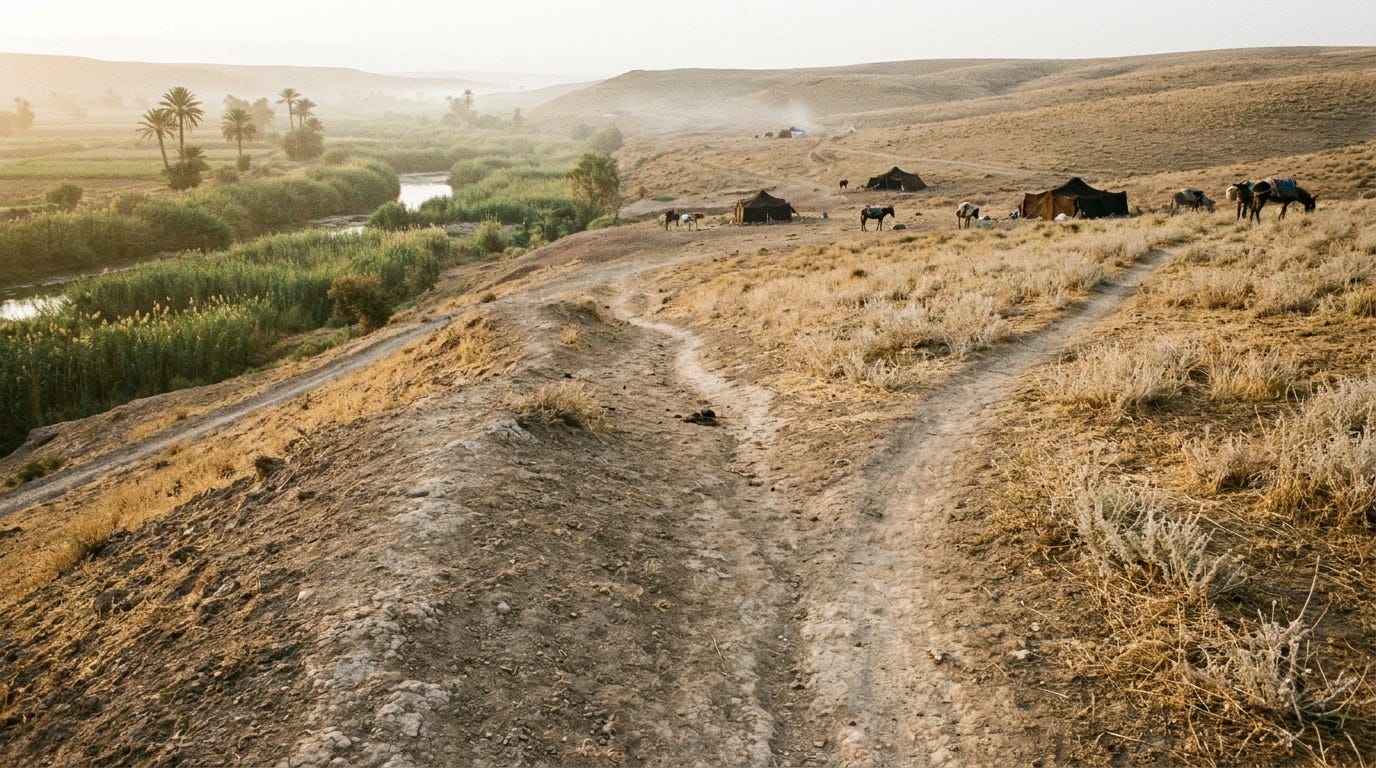
Abram came up out of Egypt richer than he went in, and the first thing he did was go looking for an altar.
He retraced his own steps north through the Negev, back toward Bethel, "to the site where he had built the altar. And there Abram called on the name of the LORD" (Genesis 13:4). The man who went silent under pressure in Egypt, who prayed nothing and schemed everything to save his own skin, comes home and picks the practice back up where he dropped it. He remembers who he is by returning to the place he last heard from God.
Then the trouble comes, the kind prosperity breeds. Abram and his nephew Lot are both wealthy now, and "the land was unable to support both of them" (Genesis 13:6). Their herdsmen start fighting over grazing and water (Genesis 13:7). Abram is the elder, and he is the one God made the promise to. He has every right to pull rank and keep the best of the land for himself.
Watch what he does instead. "Please let there be no contention between you and me, or between your herdsmen and my herdsmen. After all, we are kinsmen" (Genesis 13:8), he says, and then he hands over the choice: "If you go to the left, I will go to the right; if you go to the right, I will go to the left" (Genesis 13:9). He gives the younger man first pick of the very land God had promised him. He can afford to, because his portion was never going to be settled by a squabble over grazing rights. God had already spoken it over him. A man holding a promise from God does not have to grab.
Lot decides the other way, by his eyes. He "looked out and saw that the whole plain of the Jordan, all the way to Zoar, was well watered like the garden of the LORD, like the land of Egypt" (Genesis 13:10). He takes the lush valley, sets out east, and "pitched his tent toward Sodom" (Genesis 13:12). Then the story drops one cold line right after: "But the men of Sodom were wicked, sinning greatly against the LORD" (Genesis 13:13). The best-watered ground in the whole chapter runs straight toward the worst place in it. That is the risk of choosing by sight with no word from God in your hand.
Centuries later Jesus put Abram's posture into a single line: "Blessed are the meek, for they will inherit the earth" (Matthew 5:5). Abram let go of the land and was given all of it; Lot seized the best of it and lost everything he had pitched his tent toward. The one who opens his hands because he trusts the God who speaks ends up holding more than the one who grasps.
Here is the lift. Somewhere you are being pushed to fight for your portion, to make sure you get the well-watered patch before anyone else does. Go back to the altar first. Read again what God has actually promised you, and let that word decide how tightly you hold. When you know your inheritance rests on His voice, you can be the one who yields, who lets the other person choose first, who keeps the peace. That is how you come to know the God who speaks and be known by Him. You trust His word enough to loosen your hands. What are you gripping today that God has already promised to give you?
The Doxa Deeper Dive
Abram, Lot, and the Meek Who Inherit the Earth
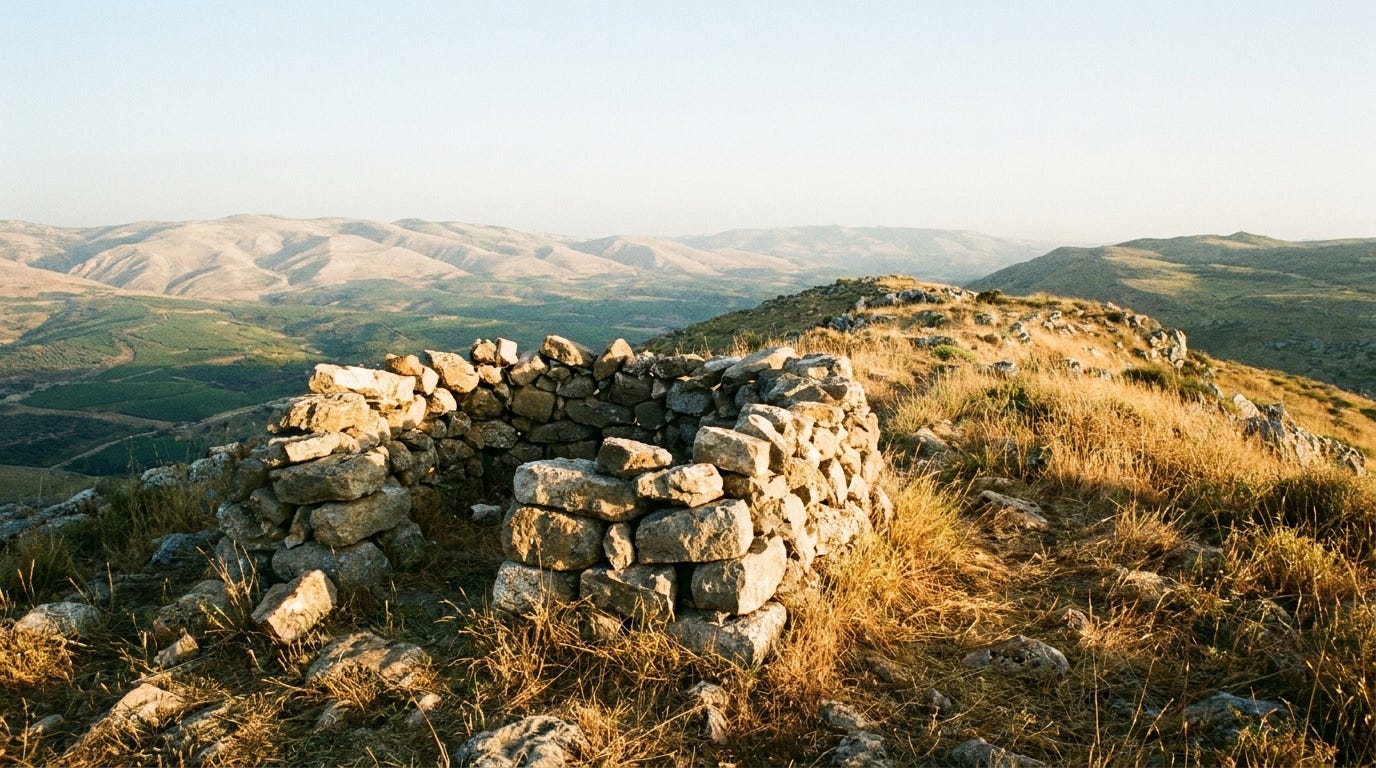
The rescue from Egypt is behind him. What Abram does with his first free morning back tells you who he had become.
Why did Abram go back to the altar first?
Abram comes up out of Egypt loaded with livestock, silver and gold (Genesis 13:2), and he does not stop to enjoy it. He travels north until he reaches "the site where he had built the altar. And there Abram called on the name of the LORD" (Genesis 13:4). The phrase is qara (H7121), to call, on the shem (H8034), the name, of the LORD, the same act he had performed on the way into the land (Genesis 12:8) and the same act that went missing the whole time he was in Egypt. Down there was no altar, no calling, no word from God, only a frightened man managing his own survival. Here the practice comes back online. To call on the name is to speak God aloud as the one you answer to, to put yourself back under the word you drifted from. Abram's repentance is a set of footsteps back to the place he last heard from God.
What was really behind the quarrel over grazing land?
Prosperity, oddly, is the problem. Both Abram and Lot have grown so rich in flocks and herds that "the land was unable to support both of them" (Genesis 13:6). The verb for support is nasa (H5375), to lift or carry or bear; the land could not carry the weight of the two of them together. So "there was discord between the herdsmen of Abram and the herdsmen of Lot" (Genesis 13:7), the word riv (H7379), strife, a courtroom-flavoured term for a dispute that can harden into a feud. And the narrator adds a quiet warning in the same verse: "the Canaanites and the Perizzites were also living in the land" (Genesis 13:7). The watching neighbours make the family's infighting a testimony problem, not only a logistics one.
Why did Abram, the elder, give Lot first choice?
By every custom of the age the older man, and the one holding the promise, picks first. Abram inverts it. "Please let there be no contention between you and me, or between your herdsmen and my herdsmen. After all, we are kinsmen" (Genesis 13:8), he says, using ach (H251), brother; the tie of blood outranks the grazing rights. Then he opens his hand: "If you go to the left, I will go to the right; if you go to the right, I will go to the left" (Genesis 13:9). The word for their parting is parad (H6504), to separate or divide. Abram can afford to divide the land and take whatever is left because his portion was never his to secure; God had already promised this whole land to his offspring (Genesis 12:7). A man standing on a word from God does not need to win the negotiation. He already knows what he will inherit.
What did Lot see, and why did it ruin him?
Lot decides the opposite way, by his eyes. He "looked out and saw that the whole plain of the Jordan, all the way to Zoar, was well watered like the garden of the LORD, like the land of Egypt" (Genesis 13:10). The Hebrew has him lift up his eyes, nasa (H5375) again, the same verb that a moment ago said the land could not bear them both. The land could not carry the two of them, so Lot raises his gaze and helps himself to the richest part of it. He chose, bachar (H977), the whole plain for himself (Genesis 13:11). Notice what his eyes reach for: land like the garden of the LORD, the gan (H1588), garden, and like the land of Egypt. He measures his future by an Eden he never saw and by the Egypt Abram just fled. He walks by sight, with no word from God anywhere in the calculation, and the text springs the trap: he "pitched his tent toward Sodom" (Genesis 13:12), and "the men of Sodom were wicked, sinning greatly against the LORD" (Genesis 13:13). Two loaded words close the scene, ra (H7451), evil, and chatta (H2400), sinners. Lot's eyes found the richest soil on the map and set him down at the gate of the city God was about to burn.
How does a quarrel over grazing land teach us to know God?
By showing two ways to hold a future, and which one God honours. Lot grasps the visible best and loses everything he moved toward; Abram releases his claim and keeps the promise whole. Centuries later Jesus names Abram's exact posture a blessing: "Blessed are the meek, for they will inherit the earth" (Matthew 5:5), praus (G4239), gentle, the strength that has nothing to prove and nothing to seize. Abram is meek in that sense, and God answers by giving him the very land he had just let Lot pick over, all of it, forever (Genesis 13:14-15). The pattern runs on to Christ, the truly meek one, who let go of His rights, took the lowest place, and was given the name above every name and the nations as His inheritance. To know the God who speaks is to trust His word enough to open your hands. The man who returns to the altar, calls on the name, and lets his brother choose first is the man who ends up holding the land. Walk back to what God has said, and hold it more tightly than you hold your grip on what your eyes can see.
Keep exploring. If this raised a question, or brought back something God has said to you, take it further. Ask Doxa. It answers from Scripture, real stories, and your own journey, free in your browser. No signup to start.
Questions and comments are welcome below.