


A ninety-nine-year-old man is lying face down in the dirt, and God is telling him he is about to become the father of nations.
Thirteen years have passed since God last spoke a recorded word to Abram. He still has no child by Sarai. He has one son, Ishmael, born of a plan that ran ahead of the promise. Into that long silence the LORD appears and says, "I am God Almighty. Walk before Me and be blameless" (Genesis 17:1).
God Almighty is El Shaddai, and this is the first time the Bible uses the name. He announces who He is before He asks for anything, the God with the power to do what He is about to say. Then the promise: "I will establish My covenant between Me and you, and I will multiply you exceedingly" (Genesis 17:2). Abram answers with his whole body. "Then Abram fell facedown" (Genesis 17:3).
Then God renames him. "No longer will you be called Abram, but your name will be Abraham, for I have made you a father of many nations" (Genesis 17:5). Abram means exalted father. Abraham means father of a multitude. God changes his name into a promise that is not yet true. He is childless by his wife, ninety-nine years old, and from that morning every person who says his name says father of a multitude over him. He carries the promise in the sound of his own name, years before he carries the son.
Then comes the centre of it. The covenant is "to be your God and the God of your descendants after you" (Genesis 17:7). Land and children are part of what God promises here, and this is the heart under all of it. God binds Himself to be their God, to be known by this man and by everyone who comes after him. Knowing God is the covenant itself.
And God gives a sign to keep it. Every male is to be circumcised, "a sign of the covenant between Me and you" (Genesis 17:11). A permanent mark, cut into the body, on the very part of the body the promise of offspring depends on, so that generation after generation no one could forget whose they were or what God had said. The covenant recorded where it could not be misplaced.
Paul looks back at this day and says Abraham was counted righteous by faith before he was ever circumcised, so that he could become "the father of all who believe" (Romans 4:11). The multitude God named him for turned out to include us. And the deepest mark was always inward: God promised through Moses to circumcise the heart (Deuteronomy 30:6), and Paul says that is exactly what happens to us in Christ (Colossians 2:11).
Here is the lift. Abraham received a brand-new name built on nothing but a promise from God, and then he spent the rest of his life walking before the God who spoke it. That is what a real promise from God is for. It is an identity to live inside for years, while you wait for it to come true. So when God says something to you, write it down in words you can return to, and let it start telling you who you are today, long before you can see it.
Where has God spoken to you, and are you living as though what He said is already true?
Keep exploring. If this raised a question, or brought back something God has said to you, take it further. Ask Doxa. It answers from Scripture, real stories, and your own journey, free in your browser. No signup to start.
Download Doxa, the app for recording, weighing and remembering prophetic encouragement.
Also please feel free to read the Doxa Deeper Dive below where we delve into the original language and historical context.
The Doxa Deeper Dive
El Shaddai and the Letter God Hid in a New Name
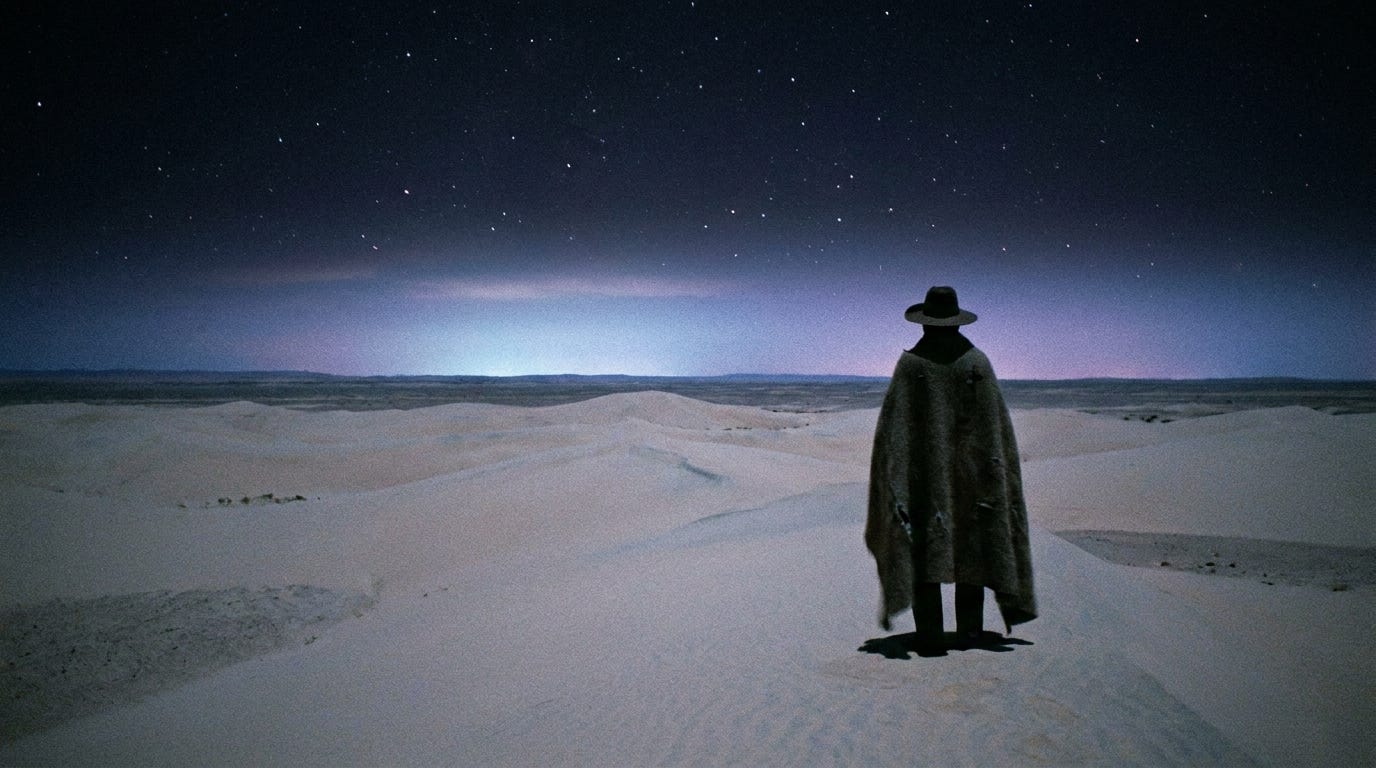
Genesis 17 is where God starts handing out names, and the names carry more than an English reader can hear. He gives Himself a name, gives Abram a new one, and hides a promise inside both. Read slowly in Hebrew, this passage is God writing His covenant into language itself before He ever writes it into flesh.
What does the name El Shaddai mean, and why does it appear here first?
"I am God Almighty," God says (Genesis 17:1). The Hebrew is El Shaddai (H7706), and this is the first time the Bible uses it. The root is debated, and the two best readings both open the verse. One traces it to a verb for overpowering strength, the God who is mightier than every obstacle. An old Jewish reading hears it as the God who is enough, the all-sufficient one. Hold either in your hand and watch where the name lands: God introduces Himself this way to a man of ninety-nine whose body has failed to produce the one thing the promise depends on. Exodus later tells us this was the covenant name the patriarchs knew God by (Exodus 6:3). It is the name for the God who keeps promises against the odds, and it steps forward the instant the odds look final.
Why did God change Abram's name by adding a single letter?
Abram (H87) means exalted father. Abraham (H85) means father of a multitude, built from av and hamon (H1995), a roaring crowd or throng. Here is what the English loses. To turn Abram into Abraham, God folds in a single Hebrew letter, the he, and in the next passage He folds the same letter into Sarai to make Sarah. The he is the letter that sounds twice in the covenant name YHWH (H3068). The God of the covenant writes a letter of His own name into theirs, so that from now on they cannot say who they are without breathing a piece of who He is.
The renaming carried an edge the first hearers would have caught at once. In the ancient Near East a great king renamed the lesser kings under him to mark them as his own: Pharaoh Neco renamed Eliakim to Jehoiakim (2 Kings 23:34), Babylon renamed Daniel and his friends (Daniel 1:7). A conquering king renamed a vassal to show he owned him. God renames Abram to hand him a future. And the new name is a promise not yet true, so every time it is spoken, by his household, his servants, his neighbours, it announces the thing God has sworn but not yet done.
What did "walk before Me" ask of Abraham?
"Walk before Me and be blameless" (Genesis 17:1). The verb is halak (H1980), to walk, joined to paniym (H6440), the face or presence: to walk before the face of God. Set it beside Noah, of whom it was said, "Noah walked with God" (Genesis 6:9), where the word is with, alongside. Abraham is told to walk in front of God, to live his whole life in the open, under a gaze he never steps out of. And blameless is tamim (H8549), whole, complete, the very word used later for a sacrifice with no defect. It asks for a whole and undivided life lived in the sight of the God who sees.
Why was the covenant sign cut into the body?
A covenant in Hebrew is a berit (H1285), and the ordinary idiom for making one is to karath (H3772) it, to cut it, because covenants were ratified by cutting animals in two, as God did with Abram in Genesis 15. This time the covenant is cut into the man. To circumcise is muwl (H4135), and the mark it leaves is called an oth (H226), a sign, the same word God used for the rainbow He set in the clouds after the flood (Genesis 9:12). One sign was arched across the whole sky for all flesh to see; this one is carried hidden in the body of a single family. And the covenant it seals is olam (H5769), age-long, everlasting.
Several of Israel's neighbours practised circumcision, the Egyptians among them, usually at puberty as a rite of manhood or a priestly mark. Israel's was different in a way the first readers would have felt at once. It came on the eighth day (Genesis 17:12), on an infant who could consent to nothing and earn nothing, marking the covenant as God's gift received before the child could reach for it. And it was placed on the organ of generation, because the whole promise is about generations, offspring too many to count. God put the sign of the promise exactly where the promise would be kept.
Now hear it as Israel first did. They heard Genesis 17 read to them as a people already formed after Egypt, and they were the multitude. They carried this mark on their own bodies, and here was its origin, older than Moses, older than the law at Sinai, given to one childless old man on the strength of a spoken word. Their existence as a nation rested on a promise El Shaddai made before there was a nation to make it to. They did not descend from a conquest or a founding king. They descended from a sentence God spoke to a man face down in the dust.
How does Abraham's covenant point to Christ?
Paul builds his whole argument on the order of events in this chapter. Abraham "received the sign of circumcision as a seal of the righteousness that he had by faith" (Romans 4:11); the faith was counted first, and the mark sealed what was already true. So Abraham becomes "the father of all who believe" (Romans 4:11), and the Gentiles reading this letter are the many nations God named him for.
And the outward cut always pointed inward. God commanded Israel to circumcise their hearts (Deuteronomy 30:6), and Paul tells the Colossians that in Christ they received a circumcision made without hands, peritome (G4061), a cutting away of the old self (Colossians 2:11). The covenant that began "to be your God" reaches its end in the God who wrote His own name into a man's name, cut His promise into flesh, and at last wrote it on hearts. To know the God who speaks is to receive the identity He gives you, carry His mark, and walk the whole of the rest of your life in front of Him.
Keep exploring. If this raised a question, or brought back something God has said to you, take it further. Ask Doxa. It answers from Scripture, real stories, and your own journey, free in your browser. No signup to start.
Questions and comments are welcome below.
Download Doxa, the app for recording, weighing and remembering prophetic encouragement.