

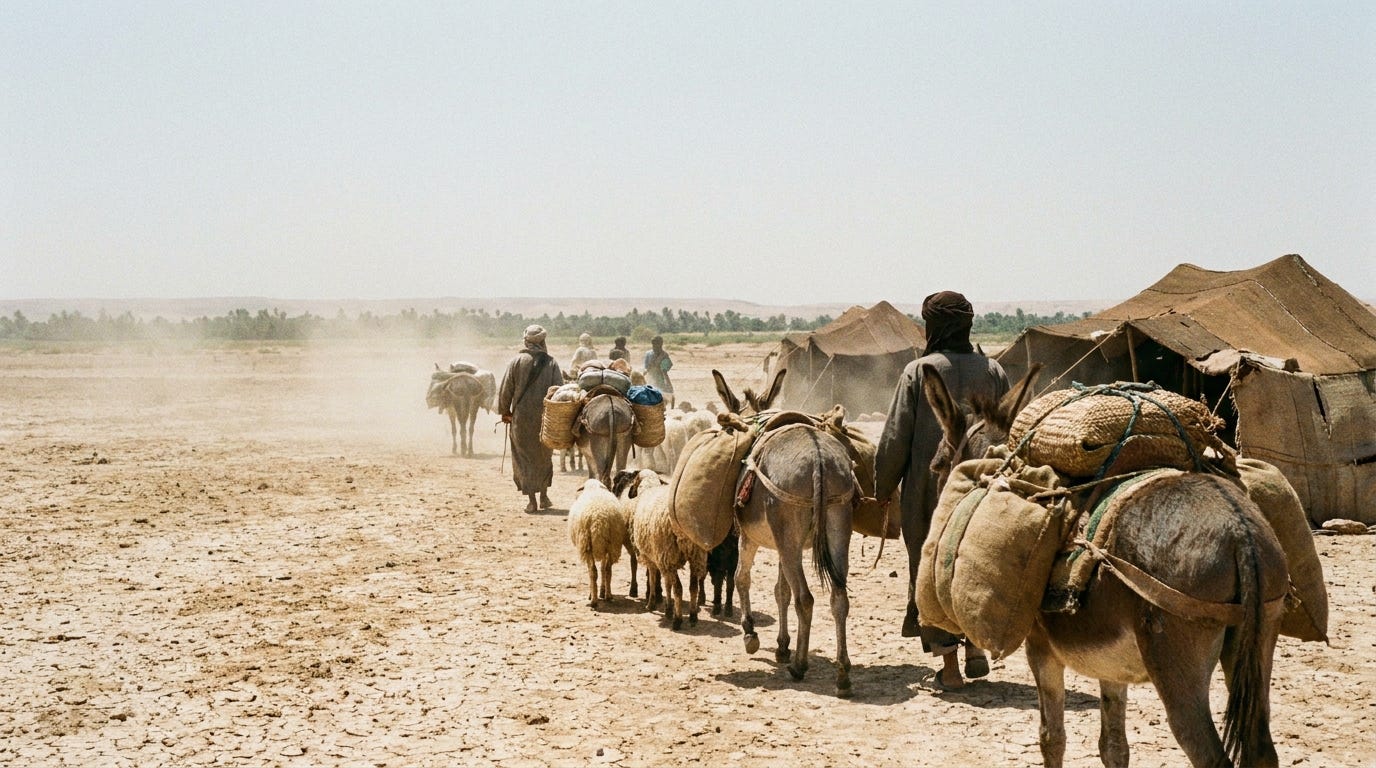
Then the famine came, and Abram went quiet.
One chapter ago he was building altars. At Shechem, then at Bethel, he had pinned God's promise to the ground and "called on the name of the LORD" (Genesis 12:8). Now the very land God sent him to dries up, and the man who had been walking on a word heads down to Egypt to wait out the famine (Genesis 12:10). Look at what is missing from the whole journey. No altar. No word from God. No calling on His name. The practice that carried him into the land is nowhere on the road out of it.
Fear moves into the silence. "I know that you are a beautiful woman," Abram tells Sarai at the border (Genesis 12:11), "and when the Egyptians see you, they will say, 'This is his wife.' Then they will kill me but will let you live" (Genesis 12:12). So he asks her to cover for him: "Please say you are my sister" (Genesis 12:13). The man God had promised to make into a great nation is now trading his wife's safety for his own skin. And the scheme pays, for a while. Pharaoh's officials take Sarai into the palace, and Abram is handed sheep, cattle, donkeys and servants on her account (Genesis 12:15-16).
Where is God while His promise sits in Pharaoh's house?
Right where Abram left Him, still keeping the word Abram had stopped trusting. "The LORD, however, afflicted Pharaoh and his household with severe plagues because of Abram's wife Sarai" (Genesis 12:17). Abram prayed nothing on the way down and asked nothing. The promise still ran through Sarai, so God guarded Sarai while the man who should have was busy saving himself. A pagan king ends up rebuking the father of the faith. "What have you done to me?" Pharaoh demands (Genesis 12:18), before sending him off with "Now then, here is your wife. Take her and go!" (Genesis 12:19).
Why does this scene feel like a story you already know?
Because it is the Exodus in miniature, centuries early. A famine drives God's people down into Egypt. A Pharaoh takes what is not his. The LORD strikes Egypt with plagues. God's people walk out unharmed and loaded with wealth (Genesis 12:20). God is already rehearsing how He rescues, and He will run the same rescue again for a whole nation, and again when He calls His own Son up out of Egypt (Matthew 2:15). The promise that all the families of the earth would be blessed survives Egypt because God guards it. Abram nearly lost it; God kept it whole.
What this means when the pressure lands on you
Here is the lift. When the famine comes, something in you wants to go quiet before God and let the fear get loud, to stop carrying the pressure back to what He said and start managing it alone. Abram shows you the cost of that, and God shows you the mercy underneath it. So do the one thing Abram skipped: take the fear back to the word. Read again what God actually told you, out loud if you need to, and weigh the threat against the promise instead of against your nerves. This is how you come to know the God who speaks and be known by Him. You carry His word back to Him, especially on the days you failed to trust it, because the God who kept His promise to a man who lied his way through Egypt keeps His promise to you when your own trust runs thin. What has God said to you that fear is trying to talk you out of? Say it back to Him today.
The Doxa Deeper Dive
How Abram's Lie Became the First Exodus (Genesis 12)
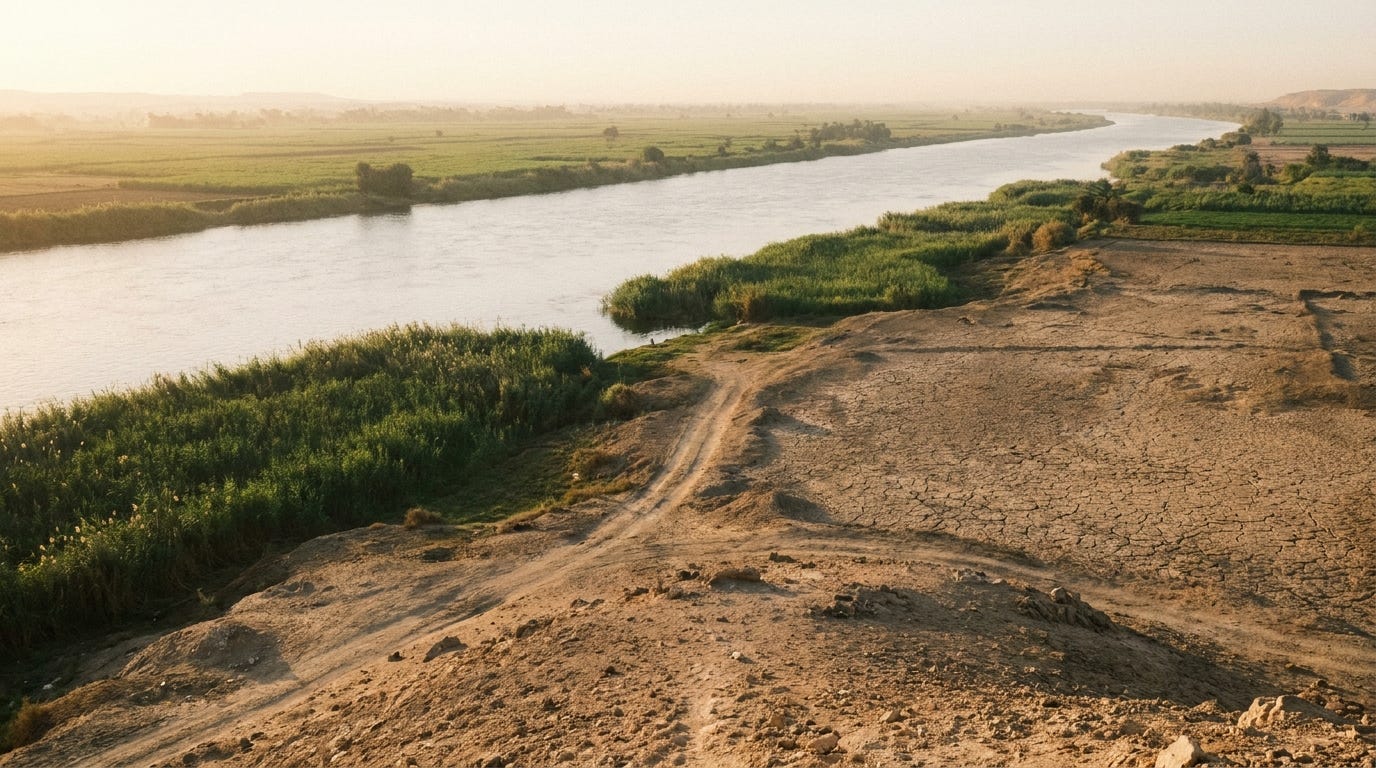
The rescue God is famous for shows up here first, in a story about a lie.
What sent Abram down to Egypt?
The chapter turns on a single hard word: "Now there was a famine in the land" (Genesis 12:10). The word is raab (H7458), famine, and it lands on the exact land God had just promised Abram's offspring (Genesis 12:7). The first test of the promise is that the promised land cannot feed him. Abram's response is told in one loaded verb: he "went down to Egypt," yarad (H3381), to go down. In the geography of Scripture Egypt is always down, lower than the land of promise, and yarad becomes the word for every later descent into Egypt: Jacob's whole family will go down in another famine (Genesis 46:3-4), and God will have to call them up again. Abram walks the road his descendants will walk, and he walks it without a word from God. There is no altar in Egypt, no calling on the name of the LORD, none of the practice that marked the first nine verses of the chapter. The man who had been living on God's voice goes silent the moment the pressure rises.
Why does Abram lie about his wife?
Abram does the math from fear. "I know that you are a beautiful woman," he tells Sarai (Genesis 12:11), using yapheh (H3303), beautiful. He knows what that will mean at the Egyptian court: "Then they will kill me but will let you live" (Genesis 12:12). His solution is a half-truth: "Please say you are my sister," achot (H269) (Genesis 12:13). Sarai really was his half-sister (Genesis 20:12), so this is a half-truth built to save himself at her expense. When the plan works, the verb falls on Sarai: she "was taken," laqach (H3947), taken, into Pharaoh's house (Genesis 12:15). The woman through whom the whole promise must come is now inside a pagan king's harem, and the husband who was meant to protect her is being paid in livestock for her (Genesis 12:16).
Why did God plague Pharaoh instead of Abram?
Because the promise was in Pharaoh's house, and God defends His promise. "The LORD, however, afflicted Pharaoh and his household with severe plagues" (Genesis 12:17). The verb for afflicted is naga (H5060), to touch or strike, and its noun nega (H5061), plague, is the same touch that will fall on Egypt again in the book of Exodus. Pharaoh himself, par'oh (H6547), is helpless the moment he touches what God has promised. Notice who is missing from the verse. Abram does not pray, does not intercede, does not so much as name God on this whole trip. God moves entirely on His own initiative to guard Sarai, because the offspring, the zera (H2233), seed, that He had promised must be hers. He is defending His own word.
Is this the Exodus before the Exodus?
Line the beats up. A famine drives the family of promise down into Egypt. A Pharaoh seizes what belongs to God. The LORD strikes Egypt with plagues, nega, until Pharaoh summons Abram and sends him away (Genesis 12:18-19). They leave enriched, carrying all their rekush (H7399), possessions (Genesis 12:20), exactly as Israel will later plunder Egypt on the night of the Exodus (Exodus 12:35-36). Genesis 12 is the template God will enlarge into the founding rescue of His people. And the pattern does not stop there. When Herod hunts a child, God takes His own Son down into Egypt and then calls Him up out of it, so that Matthew can quote Hosea over Jesus: "Out of Egypt I called My Son," kaleo (G2564), called (Matthew 2:15). Every descent into Egypt and every calling-up runs toward the one true Son who goes down and comes up for us.
How does a story about Abram's failure teach us to know God?
By showing the kind of God the promise rests on. Genesis 12:10-20 is the first place we watch Abram fail, and it will not be the last; he tells the same lie again in Gerar (Genesis 20:2), and his son Isaac repeats it after him (Genesis 26:7). If the promise depended on the patriarch's nerve, it would have died at the Egyptian border. It depends on God's faithfulness, and so it holds. To know the God who speaks is to know a God whose word does not rise and fall with your grip on it. He said He would bless the world through this family, and He kept the family intact even when its head handed his wife to Pharaoh to save his own life.
That is the God worth recording and remembering. The practice this walk is built on, hearing His word, weighing it, holding it, is how you come to trust a faithfulness that was never yours to earn in the first place. Abram forgot to bring the famine to God. God remembered Abram anyway. Bring Him your fear the next time the land runs dry, and if you have already gone quiet and started scheming, remember what He did at Pharaoh's door. He keeps His word to His people. He always has.
Keep exploring. If this raised a question, or brought back something God has said to you, take it further. Ask Doxa. It answers from Scripture, real stories, and your own journey, free in your browser. No signup to start.
Questions and comments are welcome below.