

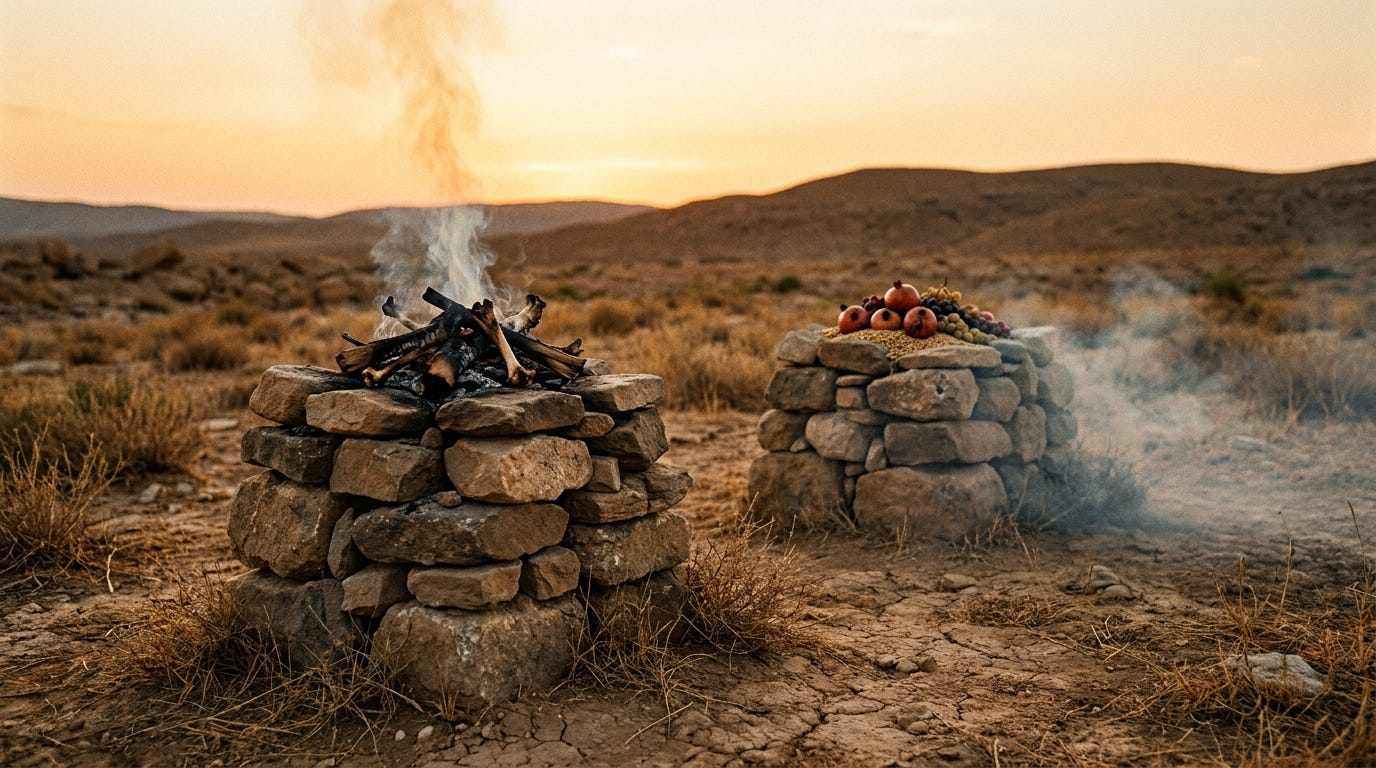
Two brothers bring God a gift on the same day. Abel keeps sheep, Cain works the soil, and when the harvest and the lambing come around they each carry the LORD something their own hands made.
Cain brought “some of the fruit of the soil as an offering to the LORD” (Genesis 4:3), while Abel brought “the best portions of the firstborn of his flock” (Genesis 4:4). God looked with favour on Abel and his gift and had no regard for Cain’s, “so Cain became very angry, and his countenance fell” (Genesis 4:5).
What went wrong with Cain’s offering in Genesis 4?
The chapter never spells out the reason in that moment, and the anger comes fast. But before Cain does anything with it, God walks up and talks him through the danger to his face: “If you do what is right, will you not be accepted? But if you refuse to do what is right, sin is crouching at your door; it desires you, but you must master it” (Genesis 4:7). God names the thing lying in wait and hands Cain the fight while it is still winnable. Cain hears every word of it. He goes out to the field anyway.
What does it mean that sin is crouching at your door?
Sin here is an animal on the threshold, low and waiting, wanting in. And the words God uses are almost exactly the ones He said to the woman one page earlier, desire and rule traded between them again (Genesis 3:16). The same battle, moved from a garden to a field. Cain could have mastered it. Instead he lets it in, “rose up against his brother Abel and killed him” (Genesis 4:8).
Then God asks where his brother is, and Cain gives one of the coldest lines in Genesis: “Am I my brother’s keeper?” (Genesis 4:9). But the ground is not so quiet. “The voice of your brother’s blood cries out to Me from the ground” (Genesis 4:10). Abel is dead and still heard, and what he says is that this was not right.
How does Abel’s blood point to Jesus?
Thousands of years later the writer of Hebrews stands a reader in front of the cross and reaches back for this exact scene. We have come, he says, “to Jesus the mediator of a new covenant, and to the sprinkled blood that speaks a better word than the blood of Abel” (Hebrews 12:24). Two lots of blood, both crying up to God from the ground where they were spilled. Abel’s blood cried for justice against the man who killed him. The blood of Jesus cries mercy over the very people who killed Him, and it calls them home.
Even Cain does not get what he has coming. God marks him so that no one who finds him will kill him (Genesis 4:15), mercy laid over a murderer. And the chapter that opened with a killing closes with a birth. “God has granted me another seed in place of Abel” (Genesis 4:25), Eve says over her third son, Seth. The promised line did not die in that field. Through Seth, “men began to call upon the name of the LORD” (Genesis 4:26).
Before Cain ever swung a hand, God told him the truth. The thing crouching at his door could be mastered. Where is something crouching at yours right now, and what would mastering it actually look like this week? Write down the warning you already sense God giving you in the Doxa app, and read it back before the door opens.
The Doxa Deeper Dive
Sin Is Crouching at Your Door: What the Hebrew of Genesis 4 Reveals
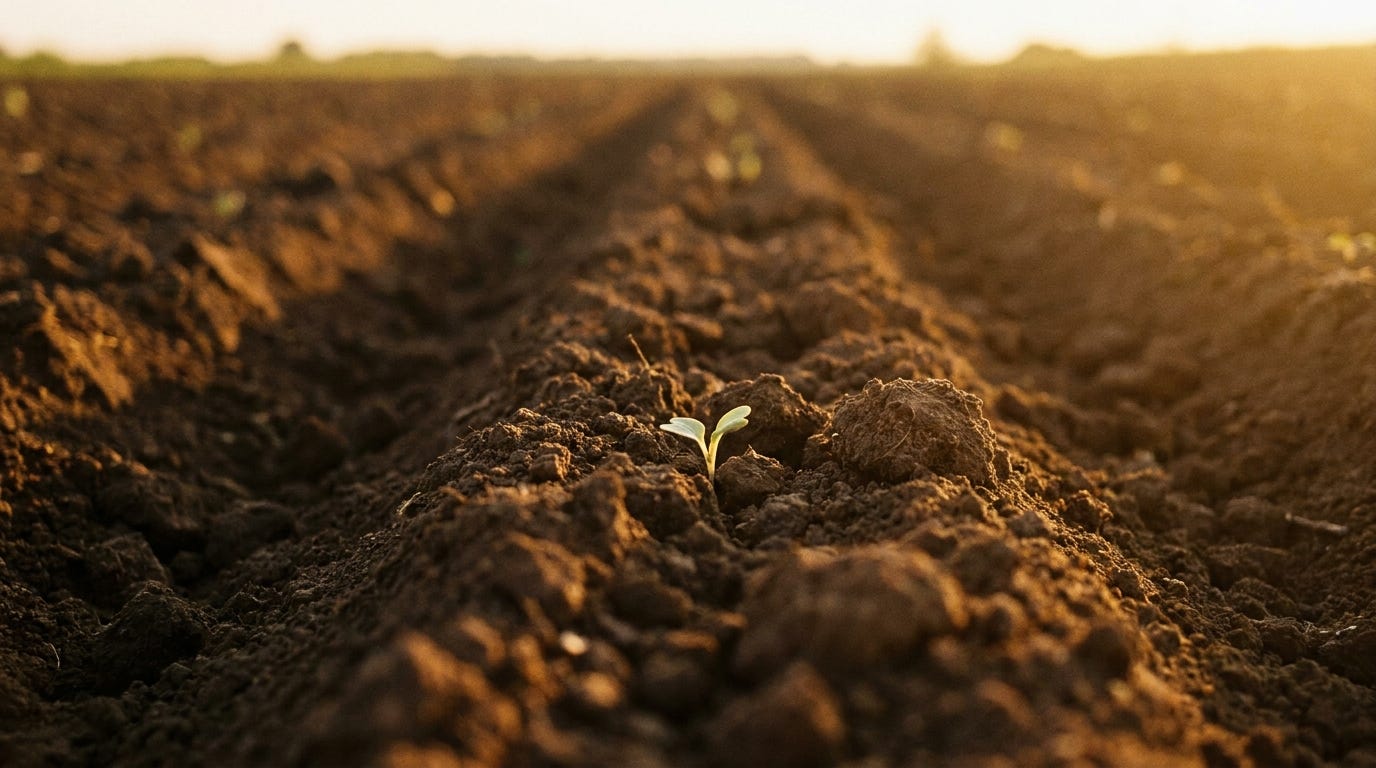
Both brothers bring the same kind of gift. The word for what Cain and Abel each carry to the LORD is minchah (H4503), a tribute offering, the present you bring a king. On the surface the two are matched. The difference is in the adjectives the narrator drops in as he goes.
Why was Abel’s offering better than Cain’s?
Cain brings “some of the fruit of the soil” (Genesis 4:3). The telling word is that little “some”, an ordinary portion from somewhere in the middle of the harvest. Abel brings “the best portions of the firstborn of his flock” (Genesis 4:4), and the Hebrew for those best portions is chelev (H2459), the fat, which later Law reserves as God’s own share of every sacrifice. One brother gives off the top of the pile; the other gives the firstborn and the fat and keeps nothing back.
The New Testament reads the gap the same way and names what is under it: “By faith Abel offered God a better sacrifice than Cain did. By faith he was commended as righteous” (Hebrews 11:4). Vegetables are a fine offering elsewhere in the Law; what God read here was the heart behind Cain’s hand, and He responds to it.
What is crouching at Cain’s door?
When Cain’s face falls, God comes to him and names the danger in a single vivid image: “sin is crouching at your door” (Genesis 4:7). The participle is robets, from rabats (H7257), the verb for an animal lying low, a lion folded down and waiting at the mouth of a fold. Sin here is a live thing with weight and patience, settled at the threshold of Cain’s life, ready to spring.
God describes the beast so Cain can fight it. The same sentence that names it tells Cain, in as many words, that he can beat it. The warning is a weapon handed over in time.
How does Cain’s warning echo Genesis 3?
Listen to the second half of the verse next to the previous chapter. To Cain: sin “desires you, but you must master it” (Genesis 4:7). To the woman, one chapter back: “Your desire will be for your husband, and he will rule over you” (Genesis 3:16). The two key words are identical. Desire is teshuqah (H8669), a strong reaching-toward, and to master or rule is mashal (H4910). God frames Cain’s fight in the exact grammar He used for the curse.
Sin reaches for Cain the way that verse says one will reaches for another, and God tells him plainly that the reaching can be ruled. Cain is the first person in Scripture told, in so many words, that he can master the thing that wants him. He is also the first to prove he will not.
What does “the voice of your brother’s blood” mean in Hebrew?
After the murder God says, “The voice of your brother’s blood cries out to Me from the ground” (Genesis 4:10). Two features of the Hebrew matter here. The word for blood, dam (H1818), stands in the plural, demei, the bloods of your brother; Jewish readers heard in that plural not only Abel but the descendants he would now never have, a whole unlived line spilled into the dirt. And the verb for cries out is tsaaq (H6817), the legal shout of someone wronged, the same cry Israel would later raise under Egypt. Abel’s blood is filing a case, and God hears it.
Hold that beside Hebrews. Abel, the writer says, “still speaks, even though he is dead” (Hebrews 11:4), and then, pages later, the cross: we have come “to the sprinkled blood that speaks a better word than the blood of Abel” (Hebrews 12:24). Both are righteous blood, both cry up to God from the ground. Abel’s asks for justice on the one who shed it. The blood of Jesus, shed by guilty hands too, asks for those hands to be pardoned. The same voice rises from the ground, and it carries the opposite verdict up.
How does the promised line survive Genesis 4?
Genesis 4 then splits into two family trees. Cain’s line runs down to Lamech, who turns God’s mercy into a boast, escalating a sevenfold protection into a personal seventy-sevenfold revenge: “If Cain is avenged sevenfold, then Lamech seventy-sevenfold” (Genesis 4:24).
The other line begins with a single word. Over her third son Eve says, “God has granted me another seed in place of Abel” (Genesis 4:25). Seed is zera (H2233), the same word God said to the serpent in the last chapter, the seed of the woman who would crush his head (Genesis 3:15). The promise took a real hit in that field. Abel, who by faith pleased God, is dead; Cain, who would not master his sin, is gone east. And the line carries on anyway, through Seth, until “men began to call upon the name of the LORD” (Genesis 4:26).
Luke picks that thread up and follows it all the way home, listing Jesus’ ancestry back through “the son of Enosh, the son of Seth, the son of Adam, the son of God” (Luke 3:38). The seed granted in place of Abel runs, generation by generation, to the One whose blood would out-speak Abel’s. John, writing to a church, keeps Cain in view as the warning at the front of it all: “Do not be like Cain, who belonged to the evil one and murdered his brother” (1 John 3:12).
Today’s Doxa Daily Lift walks the same chapter at ground level, from the two altars to the mark of mercy on a murderer.
The beast was crouching, God said so out loud, and Cain had the word he needed to master it in his ear before he ever raised his hand. Cain would not, and the ground took his brother. The blood of a better Brother would one day cry from that same ground, and over guilty hands it would cry mercy.