

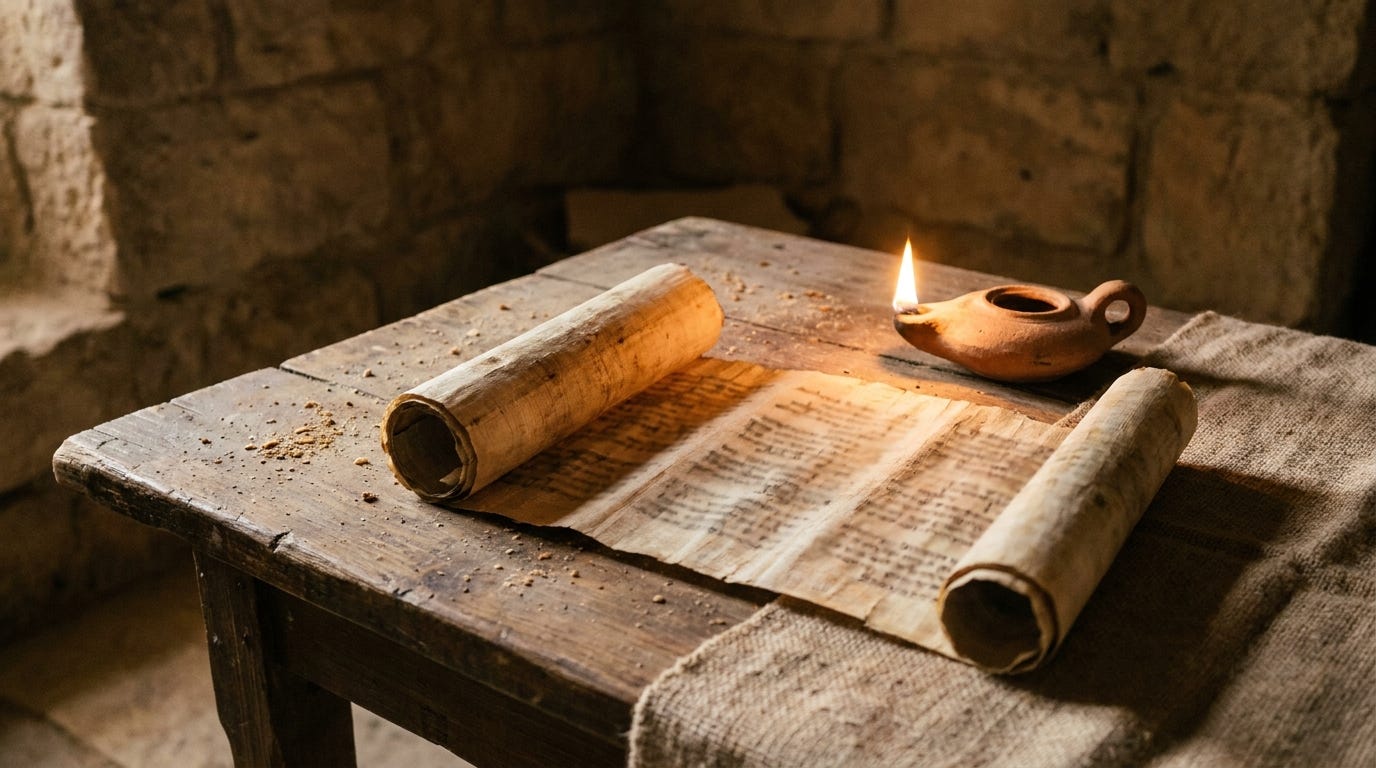
Ten names, ten fathers, and a number beside each one. That is almost the whole of the passage.
The chapter has just watched a whole civilisation try to make a name for itself and get scattered across the earth for it. Turn a few verses on and Scripture does something that looks like an anticlimax. It slows right down and reads out a family. "This is the account of Shem" (Genesis 11:10). Shem became the father of Arphaxad, Arphaxad of Shelah, Shelah of Eber, and on down through ten quiet generations to a man named Terah, who "became the father of Abram, Nahor, and Haran" (Genesis 11:26).
You can feel the gear change. Babel was loud and busy and self-important. This is a list you would skim on the way to the next story. But the list is the point. While a deaf world was busy making its own name, God was keeping one line in view, the line He would speak to next.
Why does the Bible slow down for a genealogy?
Because a genealogy is a record, and God keeps records. Every entry here has the same shape: a man, a son, more years, "and had other sons and daughters" (Genesis 11:11). Read them one after another and you notice the numbers beside the names are shrinking, from Shem's five hundred years after Arphaxad down to Nahor's hundred and nineteen. The world after the flood is winding down, and life is getting shorter. In the middle of that slow decline, God is threading a single family toward a promise. Nothing dramatic happens in these verses. Sons are born, years pass, people die. That is what most of a life of faith looks like from the inside.
So watch what God is doing while nothing seems to be happening. He is remembering. Ten times over, a name that the wider world forgot the moment it was buried is written into the record God keeps. To be known by Him is to be held in that record through the decades nobody else writes down.
How does this quiet list point to Jesus?
Every one of these names is kept for one reason. Follow the line past Abram and it runs to Isaac, to Jacob, to David, to a birth in Bethlehem. When Luke sets out the family tree of Jesus, he walks back up this very list, naming Serug, Reu, Peleg, Eber, Shelah, Arphaxad and Shem (Luke 3:35-36). The promise God made in the garden, that one born of the woman would one day crush the serpent (Genesis 3:15), travels down through these ordinary fathers. The great name Babel tried to build and could not, God was quietly growing inside one family, so that He could give it to His own Son.
That is the God this whole walk is about. He speaks, and then He keeps His word alive across centuries of people who mostly farmed, raised children and died. Knowing Him means trusting that He is still doing that in the long, undramatic middle of your own story.
What this means for your ordinary week
Here is the lift. Most of your years with God will feel like this list. Ordinary years, small obediences, and the same refrain running underneath, more sons and daughters born and buried. God keeps the record even when the record is dull. He is paying attention on the days when nothing seems to move.
So do the thing the genealogy does. Keep a record. Write down what God has said to you, so that on the quiet days you can read it back and remember that the God who speaks is still keeping your line. What has He said to you in a time you would call ordinary? Write it down today, before this year blurs into the next one.
The Doxa Deeper Dive
Shem Means Name: The Genealogy That Answers Babel (Genesis 11:10-26)
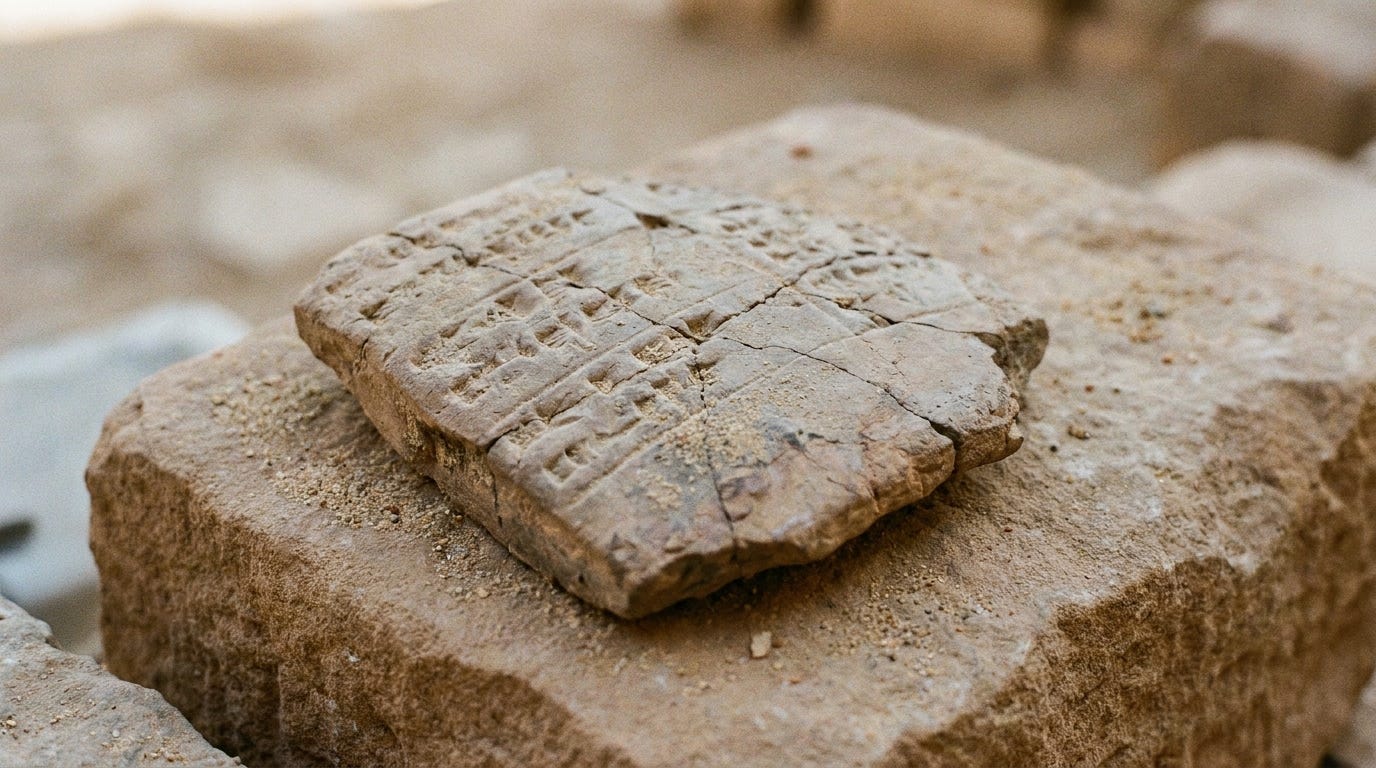
A modern reader skips genealogies. The people who first received Genesis read them slowly, because a list of names was a claim about who God had kept His hand on. Genesis 11:10-26 is one of those claims, and the Hebrew shows why it sits exactly here, right after the tower falls and right before God calls Abram.
What is a toledoth, and why does Genesis keep repeating it?
The passage opens, "This is the account of Shem" (Genesis 11:10). The word behind it is toledoth (H8435), from the verb yalad (H3205), to bear or bring forth. A toledoth is a generations-record, and it is the seam that holds the whole book together. The account of the heavens and the earth, the account of Adam, the account of Noah, and now the account of Shem, each heading hands the story from one keeper of the promise to the next. Genesis is built as a chain of these records. The book itself is a genealogy of remembering, God tracking who received His word and passed it on.
Placed here, the toledoth of Shem does something deliberate. Babel has just tried to secure its own future by building upward. Genesis answers with a record, quietly listing the family through whom God will actually secure a future for the whole earth.
Why does the line of Shem matter right after Babel?
The irony is in the name. The men of Babel set out to "make a name for ourselves" (Genesis 11:4), reaching for shem (H8034), a name, a reputation, a memorial that outlasts you. They lost it and were scattered. Turn the page and God preserves the line of a man literally called Shem (H8035), the man whose name is simply the word for name. What a rebel city grasped at and could not hold, God was keeping safe in a single family the whole time. The name the city grabbed for itself was scattered across the earth, while the name God kept here was carried on toward a promise. To be remembered by the God who speaks is worth more than any monument.
Who is Eber, and where does the word Hebrew come from?
Four generations down the list stands Eber. "When Shelah was 30 years old, he became the father of Eber" (Genesis 11:14). The name Eber (H5677) is the root standing behind ivri (H5680), the word Hebrew, the term first used of Abram himself. The people of the promise carry, in the very name they are called by, one of these otherwise obscure fathers from the list. The related verb means to cross over or pass through, which is exactly what Abram will be told to do when he crosses out of Ur toward a land he has not seen. The genealogy is the seedbed of the words the rest of the Bible will speak in.
One more name earns a second look. Peleg (H6389) comes from palag (H6385), to divide, and Genesis 10 pauses to say the earth was divided in his days. His name sits in the list as a small marker of the scattering that has just happened, tucked into the record so no reader forgets what God was working through.
Why are the lifespans shrinking?
Line the numbers up and they fall. Shem lives five hundred years after fathering Arphaxad (Genesis 11:11); by Nahor the figure is a hundred and nineteen (Genesis 11:25). The long ages of the world before and just after the flood are drawing in toward the ordinary span we know. It sets a clock ticking behind the promise. The years are getting shorter, the world is thinning out, and against that fading backdrop God is unhurried, moving one generation at a time toward the man He means to call. The record insists that the promise rests on the God who keeps speaking, even as the strength of every generation runs down.
How does this genealogy point to Jesus?
The list runs past Terah and ends by naming Abram, and the next chapter opens with God's own voice: "I will make your name great" (Genesis 12:2). The shem that Babel could not build, God hands to Abram as a gift, on the far side of this quiet register of names. And the line runs on. Luke, writing the family tree of Jesus, climbs back up through Serug, Reu, Peleg, Eber, Shelah, Arphaxad and Shem (Luke 3:35-36) to Adam. Every father in Genesis 11 is a link God was forging toward the offspring promised in the garden (Genesis 3:15), the one born to crush the serpent. The whole point of keeping the list was to keep the Christ coming. He is the one who finally receives "the name above all names" (Philippians 2:9), the great name no tower could reach.
Why does this matter for knowing God?
A genealogy is what remembering looks like when it is written down and kept for a thousand years. That is the practice this walk is built on, and here God models it Himself. He records the line, He remembers each keeper of the promise, and He holds the whole chain steady across centuries when nothing dramatic is being said. To know the God who speaks is to trust that He is doing the same with your name, keeping it in view through the ordinary years that feel like nothing more than a line in a list. Write down what He has said to you, and read it back. The God who kept ten forgotten fathers all the way to Bethlehem has not lost track of you.
Keep exploring. If this raised a question, or brought back something God has said to you, take it further. Ask Doxa. It answers from Scripture, real stories, and your own journey, free in your browser. No signup to start.
Questions and comments are welcome below.