

A pregnant slave is running down a desert road, and nobody is out looking for her.
Sarai had dealt harshly with her, so Hagar ran (Genesis 16:6). Yesterday's chapter left her fleeing into the wilderness alone, an Egyptian servant with no plan except away. The road she is on leads to Shur, which is the road back toward Egypt. She is heading home to a different kind of slavery, because the promise-shaped household of Abram had no room left for her.
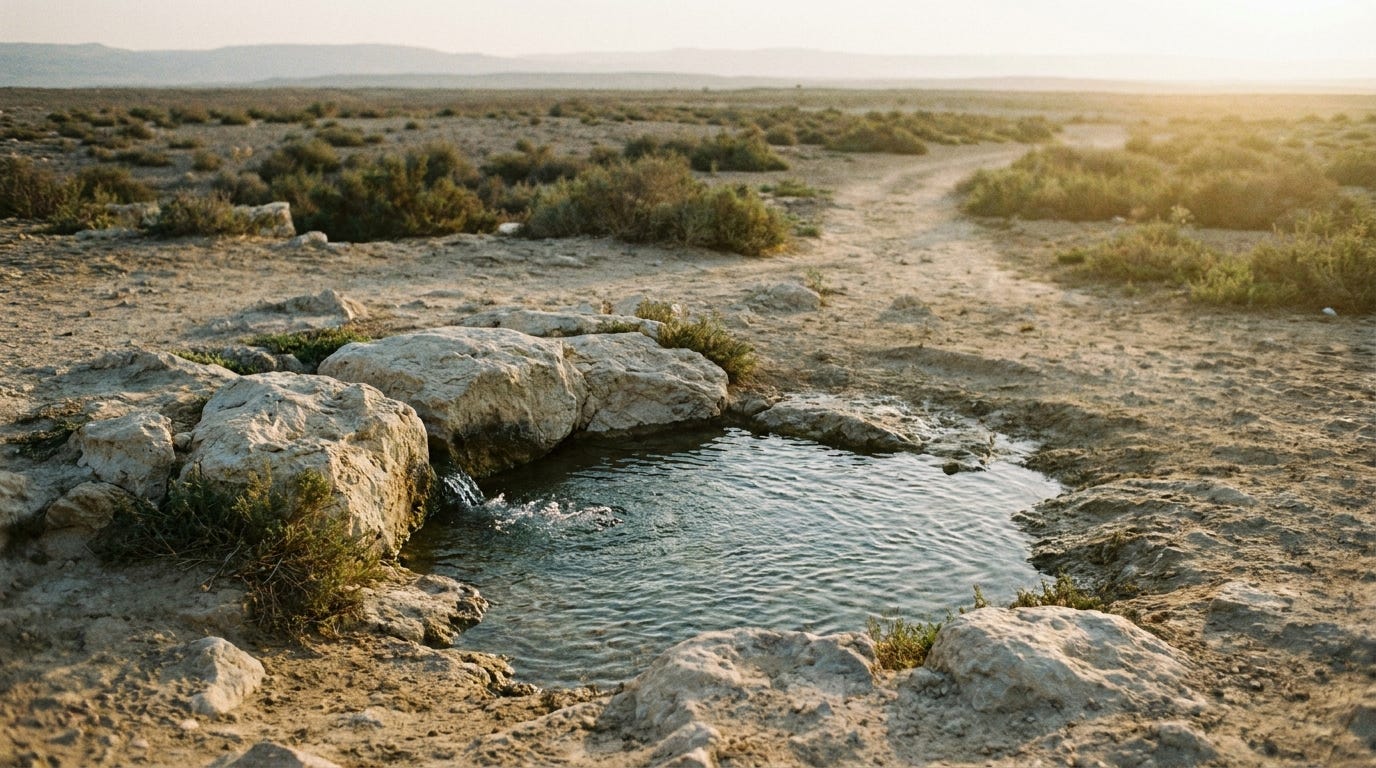
Then the God nobody thought to involve arrives. "The angel of the LORD found Hagar by a spring of water in the desert" (Genesis 16:7). Found. God was searching for her while she ran. And He speaks first, and He speaks her name: "Hagar, servant of Sarai" (Genesis 16:8). She is an Egyptian slave running from her mistress, the last person her world would bother to name. God knows exactly who she is and where she stands.
His question is gentle and searching: "where have you come from, and where are you going?" (Genesis 16:8). She can only answer the first half. "I am running away," she says. She knows what she is fleeing. She has no idea where she is headed. God does.
What He says next belongs to Abram. "I will greatly multiply your offspring so that they will be too numerous to count" (Genesis 16:10) is the promise language of stars and sand, now spoken over a runaway slave. Then: "you have conceived and will bear a son. And you shall name him Ishmael, for the LORD has heard your cry of affliction" (Genesis 16:11). Ishmael means God hears. Hagar never prayed out loud in the story. She only wept as she ran. And God heard the crying she never turned into words.
So she does something no one in the Bible has done before her. "So Hagar gave this name to the LORD who had spoken to her: You are the God who sees me" (Genesis 16:13). A slave gives God a name. The first person in Scripture to name the God who speaks is a used and overlooked foreign woman, and the name she gives Him is the God who sees me. "Here I have seen the One who sees me" (Genesis 16:13). She had been invisible to everyone who owned her. God had seen her the whole time.
This is what it looks like to be known before you know. God found her on the run, before she had her theology right or her life sorted. He heard the tears she hid and told her His plans for a son she had not yet borne. To know the God who speaks often starts exactly here, with the discovery that He already sees you and has already heard, before you have reached for Him at all.
Centuries later a tired man sits by another well and tells another outsider woman everything about her life, and she runs back to her town saying, come see a man who told me everything (John 4:29). The God who found Hagar at a spring is the same One. He still comes to the person walking away, still speaks first, still sees.
So mark it down the way Hagar did. She named the well Beer-lahai-roi, the well of the Living One who sees me (Genesis 16:14), so the place itself would carry the memory. Write down where God found you and what He said when He did. Name it, so that on the days you feel invisible you can go back and read that you were seen.
Where has God already found you and spoken, and have you written it down anywhere you can return to?
The Doxa Deeper Dive
Ishmael Means God Hears: The Well of the One Who Sees (Genesis 16)
Genesis 16 opens with hearing gone wrong and closes with hearing made perfect. In the first scene Abram listens to the voice of Sarai and steps outside the promise. In the last, God hears a cry that was never spoken aloud and comes after the person who made it. The whole chapter turns on one Hebrew verb, and the closing verses give us the first two great names for the God who speaks.
Who is the angel of the LORD who found Hagar?
This is the first time "the angel of the LORD" appears in the Bible (Genesis 16:7). The Hebrew is malak (H4397) YHWH, the messenger of the LORD. But this messenger speaks as God in the first person: "I will greatly multiply your offspring" (Genesis 16:10) is a promise only God can make, and Hagar answers by naming the LORD Himself, not an angel who was sent (Genesis 16:13). The church has long read these appearances as God coming in person, and many as a pre-incarnate appearing of the Son. That matters for the practice. The God who speaks comes down the road she is running and speaks to her face.
What does the name Ishmael mean, and why does it matter here?
The son is to be called Ishmael (H3458), built from El, God, and the verb shama (H8085), to hear. God hears. The reason is given in the same breath: "for the LORD has heard your cry of affliction" (Genesis 16:11). Heard is shama; the affliction is 'oni (H6040), the misery of the oppressed.
Now follow that verb back one scene. Earlier in this very chapter, "Abram listened to the voice of Sarai" (Genesis 16:2) is shama joined to qol (H6963), voice: shama b'qol, to heed a voice. It is the covenant phrase for obeying God, and Abram aimed it at the wrong voice. So Genesis 16 is a study in shama from end to end. It begins with a man who heard his wife over the promise, and it ends with a God who heard a slave's silent weeping and made a name out of it. The text records Hagar running and crying; it records no spoken prayer at all. God heard the crying underneath the silence. That is the quiet centre of the chapter: the same act, hearing, ruins the household when a man does it carelessly and rescues a runaway when God does it perfectly.
Why is it so surprising that Hagar names God?
"So Hagar gave this name to the LORD who had spoken to her: You are the God who sees me" (Genesis 16:13). The verb see is ra'ah (H7200); the name she coins is El Roi (H7210), the God who sees me.
Feel the scandal of that in her world. Across the ancient Near East, gods named people and claimed them; a human being did not presume to name a god. Naming carried authority, and authority ran downward from the divine. For a slave, a woman, and a foreigner to confer a name on the God of Abram turns the whole order upside down. And the name she chooses fixes on one thing, that He saw her. He is the God who sees me. She had been unseen by everyone who held power over her, and the One with all the power had watched her the entire way.
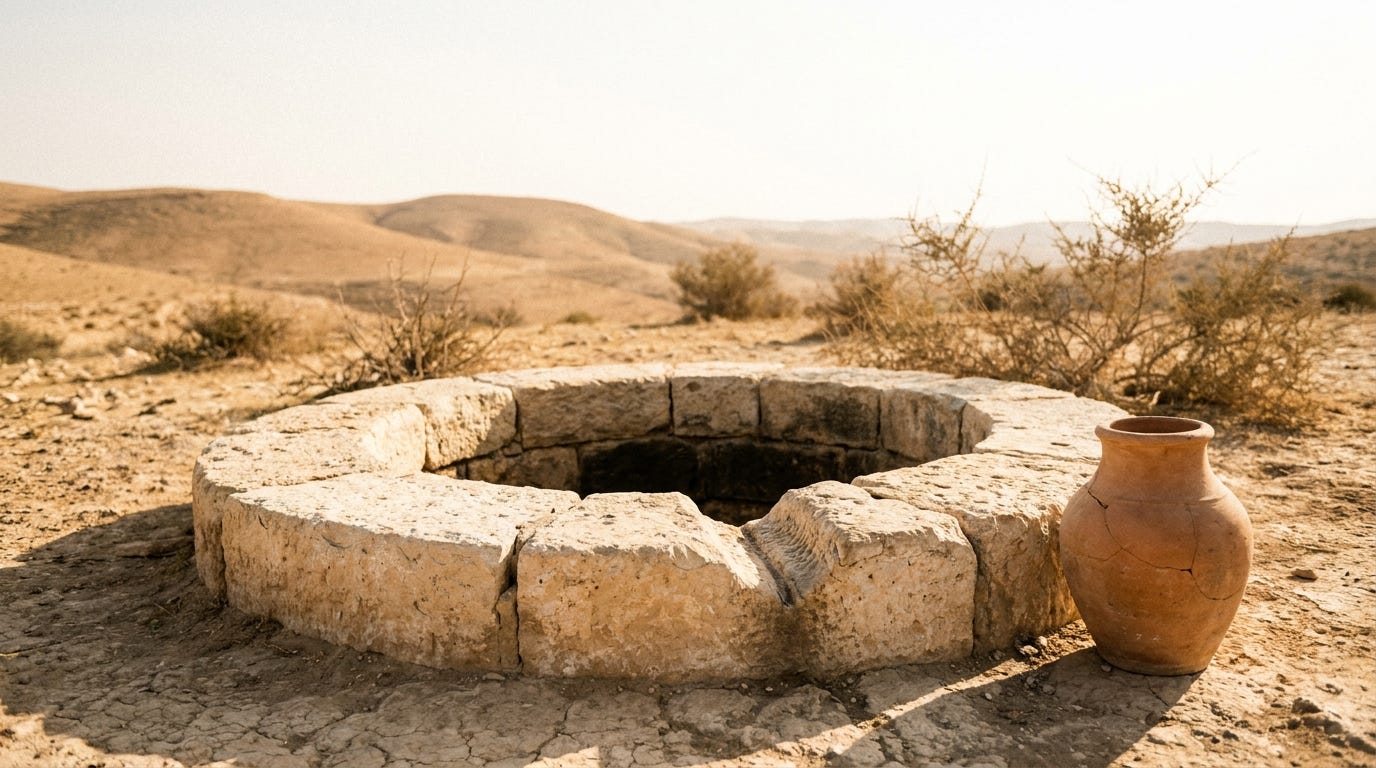
Then she pins it to the ground. The spring becomes Beer-lahai-roi (H883), the well of the Living One who sees me (Genesis 16:14). This is the practice at its plainest. Hagar heard God speak, and she recorded it, fastening the encounter to a place and a name so it could be found again by her and by everyone who passed that water after her. Naming the well is Hagar writing it down.
How does Hagar at the well point to Christ?
Centuries later, at another well, a tired traveller speaks first to another outsider woman and tells her the truth of her whole life (John 4:7-18). She leaves her water jar and runs to her town: "Come, see a man who told me everything I ever did" (John 4:29). It is the same shape. The God who sees, at a spring, meets the person the respectable world had written off, and sends her away seen and known, carrying news to her town. The thread that runs from Hagar's well to Jacob's well runs on to us.
Paul reads Hagar another way, as a picture of the flesh and the slave covenant (Galatians 4:24-25), the son secured by human scheming rather than by promise. Both readings are true, and they hold together. The covenant line runs through Isaac, the son God spoke into being; the tenderness of God still runs to Hagar, the woman that plan had wounded. God can refuse a scheme and chase down the person the scheme hurt, in the same chapter.
So Genesis 16 closes by teaching what its opening broke. To know the God who speaks is to know that He sees you first and hears the cry you never put into words, and then to hold onto it. Hagar met Him on the worst day of her life, running the wrong way, and she walked off with a name for God and a well she could return to. Do the same with your own encounters. When God finds you and speaks, name the place, write the date, keep the record, so that on the day you feel invisible you can go back to the water and read again that you were seen and heard.
Keep exploring. If this raised a question, or brought back something God has said to you, take it further. Ask Doxa. It answers from Scripture, real stories, and your own journey, free in your browser. No signup to start.
Questions and comments are welcome below.
Download Doxa, the app for recording, weighing and remembering prophetic encouragement.