

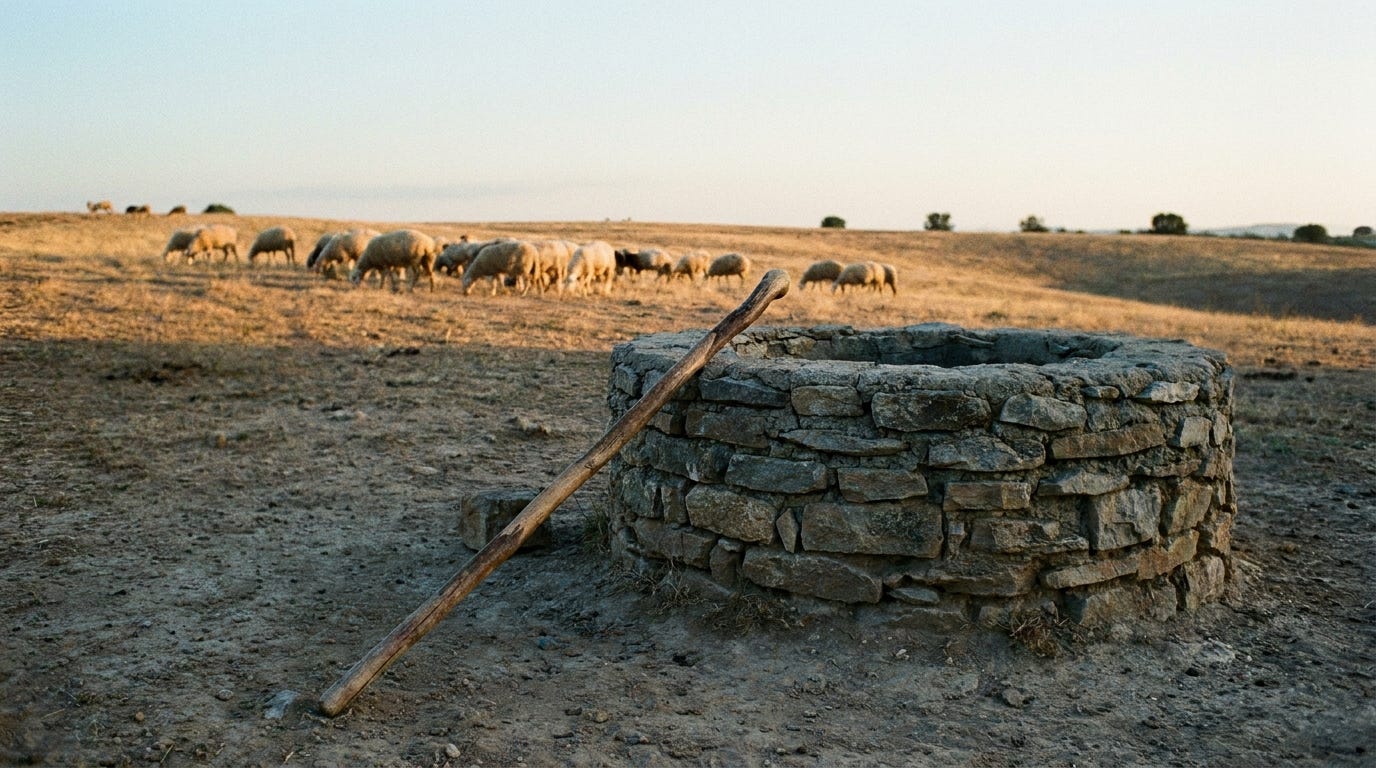
Originally published on the Doxa blog.
God had given Joseph two dreams, and at Dothan his brothers set out to end them. They saw him coming in the distance, and before he reached them they had a plan. "Come now, let us kill him and throw him into one of the pits," they said, and they named what they wanted to prove: "Then we shall see what becomes of his dreams" (Genesis 37:20). About twenty years later they did see. In Egypt they "bowed down before him with their faces to the ground" (Genesis 42:6), just as the dream of the sheaves had shown. No pit could bury what God had shown a shepherd of seventeen.
Sent to see their peace
Jacob sent Joseph to find his brothers so that he could bring back word of how they and the flocks were doing. "Go now and see how your brothers and the flocks are faring, and bring word back to me," Israel told him (Genesis 37:14). In Hebrew Jacob asked his son to see the shalom of his brothers, their peace and welfare. These were the brothers who "could not speak a kind word to him" (Genesis 37:4), in Hebrew could not speak to him in peace at all, and Joseph was sent to ask after the peace of men who had none toward him.
Joseph answered his father at once: "I am ready" (Genesis 37:13). He went north from the Valley of Hebron to Shechem and could not find them. A man found him wandering in the field, and Joseph told him, "I am looking for my brothers" (Genesis 37:16). The stranger had overheard them say, "Let us go to Dothan" (Genesis 37:17). His name was never recorded, and he sent Joseph on to the place where his road to Egypt began.
Here comes that dreamer
Joseph's brothers plotted to kill him because they hated his dreams and wanted to watch them fail. "Here comes that dreamer," they said to one another (Genesis 37:19).
They had heard the dreams God gave Joseph twice and answered both with hatred, and now they meant to end the matter in a pit. That is what it looks like when people will not hear God. They would not hear their brother either. Years later, standing before a ruler of Egypt they did not recognise, they remembered his pleading: "We saw his anguish when he pleaded with us, but we would not listen" (Genesis 42:21).
An empty pit at Dothan
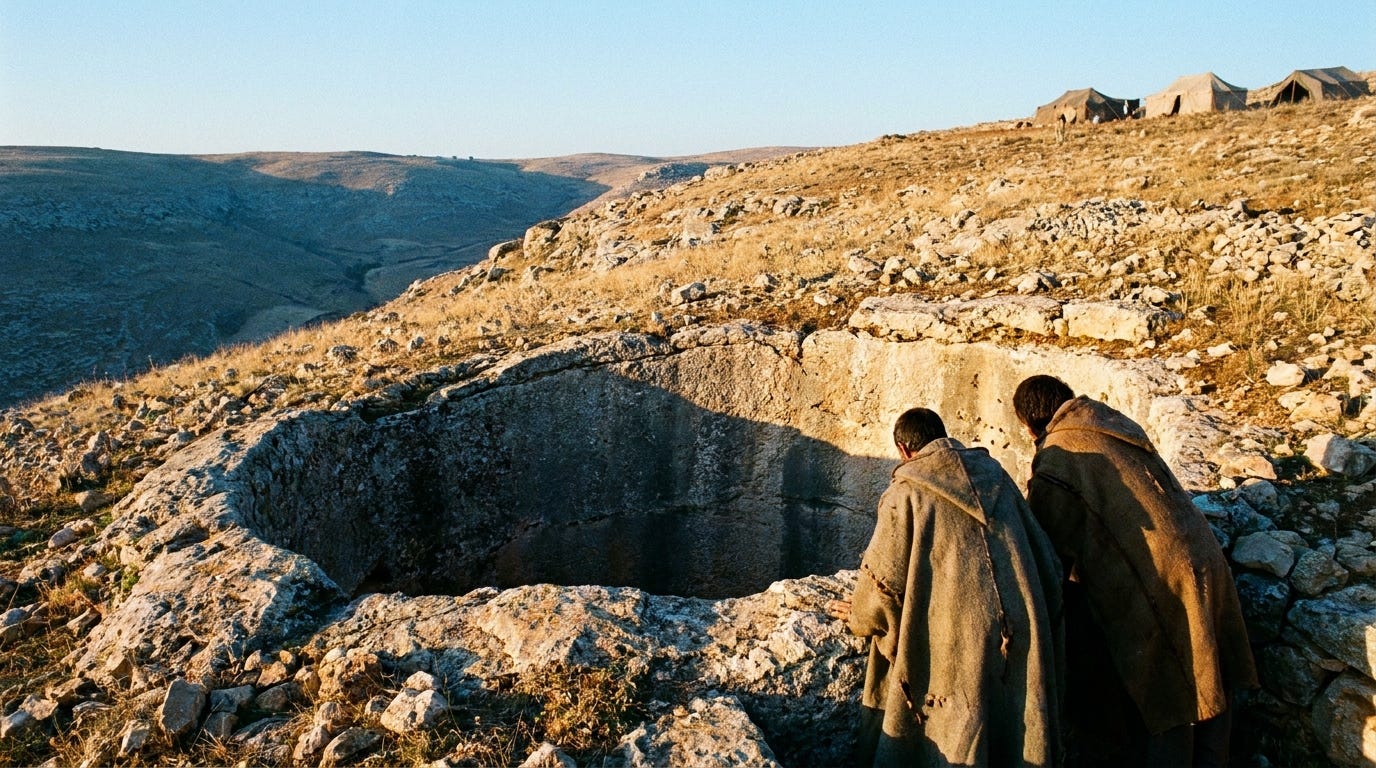
When Joseph reached his brothers, they stripped him of his robe and threw him into an empty pit with no water in it. Reuben, the eldest, had talked them out of killing him: "Do not shed his blood. Throw him into this pit in the wilderness, but do not lay a hand on him" (Genesis 37:22). He meant to come back, rescue Joseph and return him to his father.
A father sent the son he loved to his brothers, and they said, "Come now, let us kill him." Jesus told a parable about a vineyard owner who sent servant after servant to his tenants: "Finally, he sent his son to them" (Matthew 21:37). The tenants said, "This is the heir. Come, let us kill him and take his inheritance" (Matthew 21:38). Jesus was that Son, sent by His Father to brothers who rejected Him, and "God raised Him from the dead" (Acts 2:24).
Hold it while it looks buried
We are the people who remember what God has said, and some of what He says has to be held longest in the dark. If God has spoken to you, or a friend has shared an encouragement you have weighed and believe is from Him, write it down with the date in the Doxa app and read it back on the days it looks buried. We come to know Him this way, as the God whose word was still standing when the brothers sold Joseph to traders bound for Egypt. "He sent a man before them" (Psalms 105:17), and Joseph, sold as a slave, was the man God sent ahead to save their lives.
What has God said to you that you are holding while it still looks buried?
Keep exploring. If this raised a question, or brought back something God has said to you, take it further. Ask Doxa. It answers from Scripture, real stories, and your own journey, free in your browser. No signup to start.
Download Doxa, the app for recording, weighing and remembering prophetic encouragement.
Also please feel free to read the Doxa Deeper Dive below where we delve into the original language and historical context.
The Doxa Deeper Dive
The Waterless Pit God Promised to Empty (Genesis 37:12–24)
Originally published on the Doxa blog.
The first thing Joseph said in Genesis 37:12–24 was a single Hebrew word, hinneni. The BSB rendered it "I am ready" (Genesis 37:13). Around Moriah the same word passed between God, a father and his son.
Here I am, said the son
Joseph's answer in Genesis 37:13 was hinneni, here I am, the ready answer to a call in Hebrew, whether a father calls or God does. It is built on hinneh (H2009), behold or look, with the ending for me: look, me. Genesis 22 uses it three times. When God called Abraham on the day He tested him, "Here I am," he answered (Genesis 22:1). On the way up the mountain Isaac called to his father, and Abraham said, "Here I am, my son" (Genesis 22:7). When the angel of the LORD called from heaven, Abraham said it again (Genesis 22:11).
Joseph gave that answer to a father who loved him and had just said, "I am sending you to them" (Genesis 37:13). Isaiah gave it to God when he was sent: "Here am I. Send me" (Isaiah 6:8). Its root, hinneh, is also the word in "Here I am, I have come" (Psalms 40:7), and the writer of Hebrews heard that psalm in the mouth of Christ: "Here I am, it is written about Me in the scroll: I have come to do Your will, O God" (Hebrews 10:7).
Joseph was sent to Shechem, and the first people to hear this book read knew that name through his bones, whether they were carrying them through the wilderness or living beside his grave. Joseph made his brothers swear to carry his bones out of Egypt (Genesis 50:25), "Moses took the bones of Joseph with him" (Exodus 13:19), and Israel buried them "at Shechem in the plot of land that Jacob had purchased" (Joshua 24:32). The boy who went to Shechem looking for his brothers and could not find them came back to Shechem in the end, carried there by the Israelites. From Shechem the ready son walked on to Dothan, and to a pit.
A pit with no water in it
Joseph's pit was a bor, a cistern cut into the rock to catch the winter rain, and by the dry season it could stand empty. The word is bor (H953). The hill country of Canaan has few springs, so its people cut cisterns into the limestone, often narrow at the mouth and wide below. An empty one held a man as well as any cell, because he could not climb out. Centuries later Jerusalem's officials lowered the prophet Jeremiah into one, "which had no water but only mud" (Jeremiah 38:6).
Genesis 37:24 says it twice: "Now the pit was empty, with no water in it" (Genesis 37:24). In Hebrew the last words are ein bo mayim, there was no water in it. The prophet Zechariah recorded a promise of God built on nearly the same words: "because of the blood of My covenant, I will release your prisoners from the waterless pit" (Zechariah 9:11). The Hebrew there is a bor with no water in it.
The same word came back when Joseph was in Egypt. In prison he told Pharaoh's cupbearer he had done nothing "for which they should have put me in this dungeon" (Genesis 40:15), and two years later Joseph "was quickly brought out of the dungeon" (Genesis 41:14). Both times the Hebrew is bor. An English reader sees a pit and then a dungeon. A Hebrew reader heard one word, and watched God bring Joseph up out of a bor and stand him before Pharaoh.
In the Psalms bor is the pit of death. "You spared me from descending into the Pit" (Psalms 30:3); "He lifted me up from the pit of despair" (Psalms 40:2). A cistern with no water was a picture of the grave. On the night He was betrayed, Jesus lifted the cup and said, "This is My blood of the covenant, which is poured out for many" (Matthew 26:28), the covenant blood Zechariah named. The words the brothers spoke over that pit came back too, in a parable Jesus told.
The words of the tenants
Genesis 37:20 points to Jesus because Matthew recorded the tenants in Jesus' parable speaking the same Greek words the translators of Genesis had given Joseph's brothers. For "Come now, let us kill him" (Genesis 37:20) the Greek Genesis has deute apokteinōmen auton: deute (G1205), come, and apokteinō (G615), to kill. Matthew 21:38 reads deute apokteinōmen auton too: "This is the heir. Come, let us kill him and take his inheritance" (Matthew 21:38).
Jesus told that parable in the temple courts, to leaders who had just asked Him by what authority He taught (Matthew 21:23). Matthew's readers, who knew the brothers' words in the Greek translation, heard them again, word for word, in the tenants' mouths. "When the chief priests and Pharisees heard His parables, they knew that Jesus was speaking about them" (Matthew 21:45).
The heir in the parable went down into death, and the waterless pit could not keep Him. The God who promised to release prisoners from a pit with no water raised His Son on the third day, and the covenant blood Zechariah named was in the cup Jesus took at the supper. We come to know God and are known by Him as we hold what He has promised in places as dry as Joseph's cistern. Record the promise God has given you, and the day He gave it, in the Doxa app, so that in a dry season you can read His own words again: "I will release your prisoners from the waterless pit" (Zechariah 9:11).
Keep exploring. If this raised a question, or brought back something God has said to you, take it further. Ask Doxa. It answers from Scripture, real stories, and your own journey, free in your browser. No signup to start.
Questions and comments are welcome below.
Download Doxa, the app for recording, weighing and remembering prophetic encouragement.