

Originally published on the Doxa blog.
Abraham's story ends with Isaac living beside a well, "near Beer-lahai-roi" (Genesis 25:11). That well belongs to Hagar. She was pregnant and running from Sarai when the angel of the LORD found her there, and "the well was called Beer-lahai-roi" (Genesis 16:14) after what happened to her.
The very next verse turns to her son.
Who were the twelve sons of Ishmael?
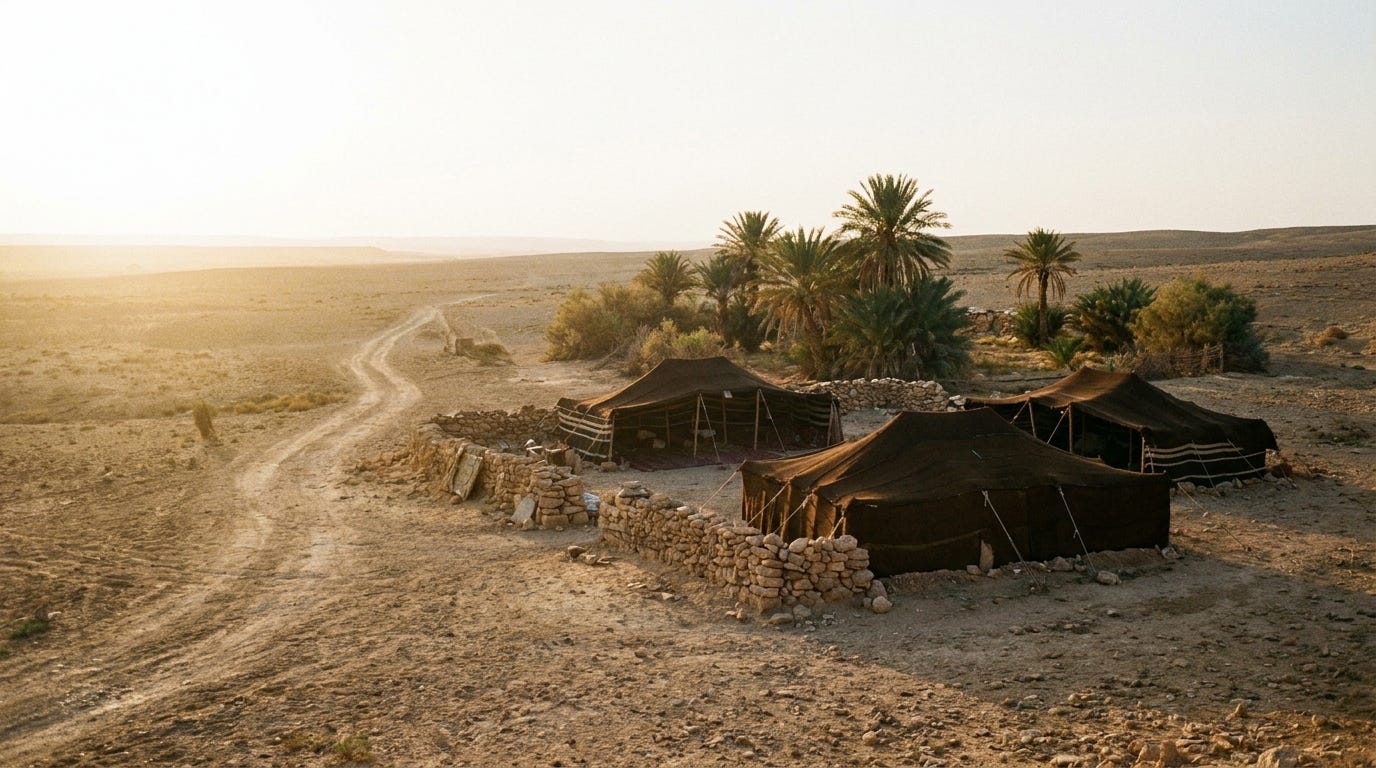
Ishmael's sons were Nebaioth, Kedar, Adbeel, Mibsam, Mishma, Dumah, Massa, Hadad, Tema, Jetur, Naphish and Kedemah, and Genesis calls them "twelve princes of their tribes" (Genesis 25:16). Each became the head of a desert people south and east of Canaan. Their land ran "from Havilah to Shur, which is near the border of Egypt" (Genesis 25:18).
Shur is a name the reader has met before. When the angel found Hagar, she was sitting at "the spring along the road to Shur" (Genesis 16:7), alone and pregnant after Sarai had treated her harshly. Her grandsons' tribes ended up living all the way out to that same road.
Why does Genesis list Ishmael's sons?
Genesis lists them because God had made promises about Ishmael, and these seven verses show each one kept. The angel told Hagar, "I will greatly multiply your offspring so that they will be too numerous to count" (Genesis 16:10). God told Abraham, "He will become the father of twelve rulers, and I will make him into a great nation" (Genesis 17:20). In the wilderness of Beersheba, with the water gone, the angel told Hagar to lift the boy up, "for I will make him into a great nation" (Genesis 21:18).
Then come the names, and there are twelve.
The hard part came true as well. The angel had warned Hagar that her son "will live in hostility toward all his brothers" (Genesis 16:12), and the account closes with his people, who "lived in hostility toward all their brothers" (Genesis 25:18). God told her the whole truth at the spring, and both halves of it happened.
What does Ishmael's family show about knowing God?
It shows that God keeps what He says even to the people at the edge of the story, and that knowing Him starts with being heard by Him. Hagar was an Egyptian slave and Ishmael was sent away from the covenant family. God still spoke to them, and the name He gave the boy says why: "you shall name him Ishmael, for the LORD has heard your cry of affliction" (Genesis 16:11). Ishmael means God hears.
Hagar is the first person in the Bible to give God a name. "You are the God who sees me" (Genesis 16:13). She heard Him, she carried what He said back to a hard household, and she lived for years before anything on this list existed. Her son's family is the record of the God she had come to know keeping His word.
How does Ishmael's family point to Jesus?
Ishmael's family points to Jesus because Isaiah saw his sons' flocks brought to God's altar when the nations come to the light, and Jesus is that light. "All the flocks of Kedar will be gathered to you; the rams of Nebaioth will serve you and go up on My altar with acceptance" (Isaiah 60:7). The chapter opens with the nations coming to Israel's light. When old Simeon held the baby Jesus in the temple, he called Him "a light for revelation to the Gentiles" (Luke 2:32). Ishmael's sons, sent away from Abraham's tents, are named among the ones who come.
Write the promise down with a name on it
Maybe God has given you an encouragement about someone: a child, a brother, a friend who walked away from the family and the faith. Write it down in the Doxa app with the date and the person's name. Years from now you can set it beside what happened, the way Genesis sets twelve names beside three promises.
Who has God told you He hears, that you are still waiting to see?
Keep exploring. If this raised a question, or brought back something God has said to you, take it further. Ask Doxa. It answers from Scripture, real stories, and your own journey, free in your browser. No signup to start.
Download Doxa, the app for recording, weighing and remembering prophetic encouragement.
Also please feel free to read the Doxa Deeper Dive below where we delve into the original language and historical context.
The Doxa Deeper Dive
Twelve Princes Before Twelve Tribes: Ishmael's Line (Genesis 25:12–18)
Originally published on the Doxa blog.
Genesis 25:12 opens with a heading a reader passes straight over: "This is the account of Abraham's son Ishmael" (Genesis 25:12). In Hebrew it is one of the main divisions of the whole book.
What does this is the account mean in Genesis 25:12?
It is a section heading, and it tells the hearer that Ishmael's line is being closed off with honour before the story moves on. The word is toledot (H8435), from yalad (H3205), to give birth: literally the begettings, what came out of a man. Genesis opens its sections with it, from "This is the account of the heavens and the earth" (Genesis 2:4) to "This is the account of Jacob" (Genesis 37:2).
Watch where the side lines go. Cain's family is told in eight verses (Genesis 4:17–24) before Seth's line takes over. Ishmael gets seven verses here, and then "This is the account of Abraham's son Isaac" (Genesis 25:19) runs to the end of chapter 35. Esau gets one chapter, "This is the account of Esau (that is, Edom)" (Genesis 36:1), before Jacob's account fills the rest of the book. The line leaving the main story is finished first and briefly, and Ishmael and Esau each get the same heading as the heavens and the earth.
The Greek translators of Genesis rendered the heading at 2:4 and 5:1 as biblos geneseos, the book of the genesis (G1078), which is how the first book got its name. Matthew opens the New Testament with the same two words: "This is the record of the genealogy of Jesus Christ, the son of David, the son of Abraham" (Matthew 1:1). Every toledot in Genesis narrows toward one line, and Matthew takes up the heading to say whom it was narrowing toward.
Why does Genesis call Ishmael's sons princes?
Genesis calls them princes because God had promised Abraham exactly that, and the Hebrew title is the one Israel used for the heads of its own twelve tribes. Princes in Genesis 25:16 is nasi (H5387), from nasa (H5375), to lift up: one who is raised up over a people. It is the same word God used in Genesis 17:20, "He will become the father of twelve rulers" (Genesis 17:20). The Hittites had once given Abraham the title himself, nesi Elohim, which the BSB translates "You are God's chosen one among us" (Genesis 23:6).
Now hear it the way Israel first heard it. The people who received Genesis were organised in twelve tribes, each with its nasi. Numbers calls them "the leaders of the tribes of their fathers" (Numbers 1:16) and "the twelve leaders of Israel" (Numbers 1:44). When the altar was dedicated, "Each day one leader is to present his offering" (Numbers 7:11), twelve days running. A tribe hearing Genesis 25 read aloud heard their own word for their own leaders given to Ishmael's sons, and Genesis lists them before Jacob is even born. The God who gave Israel its twelve had already given Hagar's son twelve, because He had said so to Abraham.
Who were Kedar, Dumah and Tema in the Bible?
They were real desert peoples of north Arabia, and Israel knew them as traders, neighbours and the subject of prophecy. Genesis 25:16 lists them "by their villages and encampments" (Genesis 25:16). The villages are chatser (H2691), unwalled settlements around a yard; the encampments are tirah (H2918), from a word for a wall, a camp with a wall around it. Each prince had places of his own to come back to.
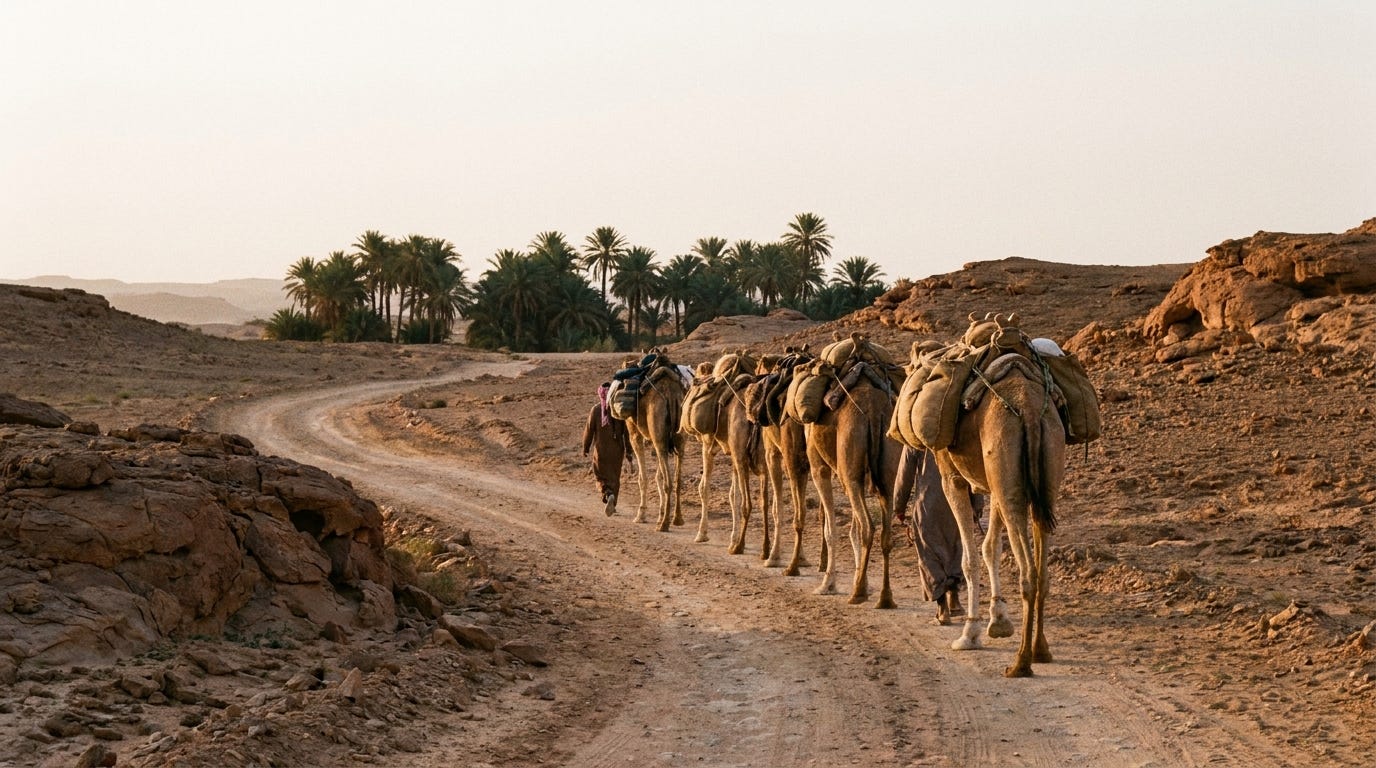
Their names run all through the Old Testament. A caravan of Ishmaelites carried Joseph to Egypt, "carrying spices, balm, and myrrh" (Genesis 37:25). Job speaks of "The caravans of Tema" (Job 6:19), and a psalmist far from home groans, "I live among the tents of Kedar!" (Psalms 120:5). Isaiah has prophecies against Dumah, Tema and Kedar side by side, and ends with "the warriors of Kedar" (Isaiah 21:17), who were archers, as Ishmael "became a great archer" (Genesis 21:20).
Tema is the oasis of Tayma in north-west Arabia, where Nabonidus, the last king of Babylon, lived for about ten years. Assyrian kings in the eighth and seventh centuries BC recorded tribute from Tema and Massa and fought wars against the Qedarites. When Israel heard this list, they heard the names of tribes whose camels they could see on the trade roads. Every caravan out of Tema was God's promise to Hagar, kept where Israel could watch it pass.
What does hostility toward all their brothers mean in Hebrew?
Literally it says Ishmael's people settled facing all their brothers: close to their kin, and set against them. The phrase is al-penei kol-echav, over against the face of all his brothers, from panim (H6440), face.
Genesis 25:18 repeats the angel's sentence from 16:12 with one verb changed. The angel said he would dwell, shakan (H7931). The narrator in 25:18 says he fell, naphal (H5307), the verb Judges uses when the Midianites "had settled in the valley like a swarm of locusts" (Judges 7:12). The King James Version reads naphal here as death. Shakan is the verb for staying in one place. Naphal is the verb for a people coming down and spreading over a land, the way the Midianites covered that valley. The angel spoke about one boy's life, and the narrator reports a nation spread from Havilah to Shur.
What does Ishmael's account show about knowing God?
Ishmael's account shows that people come to know God by hearing what He promises and then seeing Him keep it, and that He keeps His word even outside the chosen line. Ishmael is Yishmael (H3458), from shama (H8085): God hears. God heard Hagar (16:11). He told Abraham, "As for Ishmael, I have heard you" (Genesis 17:20). In the desert He "heard the voice of the boy" (Genesis 21:17). Every one of those promises has a matching line in Genesis 25:12–18. Israel learned the God who speaks by setting what He said beside what He did, and this list is that check written down.
Isaiah takes it further. The Servant song promises "a light to the nations" (Isaiah 42:6), and a few verses on, "let the villages of Kedar cry aloud" (Isaiah 42:11). Villages is chatser again, the same word as Genesis 25:16. Kedar's settlements are called to sing to the God who heard their father's voice where he lay under a bush in the desert. Matthew quotes this Servant song of Jesus: "In His name the nations will put their hope" (Matthew 12:21).
Keep what God has said to you in the Doxa app, with the date, so you can check it the way Genesis checks Ishmael's twelve against the promise.
Keep exploring. If this raised a question, or brought back something God has said to you, take it further. Ask Doxa. It answers from Scripture, real stories, and your own journey, free in your browser. No signup to start.
Questions and comments are welcome below.
Download Doxa, the app for recording, weighing and remembering prophetic encouragement.