

Originally published on the Doxa blog.
The LORD had told Jacob, "Go back to the land of your fathers and to your kindred, and I will be with you" (Genesis 31:3). After the night at Peniel and his brother's embrace, Jacob came to Shechem in the land of Canaan, bought a field, and set up an altar with God's name and his own new name on it. We are the people who mark the place where God's promise came true, the way Jacob did at Shechem.
At the pace of the children
Jacob asked Esau to go on ahead because his children were frail and his young animals could not be driven hard. Esau had offered, "Let us be on our way, and I will go ahead of you" (Genesis 33:12). Jacob answered, "If they are driven hard for even a day, all the animals will die" (Genesis 33:13), and he said he would follow "at a comfortable pace for the livestock and children, until I come to my lord at Seir" (Genesis 33:14).
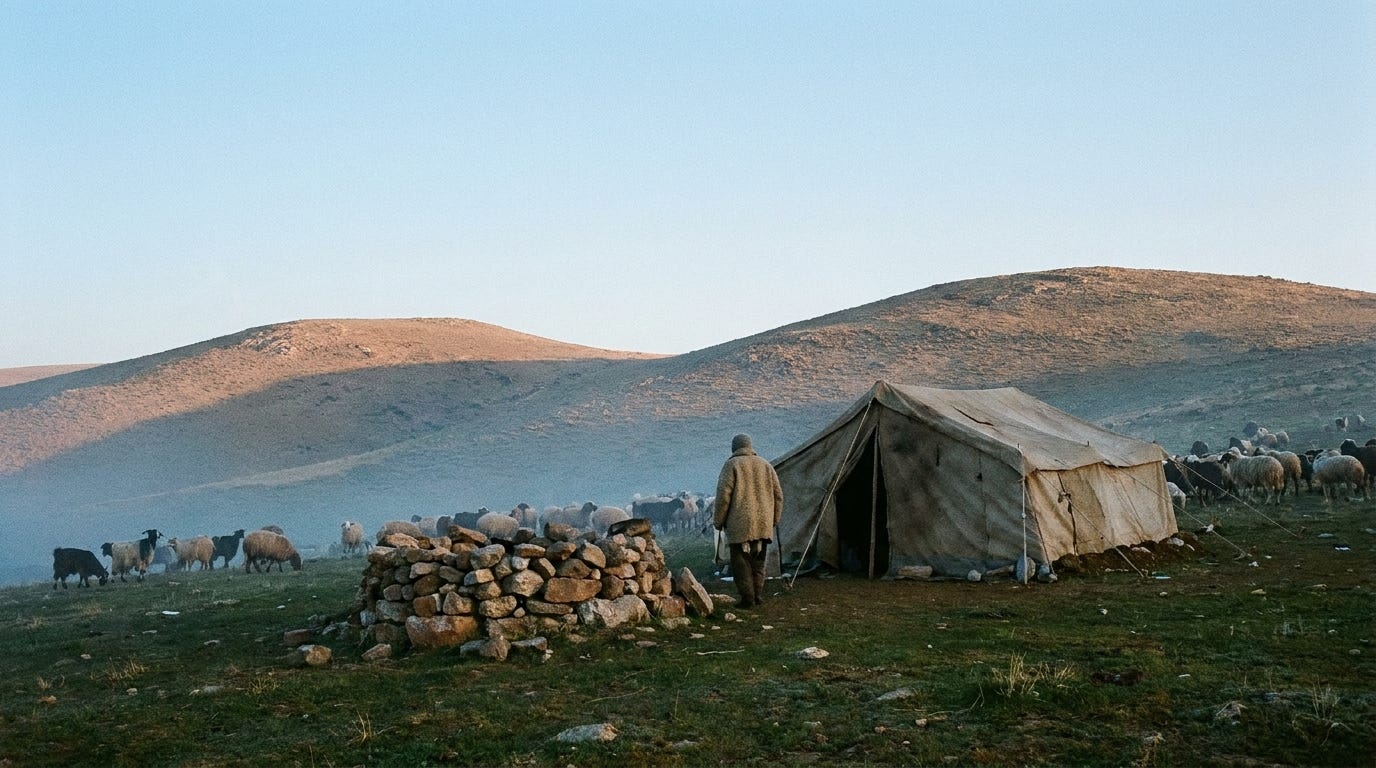
Esau went back to Seir that day (Genesis 33:16), and Scripture records no visit by Jacob to Seir. He travelled to Succoth, where "he built a house for himself and shelters for his livestock" (Genesis 33:17), and then crossed into Canaan. Jacob had told his brother he would come to Seir, and he went instead to the land God had named.
Safe at Shechem
At Shechem Jacob bought land and camped on it, in the place where God had first promised the land to Abraham. Genesis 33:18 records that "he arrived safely at the city of Shechem in the land of Canaan, and he camped just outside the city." He bought the plot where he pitched his tent "for a hundred pieces of silver" (Genesis 33:19).
Long before, at the same place, the LORD had told Abram, "I will give this land to your offspring" (Genesis 12:7). Now Abram's grandson owned a small piece of it.
God, the God of Israel
El-Elohe-Israel means God, the God of Israel, and in it Jacob used the new name God had given him. "There he set up an altar and called it El-Elohe-Israel" (Genesis 33:20). At Peniel the man who wrestled with him had said, "Your name will no longer be Jacob, but Israel" (Genesis 32:28).
Twenty years earlier, at Bethel, Jacob had vowed that if God brought him back "safely to my father's house, then the LORD will be my God" (Genesis 28:21). God had brought him back safely into the land. Jacob had come to know God as the One who keeps what He says, and he answered with a name on an altar, telling anyone who passed Shechem who God was to him.
Jacob's field and Jacob's well
The field Jacob bought is where Jesus later sat beside Jacob's well and offered water that springs up to eternal life. John records that Jesus "came to a town of Samaria called Sychar, near the plot of ground that Jacob had given to his son Joseph" (John 4:5). There He told a Samaritan woman, "the water I give him will become in him a fount of water springing up to eternal life" (John 4:14). On the ground where Jacob named God the God of Israel, the Son of God offered Himself to a thirsty stranger.
Give the place a name
We are the people who remember what God has said and mark the place where He kept it, as Jacob did at Shechem. When God brings you through what He promised, write down what He said, the place and the date in the Doxa app, with the name you would give God for it, so you can read it back in ten years and in thirty and find the God of Israel still keeping His promise.
Where has God brought you through safely, and what name would you give that place?
Keep exploring. If this raised a question, or brought back something God has said to you, take it further. Ask Doxa. It answers from Scripture, real stories, and your own journey, free in your browser. No signup to start.
Download Doxa, the app for recording, weighing and remembering prophetic encouragement.
Also please feel free to read the Doxa Deeper Dive below where we delve into the original language and historical context.
The Doxa Deeper Dive
Jacob Arrived Whole and Bought Joseph's Future Grave (Genesis 33:12–20)
Originally published on the Doxa blog.
God promised Jacob at Bethel, "I will not leave you until I have done what I have promised you" (Genesis 28:15), and Genesis 33:18 records the day He finished it with one Hebrew word, shalem, whole. Follow that word through Israel's history and you see what His faithfulness made of a man who arrived limping.
Whole when he arrived
In Genesis 33:18, arrived safely translates shalem (H8003), whole or complete, with nothing missing, and it comes from the same root as shalom (H7965). At Bethel Jacob had asked that he might "return safely to my father's house" (Genesis 28:21), and the Hebrew there is beshalom, in peace. Twenty years later he came into the land shalem. An English reader sees the word safely and can miss that God's answer used the root of Jacob's own prayer.
Scripture uses the same word for Israel's altars. Moses commanded the people to build an altar on Mount Ebal, the mountain above Shechem, once they had crossed the Jordan: "You shall build the altar of the LORD your God with uncut stones" (Deuteronomy 27:6). Uncut stones are avanim shelemot, whole stones that no iron tool had touched. Solomon later told the people, "let your heart be fully devoted to the LORD our God" (1 Kings 8:61), and fully devoted is shalem again, a whole heart. Jacob had been limping when he passed Penuel at sunrise (Genesis 32:31), and in God's word for it he was whole when he reached Shechem.
The King James Version read the word as the name of a town, Shalem, near Shechem. Most modern translations read it as the state Jacob arrived in, and the echo of the Bethel vow supports them.
Booths at Succoth
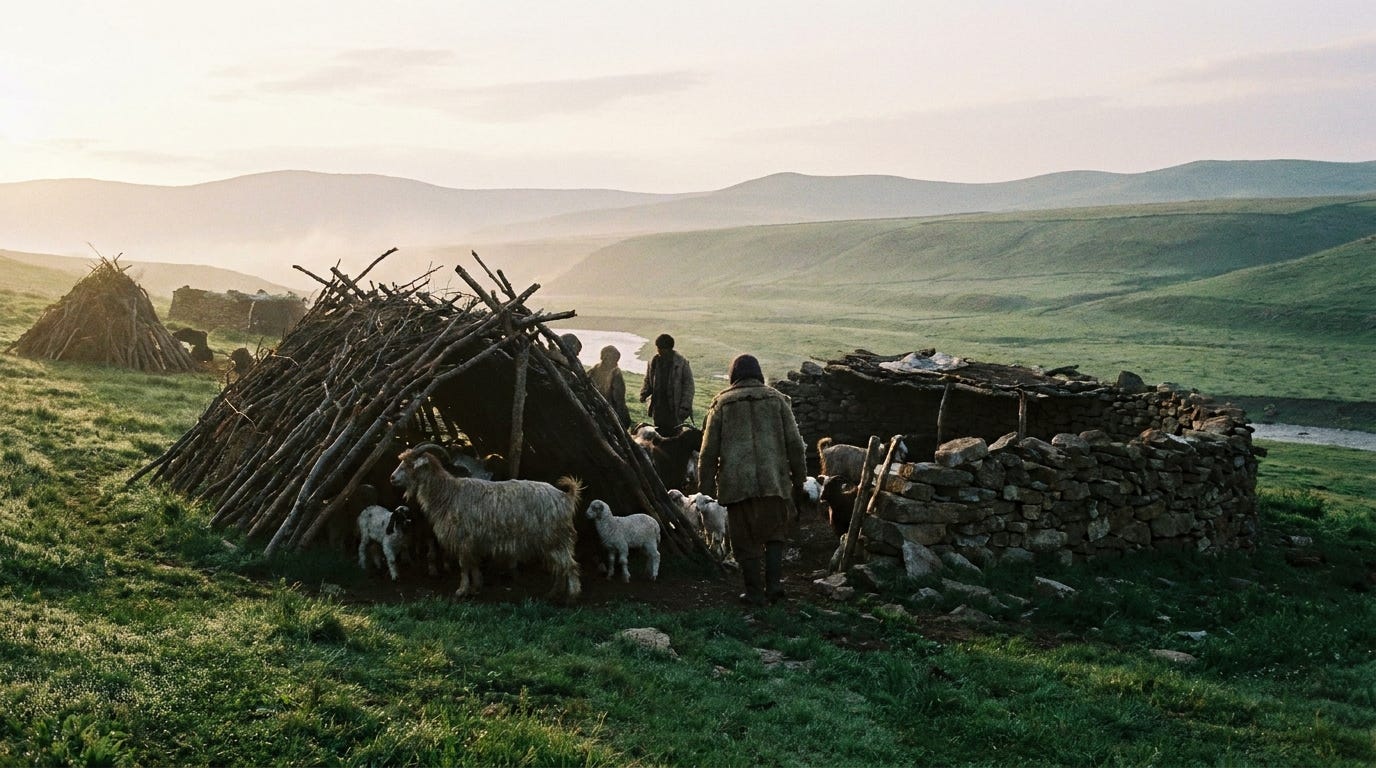
Succoth means booths, the rough shelters of branches Jacob built for his flocks, and the first readers of Genesis built the same booths every autumn. The noun is sukkah (H5521) and the town is Sukkot (H5523): Jacob "built a house for himself and shelters for his livestock; that is why the place was called Succoth" (Genesis 33:17). A herdsman who builds a house means to stay for a season, and Jacob built one before he crossed the Jordan.
God later commanded Israel, "You are to dwell in booths for seven days" (Leviticus 23:42), "so that your descendants may know that I made the Israelites dwell in booths when I brought them out of the land of Egypt" (Leviticus 23:43). Their first camp after Egypt was a different place with the same name: "The Israelites journeyed from Rameses to Succoth" (Exodus 12:37). A people who sat in booths each year to remember how God brought them out of slavery heard that their father Jacob built booths on his own way home, after God brought him out of Laban's house.
A hundred pieces of silver
The hundred pieces of silver were a hundred qesitah (H7192), a unit of value so old that Scripture uses it only three times and nobody now knows its weight. The other two are Joshua 24:32, about this same field, and Job 42:11, where each of Job's family and friends brought him one. Abraham had weighed out shekels for his cave at Machpelah (Genesis 23:16); Jacob paid in a unit that belonged to the age of the fathers.
A herdsman camped outside a city wall had no right to the ground his flocks grazed. Buying a plot from the city's ruling family gave Jacob ground of his own in Canaan, only the second piece the family ever owned, and the first had been a grave. The writer of Hebrews said Abraham "lived in tents, as did Isaac and Jacob, who were heirs with him of the same promise" (Hebrews 11:9). Jacob's field was a first piece of that promise, held by a man who still lived in a tent.
The first readers knew what became of this field. Joseph, dying in Egypt, told his brothers, "God will surely attend to you, and then you must carry my bones up from this place" (Genesis 50:25). Generations later his bones "were buried at Shechem in the plot of land that Jacob had purchased from the sons of Hamor, Shechem’s father, for a hundred pieces of silver" (Joshua 24:32). The people who first heard this chapter had carried Joseph's coffin out of Egypt and across the wilderness to lay it in the field their father Jacob paid for.
The God of Israel at Shechem
At Shechem, in the days of Joshua, Israel built an altar to the LORD, the God of Israel, renewed the covenant, wrote down what God had said and set up a stone to remember it. "Joshua built an altar on Mount Ebal to the LORD, the God of Israel" (Joshua 8:30), of whole stones. The name was Jacob's: El (H410), the mighty God, joined to Elohim (H430) and to Israel (H3478), the name God gave Jacob at the Jabbok.
At the end of his life Joshua gathered the tribes at Shechem (Joshua 24:1) and began, "This is what the LORD, the God of Israel, says" (Joshua 24:2). Before they went home, "Joshua recorded these things in the Book of the Law of God. Then he took a large stone and set it up there under the oak that was near the sanctuary of the LORD" (Joshua 24:26). The nation stood where their father had stood and called God by the name on his altar. The first readers knew that Jacob's altar at Shechem was the first place in Scripture where anyone called Him the God of Israel, and they called Him that on the same ground.
Known at Shechem
To know God in this chapter is to know Him as the One who finishes what He says, and Jacob answered by putting God's name and his own on one altar. God had called him Israel, and Jacob called God the God of Israel. Centuries later a Samaritan woman told Jesus beside Jacob's well, "Our fathers worshiped on this mountain" (John 4:20), and Jesus answered that "the true worshipers will worship the Father in spirit and in truth, for the Father is seeking such as these to worship Him" (John 4:23). The God who met Jacob at Shechem was seeking worshipers there still.
We are the people who remember what God has finished. Write down in the Doxa app what God has finished for you, the way Joshua wrote in the Book of the Law and set up a stone at Shechem, and come back to it when the next promise is still open. The God of Israel who kept His word to Jacob is seeking worshipers still.
Keep exploring. If this raised a question, or brought back something God has said to you, take it further. Ask Doxa. It answers from Scripture, real stories, and your own journey, free in your browser. No signup to start.
Questions and comments are welcome below.
Download Doxa, the app for recording, weighing and remembering prophetic encouragement.