

Originally published on the Doxa blog.
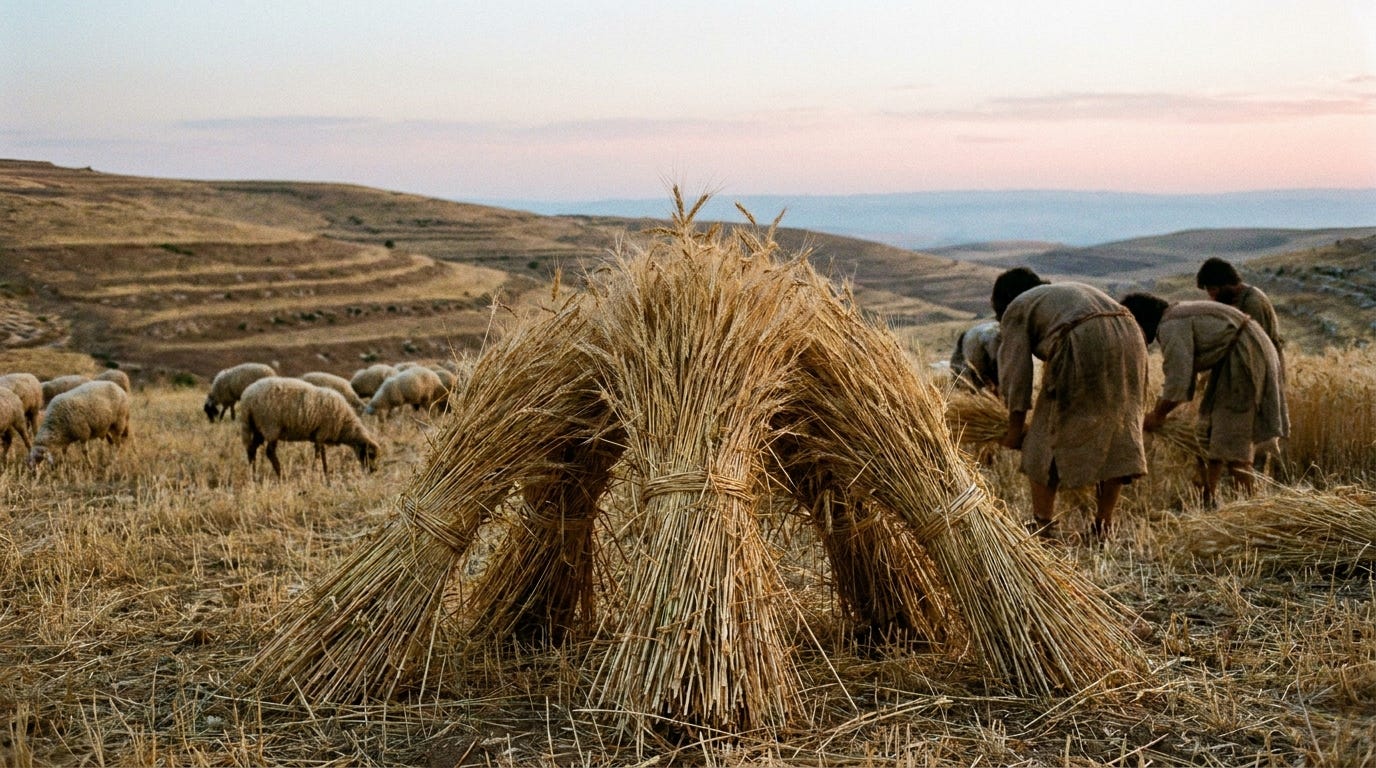
Joseph was seventeen, a shepherd with his brothers, when he had a dream and told it to them: "We were binding sheaves of grain in the field, and suddenly my sheaf rose and stood upright, while your sheaves gathered around and bowed down to mine" (Genesis 37:7). They hated him for it. Centuries later a psalmist wrote that Joseph wore shackles "until his prediction came true and the word of the LORD proved him right" (Psalms 105:19). Joseph later told those same brothers, "God sent me before you" (Genesis 45:7), and from the first dream one man in Jacob's house kept what he heard.
A robe and a bad report
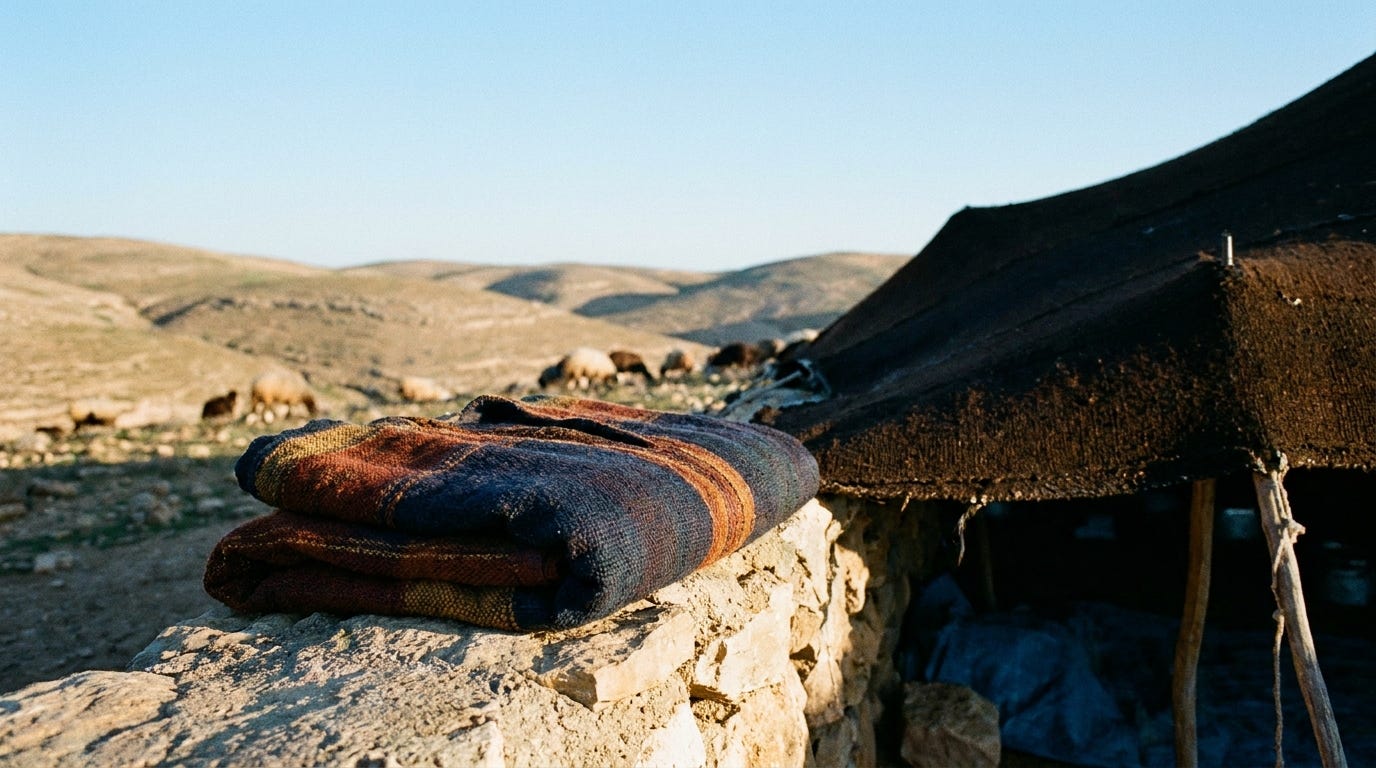
Joseph's brothers hated him because their father loved Joseph more than any of them and showed it. Joseph was the son "born to him in his old age; so he made him a robe of many colors" (Genesis 37:3). Joseph had also "brought their father a bad report about them" (Genesis 37:2).
"They hated him and could not speak a kind word to him" (Genesis 37:4). In Hebrew they could not speak to him leshalom, for peace. The family God had promised to bless could not greet one another in peace, and in that house Joseph began to dream.
Sheaves, sun, moon and stars
Joseph had two dreams, and both meant that his family would one day bow down to him: first his brothers, then his father and mother too. After the first, the brothers heard a boast. "Do you intend to reign over us?" they asked (Genesis 37:8), and they hated him even more. In the second dream, "the sun and moon and eleven stars were bowing down to me" (Genesis 37:9), and Jacob understood at once whom the lights stood for: "Will your mother and brothers and I actually come and bow down to the ground before you?" (Genesis 37:10).
The first dream came true in a famine. About twenty years after he first told them, Joseph was the man who sold grain in Egypt, and "when his brothers arrived, they bowed down before him with their faces to the ground" (Genesis 42:6). Then "Joseph remembered his dreams about them" (Genesis 42:9). Between the dreams and that day lay a pit, slavery and a prison, and God kept His word through every one of them.
Jacob kept the dream
Jacob kept Joseph's dream in mind by holding on to it after he had rebuked it out loud. The next verse records what came after the rebuke: "his brothers were jealous of him, but his father kept in mind what he had said" (Genesis 37:11). Jacob questioned the dream honestly and still kept it, and that is how we weigh what someone believes God has shown them: test it and hold it. We come to know God this way, by holding what He has said until we see Him do it.
Centuries later a young mother did the same. When the shepherds repeated what the angels had told them about her baby, "Mary treasured up all these things and pondered them in her heart" (Luke 2:19). Joseph's brothers rejected the son their father loved, and of Mary's Son John wrote, "He came to His own, and His own did not receive Him" (John 1:11). God exalted Him all the same, "that at the name of Jesus every knee should bow" (Philippians 2:10).
Keep what God has said
We are the people who keep what God has said, even when it sounds too big, and even when the people around us want it gone. When God gives you a promise, or a friend shares an encouragement they believe is from Him, write it down with the date in the Doxa app, weigh it honestly, and keep it where you can read it again. Jacob kept the dream in mind, and about twenty years later, in Egypt, God proved it right.
What has someone shared with you from God that you questioned at first and are still keeping?
Keep exploring. If this raised a question, or brought back something God has said to you, take it further. Ask Doxa. It answers from Scripture, real stories, and your own journey, free in your browser. No signup to start.
Download Doxa, the app for recording, weighing and remembering prophetic encouragement.
Also please feel free to read the Doxa Deeper Dive below where we delve into the original language and historical context.
The Doxa Deeper Dive
Mary Kept Jesus' Words as Jacob Kept Joseph's Dream (Genesis 37:1–11)
Originally published on the Doxa blog.
Genesis 37:11 closes with a short Hebrew line, ve'aviv shamar et-hadavar, and his father kept the word. Before anyone threw Joseph into a pit, his father was already guarding what the word of the LORD would one day prove right.
A robe the king's daughters wore
Joseph's robe of many colors was a kethoneth passim, and the only other person in the Bible said to wear one was a king's daughter. Kethoneth (H3801) is the tunic, the long garment of daily life. Pas (H6446) is the hard word: Strong's ties it to the palm of the hand and the sole of the foot, which points to a robe reaching to the wrists and ankles, while the Greek translators read it as many colors.
The phrase comes back once, in the house of David. When Amnon had his half-sister thrown out and the door bolted, the writer of Samuel stopped to explain her clothes: "Now Tamar was wearing a robe of many colors, because this is what the king's virgin daughters wore" (2 Samuel 13:18). An English reader sees a bright coat. A Hebrew reader who knew both stories heard royal clothing, the dress of a king's child, on the shoulders of a shepherd boy of seventeen.
To the brothers, the robe marked Joseph as the son who would lead. In Israel's world the firstborn son carried the family's leadership and a double portion; the law later required a father to give his firstborn "a double portion of all that he has" (Deuteronomy 21:17). Reuben was Jacob's firstborn, and he lost his place when he dishonoured his father with Bilhah (Genesis 35:22). The Chronicler recorded where the birthright went: "his birthright was given to the sons of Joseph son of Israel" (1 Chronicles 5:1). The first readers of Genesis lived among the great tribes of Ephraim and Manasseh, Joseph's sons, and they heard the royal robe in Genesis 37:3 as the first sign of the honour God would give to Joseph's house.
The robe would come back to Jacob soaked in a goat's blood. Before then, Joseph dreamed twice.
The lights God made to rule
The sun, moon and stars bowed to Joseph because they stood for his father, his mother and his eleven brothers, and their bowing answered the brothers' own question about who would rule. After the first dream they asked him two questions, and the second was "Will you actually rule us?" (Genesis 37:8). The verb is mashal (H4910), to rule, and Joseph's next dream came in lights.
On the fourth day God made those lights "to preside over the day and the night" (Genesis 1:18), and the Hebrew word there is mashal again; two verses earlier the sun is "the greater light to rule the day" (Genesis 1:16). An English reader sees preside in one verse and rule in the other and misses the link. The brothers asked whether Joseph would mashal over them, and the next dream answered with the very lights God made to mashal the day and the night.
The verb for bowing is shachah (H7812), in all three verses of the dreams. It is the bow a subject gives a ruler, and it is also the bow of worship given to God, the word Abraham used on the way to Moriah: "The boy and I will go over there to worship" (Genesis 22:5).
The people who first heard this book read aloud already knew that verb from a warning. Before Israel crossed the Jordan, Moses told them that when they looked up at the sun, moon and stars they must "not be enticed to bow down and worship what the LORD your God has apportioned to all the nations under heaven" (Deuteronomy 4:19).
That warning used the same verb, shachah, and Egypt, the land Israel had left, honoured the sun as a god. In Israel's own story the sun, moon and stars bowed, and each of them stood for a member of the family God had chosen to speak through.
Jacob heard that second dream and rebuked his son. Then Genesis 37:11 records what he did next.
His father kept the word
Luke described Mary with the same Greek verb that the Greek translation of Genesis used for Jacob, so Mary kept the words about Jesus the way Jacob kept Joseph's dream. In Hebrew Jacob shamar (H8104) the davar (H1697), he guarded the word. Shamar is the verb of Eden, where God placed the man "to cultivate and keep it" (Genesis 2:15), and of the cherubim set "to guard the way to the tree of life" (Genesis 3:24). Jacob stood watch over a sentence he did not yet understand.
In the centuries before Jesus, Jewish scholars translated Genesis into Greek, and for Jacob keeping the word they chose diatēreō (G1301), to keep carefully and keep through, with rhēma (G4487) for the spoken word he kept. Luke used that pair for Mary after twelve-year-old Jesus stayed behind in the temple: "His mother treasured up all these things in her heart" (Luke 2:51). In Greek she kept through all the rhēmata. A reader who knew the Greek translation could hear Jacob in that line, a parent holding sayings about a son that only time would explain.
About twenty years later Jacob's sons bowed before Joseph in Egypt for bread, and "Joseph remembered his dreams about them" (Genesis 42:9). Jacob had mourned his son as dead for most of those years, and God kept the word anyway. The sayings Mary kept became clear after the cross and the empty tomb, when "God exalted Him to the highest place and gave Him the name above all names" (Philippians 2:9). Both Jacob and Mary kept sayings they could not yet explain, and God proved every one of them right.
We come to know God and are known by Him as we keep what He has said long enough to watch Him do it. We are the people who remember, so record what He tells you, with the date, in the Doxa app, and read it back while you wait. "The word of the LORD proved him right" (Psalms 105:19), and the God who spoke to Joseph's family still keeps every word He speaks.
Keep exploring. If this raised a question, or brought back something God has said to you, take it further. Ask Doxa. It answers from Scripture, real stories, and your own journey, free in your browser. No signup to start.
Questions and comments are welcome below.
Download Doxa, the app for recording, weighing and remembering prophetic encouragement.