

Originally published on the Doxa blog.
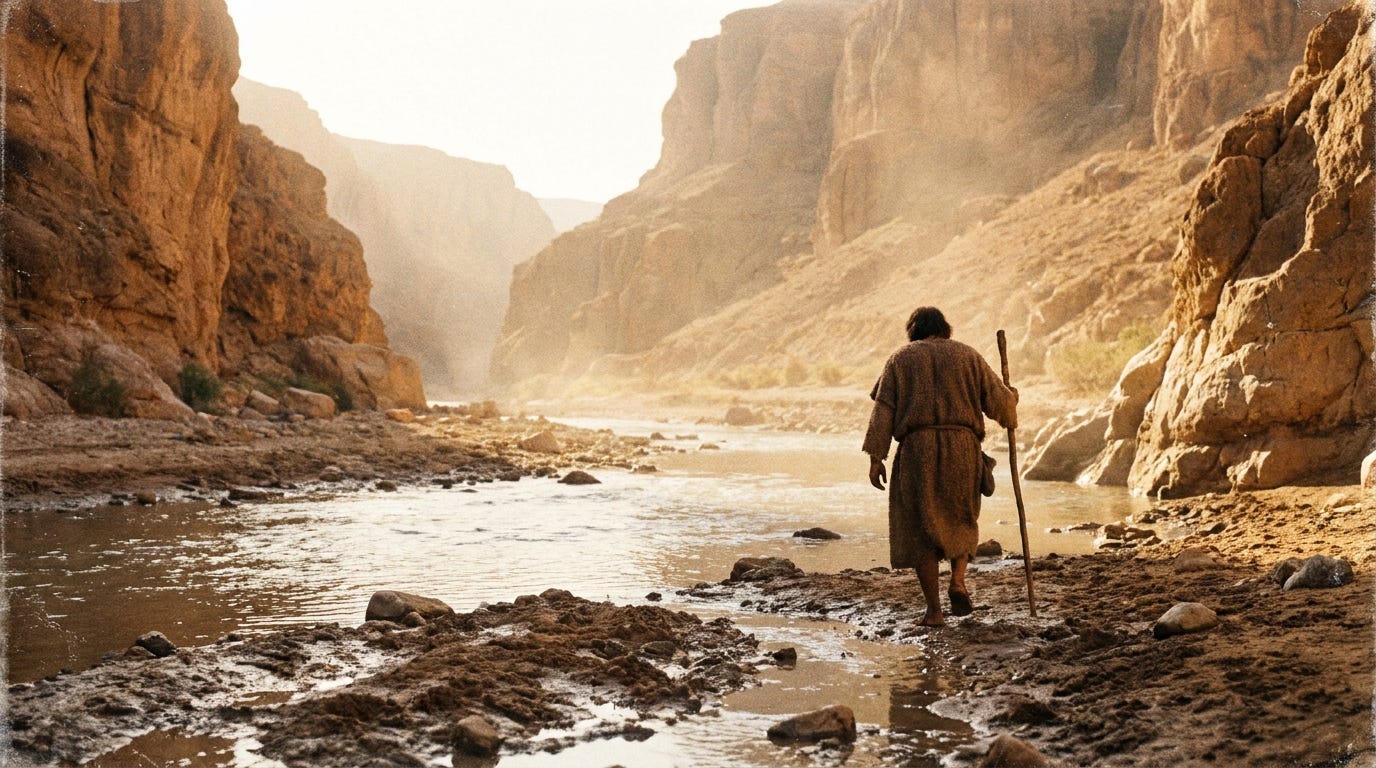
On the last night before Jacob met his brother, God came to him by the river Jabbok and wrestled with him until the sky went grey.
Alone at the ford of the Jabbok
Jacob wrestled with a man who was God Himself, and by sunrise Jacob knew it. He had already sent his two wives, his two maidservants, his eleven sons and everything he owned across the ford. "So Jacob was left all alone, and there a man wrestled with him until daybreak" (Genesis 32:24). The man gave no name and no reason, and the two of them fought on the riverbank in the dark.
Then the man ended the fight with one touch. "When the man saw that he could not overpower Jacob, he struck the socket of Jacob’s hip and dislocated it as they wrestled" (Genesis 32:25). Jacob could no longer win, and he still did not let go.
I will not let you go
Jacob asked for a blessing because by then he knew who he was holding, and God's blessing was what he had been grasping for all his life. As the sky lightened the man said, "Let me go, for it is daybreak," and Jacob replied, "I will not let you go unless you bless me" (Genesis 32:26).
Twenty years before, he had worn his brother's clothes to get a blessing from his blind father. That night he asked for one openly, with his hip out of its socket. Only hours earlier he had prayed God's own promise back to Him: "But You have said, ‘I will surely make you prosper’" (Genesis 32:12). At the river he kept hold of the One who had made it.
What is your name
God renamed Jacob Israel because he had struggled with God and with men and prevailed, and first God had him say his own name. "What is your name?" the man asked (Genesis 32:27), and Jacob gave the name that meant heel-grabber. Esau had said it bitterly: "Is he not rightly named Jacob? For he has cheated me twice" (Genesis 27:36).
The last time anyone asked who he was, his father said, "Which one are you, my son?" (Genesis 27:18), and Jacob answered, "I am Esau, your firstborn" (Genesis 27:19). By the Jabbok he told the truth. God knew his name already, and He answered the truth with a new one: "Your name will no longer be Jacob, but Israel, because you have struggled with God and with men, and you have prevailed" (Genesis 32:28). This is what it is to be known by God: He hears the true name from our own mouth, and He gives His blessing to the one who said it.
God's face in Jesus Christ
Jacob's night points to Jesus, because in Jesus we see the face of God and live. At sunrise Jacob said, "Indeed, I have seen God face to face, and yet my life was spared" (Genesis 32:30). Paul told the church in Corinth that God gives us "the light of the knowledge of the glory of God in the face of Jesus Christ" (2 Corinthians 4:6). Jacob saw that face once, at a river crossing, and limped away blessed. In Christ, God has turned His face toward us for good.
Hold on until daybreak
We are the people who hold on to what God has said. Jacob held on with a dislocated hip and walked into the sunrise blessed. When God has spoken to you, through Scripture or through an encouragement someone shared, write it down with the date in the Doxa app, and on the long nights read it back to Him the way Jacob did: "But You have said" (Genesis 32:12). This is how we come to know God and be known by Him: we keep hold of Him with His own promises, and He meets us there.
What has God said to you that you are still holding on to tonight?
Keep exploring. If this raised a question, or brought back something God has said to you, take it further. Ask Doxa. It answers from Scripture, real stories, and your own journey, free in your browser. No signup to start.
Download Doxa, the app for recording, weighing and remembering prophetic encouragement.
Also please feel free to read the Doxa Deeper Dive below where we delve into the original language and historical context.
The Doxa Deeper Dive
Why Israel Never Ate the Hip Tendon (Genesis 32:22–32)
Originally published on the Doxa blog.
Read Genesis 32:22–24 aloud in Hebrew and Jacob, the river and the fight all sound alike.
Jacob, the Jabbok and the dust
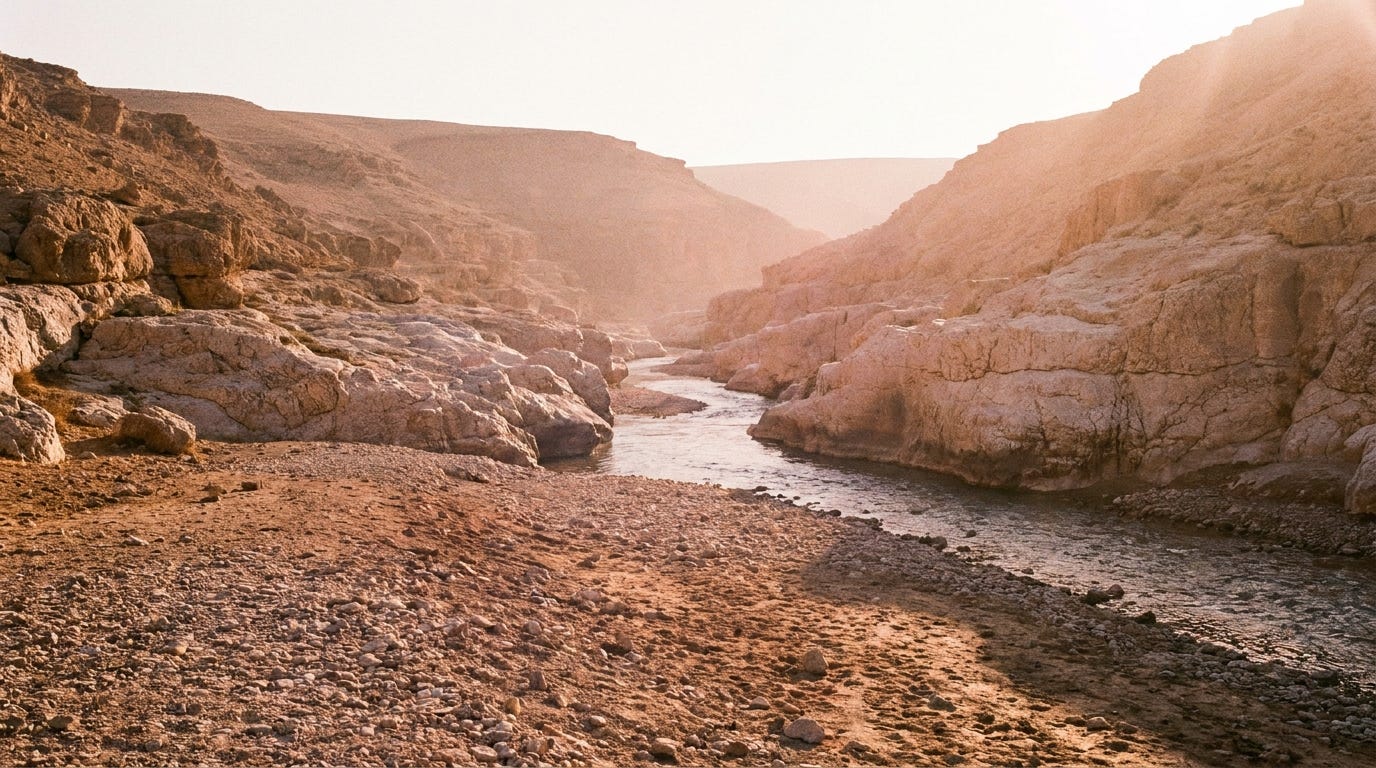
The Hebrew word for wrestled is abaq (H79), to grapple body to body, and it appears only in this scene, in verses 24 and 25. Its three Hebrew letters are the same as the word for fine dust, abaq (H80). Say them together and you hear it: Ya'aqov, Jacob (H3290), at the ford of the Yabboq, Jabbok (H2999), and vayye'aveq, a man wrestled. A Hebrew listener heard Jacob's name, the river and the struggle ring together, and no English translation can carry that sound.
The same dust word appears in other books of Scripture, and two of them show what it means. When God told Moses to toss furnace soot into the air before Pharaoh, He said, "It will become fine dust over all the land of Egypt" (Exodus 9:9). Nahum wrote of the LORD, "His path is in the whirlwind and storm, and clouds are the dust beneath His feet" (Nahum 1:3). That is abaq too. The God whose feet raise the clouds like dust came down to a gravel bank on the Jabbok and grappled in the dust with one frightened man until morning.
A name that became a verb
Jacob means he grabs the heel, and Israel means he struggles with God; the change is the difference between a man known for gripping his brother and a man known for gripping God. Jacob came out of the womb "grasping Esau’s heel; so he was named Jacob" (Genesis 25:26), from aqev (H6119), heel. The verb from the same root, aqav (H6117), means to take by the heel, to trip and supplant. When Esau said "he has cheated me twice" (Genesis 27:36), cheated was Jacob's own name turned into a verb.
The name kept that meaning in Israel for centuries. Jeremiah warned Judah, "do not trust any brother, for every brother deals craftily" (Jeremiah 9:4), and in Hebrew it reads kol ach aqov ya'qov, every brother will utterly Jacob. Israel, Yisra'el (H3478), carries God's own name, El, and the verb sarah (H8280), to strive. That verb is rare, and Hosea used it when he told the story again: "In the womb he grasped his brother’s heel, and in his vigor he wrestled with God" (Hosea 12:3). Hosea wrote the heel and the wrestling into one verse, the old grip and then the new one. Then he added what Genesis 32 does not record: "he wept and sought His favor" (Hosea 12:4). The man God renamed had held on in tears.
The one who gives the name
The man refused to give his name because that night the naming was His to do, and He had come to give Jacob a new one. In the ancient world the one who named someone held authority over them. Adam named the animals, and "whatever the man called each living creature, that was its name" (Genesis 2:19). When Joseph rose in Egypt, "Pharaoh gave Joseph the name Zaphenath-paneah" (Genesis 41:45), and in Babylon "the chief official gave them new names" to Daniel and his friends (Daniel 1:7). Rulers renamed the men who served them.
So when Jacob asked for his name, the man answered, "Why do you ask my name?" (Genesis 32:29) and blessed him instead. Centuries later the angel of the LORD gave Manoah the same answer, "Why do you ask my name" (Judges 13:18), and told him the name was "beyond comprehension" (Judges 13:18). Jacob could not take hold of God's name, and God already held his. Jacob named the place by what he had seen, Peniel (H6439), and set it down on the map.
The tendon at the table
The Israelites did not eat that tendon because it was where God touched Jacob, and every household that kept the custom remembered the night their father was renamed. Genesis 32:32 says, "Therefore to this day the Israelites do not eat the tendon attached to the socket of the hip." The phrase is gid (H1517) hanasheh, the tendon of the nasheh (H5384), a word found only in this verse.
That line was written to the first readers. Israel heard Genesis as the people called by Jacob's new name, and the words to this day pointed at their own kitchens. Each time a family cut that tendon out of a lamb's hindquarter and set it aside, the meal carried the memory of a man who would not let go of God. They knew the river too. Under Moses the tribes of Reuben and Gad received land "up to the Jabbok River, the border of the Ammonites" (Deuteronomy 3:16). The ford where their father crossed alone with a limp was a line on their own map. Every time they said their nation's name, they said what God had called a limping man at dawn.
Known by the name He gives
God remade Jacob by giving him a name, and He still names His people. Jesus looked at Andrew's brother and said, "You are Simon son of John. You will be called Cephas" (John 1:42). To the one who overcomes, the risen Christ promised "a white stone inscribed with a new name, known only to the one who receives it" (Revelation 2:17). To know God is to be known by Him that closely, by a name only He could give.
Israel kept that night in a place name and at the table so they would not forget what God had said. We are the people who remember too. When God speaks to you through Scripture, or through an encouragement someone shares with you, record it in the Doxa app with the date, weigh it against Scripture, and read it back on the night you are tempted to go back to grabbing heels. The God who wrestled in the dust at the Jabbok keeps every word He speaks, and He calls His people by name.
Keep exploring. If this raised a question, or brought back something God has said to you, take it further. Ask Doxa. It answers from Scripture, real stories, and your own journey, free in your browser. No signup to start.
Questions and comments are welcome below.
Download Doxa, the app for recording, weighing and remembering prophetic encouragement.