

Originally published on the Doxa blog.
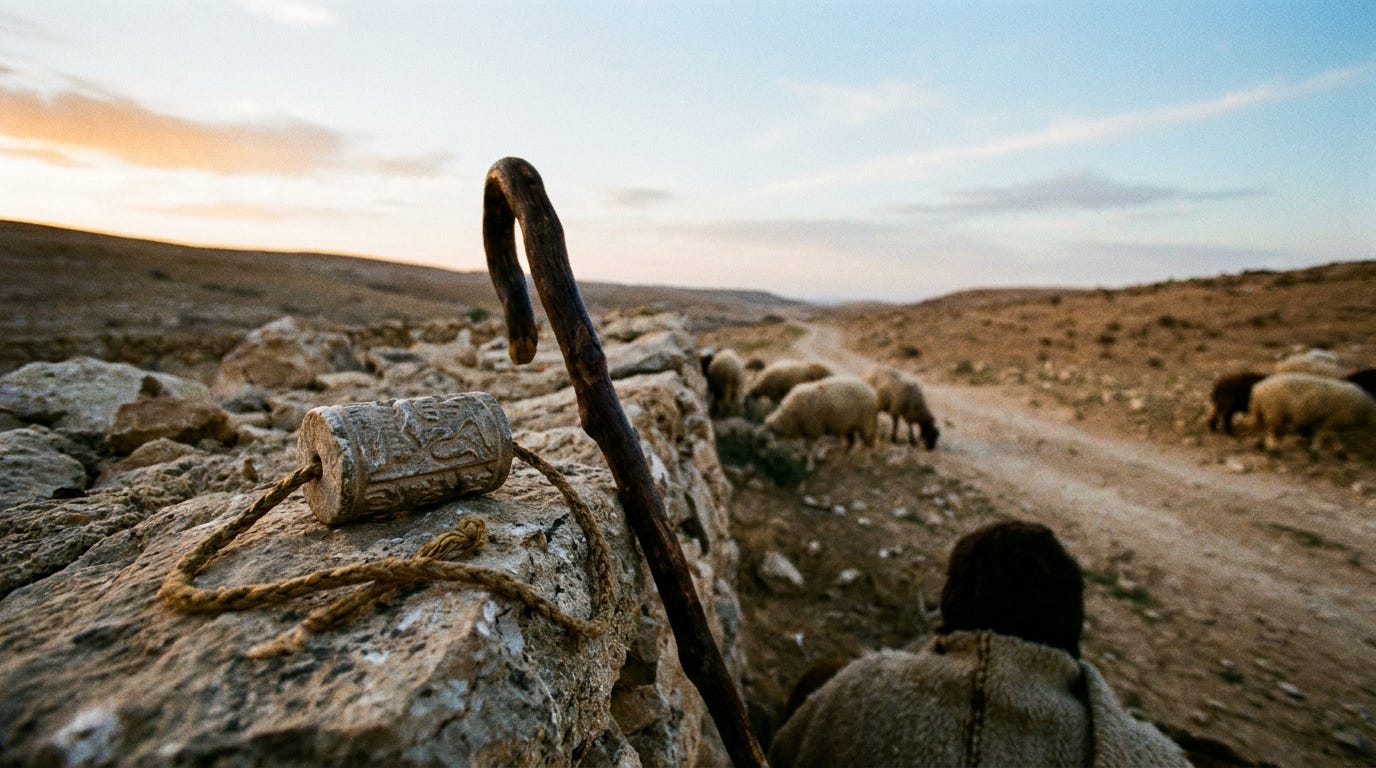
Judah looked at his own seal, his own cord and his own staff, and he told the truth: "She is more righteous than I, since I did not give her to my son Shelah" (Genesis 38:26). No one in these verses spoke of God, and He kept His promise to Abraham through every one of them. The widow Judah had sent away bore Perez, and Matthew wrote her into the family of Jesus: "Judah was the father of Perez and Zerah by Tamar" (Matthew 1:3).
The pledge Tamar kept
Tamar asked for Judah's seal, cord and staff because they carried his name, and she kept them as proof of who the father was. Judah's promise had failed her: "she saw that although Shelah had grown up, she had not been given to him as a wife" (Genesis 38:14). So when Judah went up to Timnah to shear his sheep, she put off her widow's garments, veiled her face and sat by the road.
Judah took her for a prostitute and offered a young goat. She asked for a pledge until it came, and he handed over "Your seal and your cord, and the staff in your hand" (Genesis 38:18). Then she went home and put on her widow's garments again. Hirah came back with the goat and could not find her. Judah let the matter drop: "Let her keep the items" (Genesis 38:23). He did not want to become a laughingstock. Tamar kept what he left in her hands, and in that same house God was keeping what He had sworn to Abraham: "through your offspring all nations of the earth will be blessed" (Genesis 22:18).
The question Tamar sent
Tamar sent Judah his own pledge with a question: "Whose seal and cord and staff are these?" (Genesis 38:25). Three months had passed, she was pregnant, and Judah had answered, "Bring her out!" and then, "Let her be burned to death!" (Genesis 38:24). As they brought her out, she sent the items with a message: "I am pregnant by the man to whom these items belong" (Genesis 38:25).
Her words, "Please examine them" (Genesis 38:25), echoed what Judah and his brothers had said to their father over Joseph's bloodied robe: "Examine it to see whether it is your son's robe or not" (Genesis 37:32). Judah had once helped deceive his father with a piece of evidence. Now the evidence was his, and he did not hide. "Judah recognized the items" (Genesis 38:26) and confessed it.
That confession was the start of a new Judah. Years later he offered himself as a slave in Egypt so that his youngest brother could go home: "Now please let your servant stay here as my lord's slave in place of the boy" (Genesis 44:33). "Our Lord descended from Judah" (Hebrews 7:14), and Jesus took the place of others all the way to the cross.
Perez and Zerah
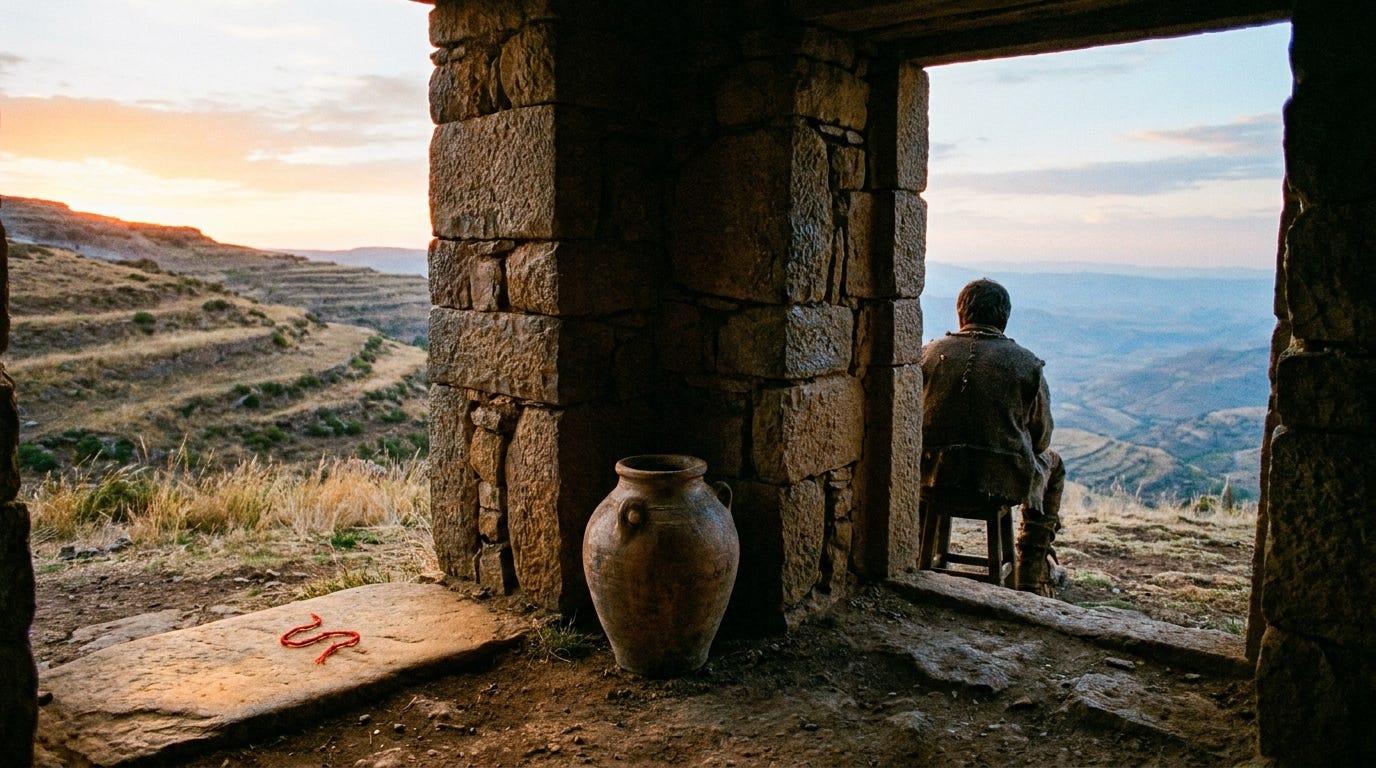
Perez and Zerah were the twins Tamar bore to Judah, and Perez became the forefather of King David and of Jesus. The midwife tied a scarlet thread on the first hand to appear, but the other twin came out first, and she said, "You have broken out first!" (Genesis 38:29). He was named Perez. The line of Perez ran through Boaz to David (Ruth 4:18–22), and on to Jesus. God brought life out of a house that had nearly lost its future.
Bring out what God has said
We are the people who remember what God has said. Tamar kept a pledge in her hands for months and brought it out on the day it mattered. God has given you promises of His own, and He keeps every one. When He speaks to you, or a friend shares an encouragement you have weighed and believe is from Him, write it down with the date in the Doxa app, and bring it out again when the day comes. God knew everything that happened in Judah's house and still kept His promise, and we come to know God the same way, by holding what He has said until the day He keeps it.
What has God said to you that you need to bring out and read again today?
Keep exploring. If this raised a question, or brought back something God has said to you, take it further. Ask Doxa. It answers from Scripture, real stories, and your own journey, free in your browser. No signup to start.
Download Doxa, the app for recording, weighing and remembering prophetic encouragement.
Also please feel free to read the Doxa Deeper Dive below where we delve into the original language and historical context.
The Doxa Deeper Dive
Tamar Sent Judah the Words That Once Fooled His Father (Genesis 38:12–30)
Originally published on the Doxa blog.
The same two Hebrew words reached Jacob in Genesis 37, with Joseph's robe dipped in goat's blood, and they reached Judah in Genesis 38. An English reader sees "Examine it" in Genesis 37:32 and "Please examine them" in Genesis 38:25. A Hebrew hearer heard one phrase spoken twice. The second time it brought Judah to the truth, and the LORD kept alive the line He had promised Abraham: "through your offspring all nations of the earth will be blessed" (Genesis 22:18).
Please examine
The Hebrew word behind examine in Genesis 38:25 is nakar (H5234), to look closely and recognize, and Tamar used the very phrase Judah's brothers had used to deceive their father. The brothers sent the robe to Jacob and said, "We found this. Examine it to see whether it is your son's robe or not" (Genesis 37:32). The next verse used the same verb: "His father recognized it" (Genesis 37:33). In Genesis 38 the phrase came back word for word, haker na (H4994), please examine, and Genesis 38:26 records the same verb: "Judah recognized the items" (Genesis 38:26).
Even the goat came back. The brothers "slaughtered a young goat" to stain the robe (Genesis 37:31). Judah promised Tamar "a young goat from my flock" (Genesis 38:17), and his payment was the thing that never reached her. The man who helped deceive his father with a goat and a piece of evidence was undone by a goat and a piece of evidence.
The same verb appears again four chapters later, when Joseph stood over his brothers in Egypt: "Although Joseph recognized his brothers, they did not recognize him" (Genesis 42:8). The family that hid the truth with nakar was brought back to it, one recognition at a time, by the God who knew every one of them. David prayed for that kind of seeing: "Search me, O God, and know my heart; test me and know my concerns" (Psalms 139:23).
A seal, a cord and a staff
Judah's seal, cord and staff were his signature and his identity in a world of clay tablets. A seal was a small carved stone, often worn on a cord around the neck and pressed or rolled into soft clay to sign a contract. The word is chotham (H2368), and the cord is pathil (H6616). A man's staff often bore his own carved marks and was known on sight.
The word for staff is matteh (H4294), and Israel used the same word for a tribe. When Moses counted the people, "those registered to the tribe of Judah numbered 74,600" (Numbers 1:27), and the word for tribe there is matteh. The first people to hear Genesis read were tribes named after Jacob's sons. They heard their forefather hand his staff to a veiled woman by the road, and they heard the tribe's future come back to him in her hand.
Those hearers also caught a change of words. Judah took Tamar for a zonah (H2181), the plain word for a prostitute (Genesis 38:15). When Hirah went looking, he asked for a qedeshah (H6948), from qadash (H6942), to be set apart, a word for a woman attached to a shrine. Israel's law named that word and closed the door on it: "No daughter or son of Israel is to be a shrine prostitute" (Deuteronomy 23:17). Judah's friend reached for the polite Canaanite term. Israel heard how far down Judah had gone among the Canaanites, and how far the LORD reached to bring his house back.
Breach and sunrise
Perez means a breach, a breaking through, and Zerah means a rising, like the sun at dawn. The midwife cried, "You have broken out first!" (Genesis 38:29), and both the verb and the name come from parats (H6555), to break through. Micah used it for the King who leads His people out: "One who breaks open the way will go up before them" (Micah 2:13). The name Perez (H6557) stood at the head of the royal line: "Now these are the generations of Perez" (Ruth 4:18). Israel blessed Boaz with it: "may your house become like the house of Perez, whom Tamar bore to Judah" (Ruth 4:12).
Zerah (H2226) comes from zarach (H2224), the verb for the sun coming up. In Genesis 38:26 Judah said, "She is more righteous than I," with the verb tsadaq (H6663), to be righteous. The same two roots, rising and righteousness, meet again in Malachi's promise: "But for you who fear My name, the sun of righteousness will rise with healing in its wings" (Malachi 4:2).
The scarlet thread on Zerah's wrist was shani (H8144), and scarlet came back in Jericho. Rahab tied "the scarlet cord in the window" (Joshua 2:21), and the word for cord there is tiqvah (H8615), which almost everywhere else in the Old Testament means hope: "to give you a future and a hope" (Jeremiah 29:11). Matthew put both women in the same list: "Judah was the father of Perez and Zerah by Tamar" (Matthew 1:3), and "Salmon was the father of Boaz by Rahab" (Matthew 1:5). God carried His promise to Abraham through a widow Judah had sent away and a woman of Jericho, and both stand in the family of Jesus.
The God who searches and knows His people brought Judah to say, "She is more righteous than I" (Genesis 38:26). Judah had helped hide the truth from his father with a robe, and he recognized it at last in his own seal. We come to know God and be known by Him as Judah did, when He brings the truth to light and keeps His promise all the same. We are the people who remember what God has said, so we keep it where we can examine it again. Record what He speaks to you, with the date, in the Doxa app, and when you read it back, look for His hand in all that followed. The God who kept Judah's line sent the Dawn Himself, "because of the tender mercy of our God, by which the Dawn will visit us from on high" (Luke 1:78).
Keep exploring. If this raised a question, or brought back something God has said to you, take it further. Ask Doxa. It answers from Scripture, real stories, and your own journey, free in your browser. No signup to start.
Questions and comments are welcome below.
Download Doxa, the app for recording, weighing and remembering prophetic encouragement.