

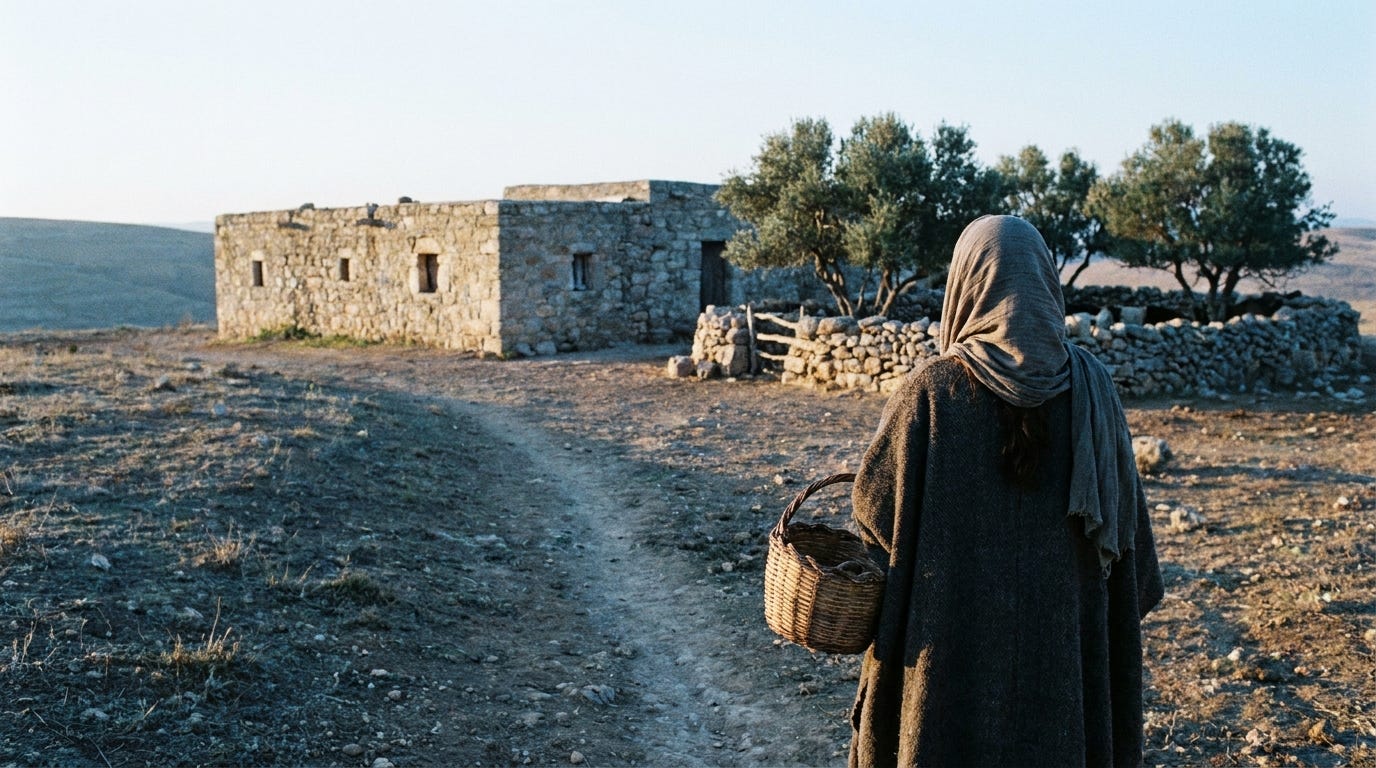
Originally published on the Doxa blog.
The LORD saw. Nobody in Judah's house spoke of God in these eleven verses, and nobody heard Him speak, yet twice Scripture says that what a son of Judah did was wicked "in the sight of the LORD" (Genesis 38:7). Judah had walked away from his family, and God saw his house all the same. The line that led to Jesus ran straight through it: "Judah was the father of Perez and Zerah by Tamar" (Matthew 1:3).
Judah left his brothers
Judah left his brothers soon after he had talked them into selling Joseph, and Scripture records no reason beyond the timing. "About that time, Judah left his brothers and settled near a man named Hirah, an Adullamite" (Genesis 38:1). In Adullam he married the daughter of a Canaanite man named Shua (Genesis 38:2).
His great-grandfather Abraham had made his servant swear by the LORD that he would not take a wife for Isaac "from the daughters of the Canaanites among whom I am dwelling" (Genesis 24:3). Isaac had sent Jacob away with the same charge: "Do not take a wife from the Canaanite women" (Genesis 28:1). Two generations had kept that charge, and Judah went his own way. Three sons were born in that house, and the LORD saw what they became.
In the sight of the LORD
Scripture never names Er's wickedness, and Onan's wickedness was refusing to give his dead brother a child while he slept with his brother's widow. "Er, Judah's firstborn, was wicked in the sight of the LORD; so the LORD put him to death" (Genesis 38:7). Judah told his second son to take Tamar and "raise up offspring for your brother" (Genesis 38:8). Onan made sure no child came, because "Onan knew that the offspring would not belong to him" (Genesis 38:9). "What he did was wicked in the sight of the LORD, so He put Onan to death as well" (Genesis 38:10).
Onan knew what he would lose, and he hid what he was doing. The LORD saw it. David prayed, "O LORD, You have searched me and known me" (Psalms 139:1), and in Judah's house that truth was fearful. The God who saw what Onan did also saw the widow he wronged, and Matthew wrote her name into the family of Jesus.
Sent home to wait
Judah sent Tamar home because he was afraid that Shelah, his last son, would die like his brothers. He told her, "Live as a widow in your father's house until my son Shelah grows up." Then the reason came out: "For he thought, 'He may die too, like his brothers'" (Genesis 38:11). Scripture names why Er and Onan died. Judah was afraid of Tamar instead.
So Tamar went back to her father's house as a widow, holding a promise from a man who did not mean to keep it. A long time passed, and when Shelah had grown up, "she had not been given to him as a wife" (Genesis 38:14). Judah's promise to Tamar came to nothing, and God kept His promise to Abraham through Judah's own house. From Tamar came Perez, from Perez came David (Ruth 4:18–22), and from David came Jesus, "the Lion of the tribe of Judah" (Revelation 5:5).
Hold what God has said
We are the people who remember what God has said. Tamar waited in her father's house on Judah's word. You can wait on a better one. If God has spoken to you, or a friend has shared an encouragement you have weighed and believe is from Him, write it down with the date in the Doxa app, and read it back while you are still waiting. This is how we come to know God and be known by Him: the God who saw everything in Judah's house kept every word He had spoken, and He sees you in the waiting too.
What has God said to you that you are still waiting on, and when did you last read it back?
Keep exploring. If this raised a question, or brought back something God has said to you, take it further. Ask Doxa. It answers from Scripture, real stories, and your own journey, free in your browser. No signup to start.
Download Doxa, the app for recording, weighing and remembering prophetic encouragement.
Also please feel free to read the Doxa Deeper Dive below where we delve into the original language and historical context.
The Doxa Deeper Dive
Er Backward Spells Evil, and God Kept Judah's Line (Genesis 38:1–11)
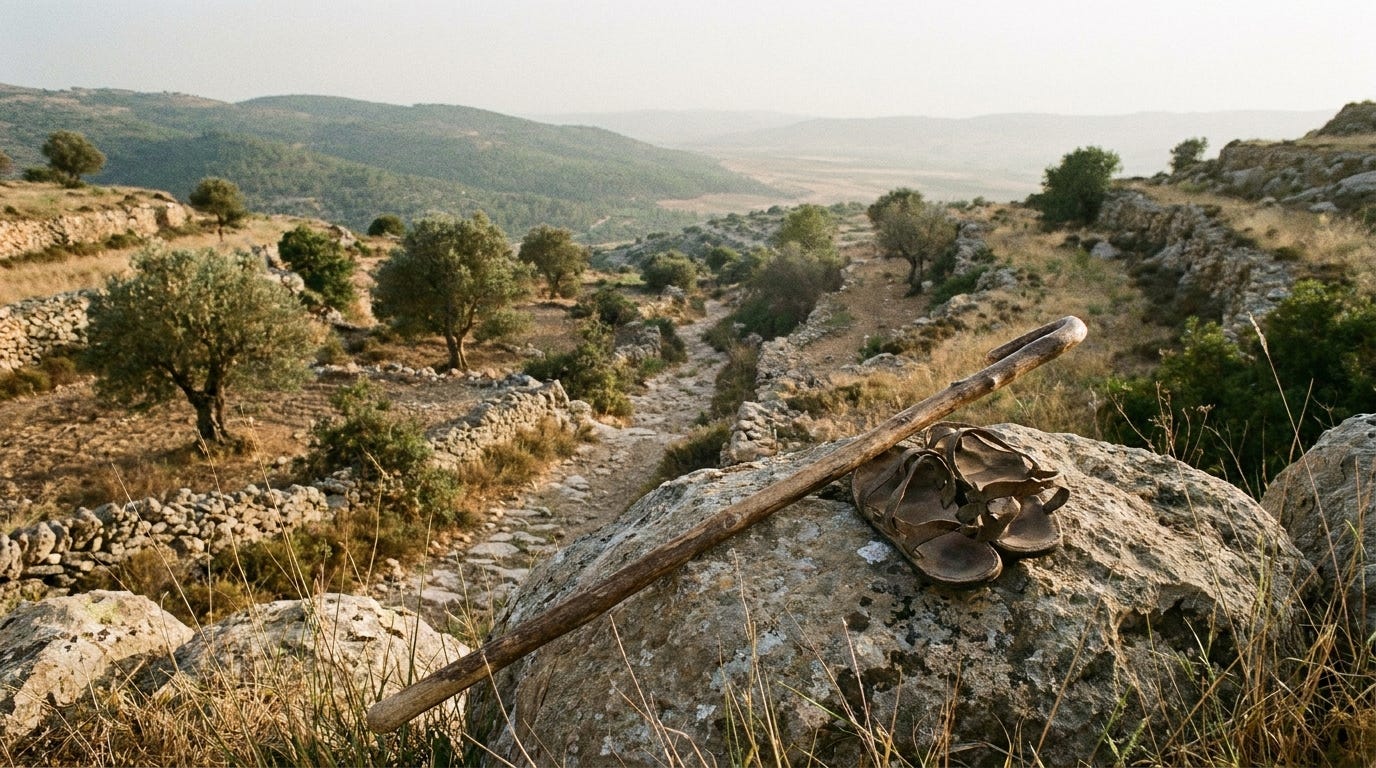
Originally published on the Doxa blog.
God told Jacob, "I will go down with you to Egypt" (Genesis 46:4), and the verb He used had already run through Joseph's story. The caravan was going down to Egypt, Jacob said he would go down to Sheol, Judah went down from his brothers, and Joseph was taken down to Egypt. In the middle of that descent the LORD saw Judah's house and kept the promise He had sworn to Abraham: "through your offspring all nations of the earth will be blessed" (Genesis 22:18).
Judah went down
The Hebrew word behind left in Genesis 38:1 is yarad (H3381), to go down, and it ties Judah's move to a run of descents in the story of Joseph. Where the English reads "Judah left his brothers" (Genesis 38:1), the Hebrew says Judah went down. Two verses earlier Jacob used the same verb in his grief, "I will go down to Sheol mourning for my son" (Genesis 37:35), and so did the caravan "on their way down to Egypt" (Genesis 37:25). The chapter after it opens with it again: "Joseph had been taken down to Egypt" (Genesis 39:1).
An English reader meets left, down, go down and taken down. A Hebrew hearer heard one verb in four scenes running. Joseph was taken down against his will. Judah went down by his own choice.
Judah's move was downhill on the map as well. Jacob lived in "the Valley of Hebron" (Genesis 37:14), up in the hill country, and Adullam lay west of it among the towns Joshua listed as "in the foothills" (Joshua 15:33, Joshua 15:35). Judah walked downhill, away from his father's tent, toward the Canaanite towns of the lowland.
Then God used the verb Himself. When Jacob set out for Egypt, God spoke to him in a vision at night: "Do not be afraid to go down to Egypt, for I will make you into a great nation there" (Genesis 46:3). Then He said, "I will go down with you to Egypt, and I will surely bring you back" (Genesis 46:4). The God who speaks went down with His people. He had already seen what happened in Judah's house on the way.
Er, wicked in His sight
The LORD put Er to death because Er was wicked in His sight, and Scripture never says what he did. In Hebrew his name and that verdict use the same two letters. The name Er (H6147) is written ayin, resh. The word for wicked, ra (H7451), the everyday Hebrew word for evil, is resh, ayin. Read Er backward and it spells evil. Whatever the name meant to Judah when he gave it, a Hebrew hearer could not miss the sound and the letters: "Er, Judah's firstborn, was wicked in the sight of the LORD; so the LORD put him to death" (Genesis 38:7).
Where the English reads sight, the Hebrew has the word for eyes, ayin (H5869). Scripture never says who else knew what Er did. The eyes of the LORD saw it. Chronicles kept the verdict word for word in Judah's genealogy: "Er, Judah's firstborn, was wicked in the sight of the LORD. So the LORD put him to death" (1 Chronicles 2:3). The same phrase became the verdict line of Israel's history: "And the Israelites did evil in the sight of the LORD and served the Baals" (Judges 2:11).
Genesis 37 never names God, from the dreams to the bloodied robe. Here, in Judah's household away from his brothers, the LORD is named for the first time in the story of Joseph and his brothers, and He is named as the One who sees. He is named again over Onan, and the next chapter opens with "And the LORD was with Joseph" (Genesis 39:2). The same eyes saw both sons of Jacob, the one who went down and the one who was taken down.
Offspring for your brother
The duty of a brother-in-law was to marry his dead brother's childless widow and give her a son who would carry the dead brother's name. Judah's words to Onan, "Perform your duty as her brother-in-law" (Genesis 38:8), are one Hebrew verb, from yabam (H2992), to act as a husband's brother. Law collections from Israel's neighbours, the Hittite laws and the Middle Assyrian laws among them, also made room for a dead man's brother to marry his widow. In a world where land and a name passed from father to son, a man who died childless lost both, and his widow lost her place in the family.
The word for offspring in verses 8 and 9 is zera (H2233), seed, and it carries the whole promise of Genesis. God said to the serpent, "I will put enmity between you and the woman, and between your seed and her seed" (Genesis 3:15). He swore to Abraham, "through your offspring all nations of the earth will be blessed" (Genesis 22:18). Paul read that seed as one Person, "meaning One, who is Christ" (Galatians 3:16). Onan, a grandson of Jacob, "knew that the offspring would not belong to him" (Genesis 38:9), and he withheld that seed from his brother inside the family that carried God's promise of it.
The first people to hear Genesis read heard it with their own law in their ears. Moses gave Israel the same duty: "Her husband's brother is to take her as his wife and fulfill the duty of a brother-in-law for her" (Deuteronomy 25:5). The reason followed: "The first son she bears will carry on the name of the dead brother, so that his name will not be blotted out from Israel" (Deuteronomy 25:6). Judah was the tribe of the scepter (Genesis 49:10), and later Israel knew where Judah's line went. The elders at Bethlehem blessed Boaz, "may your house become like the house of Perez, whom Tamar bore to Judah, because of the offspring the LORD will give you by this young woman" (Ruth 4:12), and the generations of Perez ended, "Jesse was the father of David" (Ruth 4:22). So Israel heard their royal tribe nearly end in one frightened father's house, and heard the LORD keep the seed alive through the widow Judah sent away.
Onan's verb was yada (H3045), to know, and all he knew was his own loss. The God who knows His people kept His word to them, and this is how we come to know God and be known by Him. We are the people who remember what He has said on the way down. Record what He has spoken to you, with the date, in the Doxa app, and read it back in the low places. He is the God who goes down with His people, and in Jesus, the promised seed, He came down Himself: "For I have come down from heaven" (John 6:38).
Keep exploring. If this raised a question, or brought back something God has said to you, take it further. Ask Doxa. It answers from Scripture, real stories, and your own journey, free in your browser. No signup to start.
Questions and comments are welcome below.
Download Doxa, the app for recording, weighing and remembering prophetic encouragement.