

Originally published on the Doxa blog.
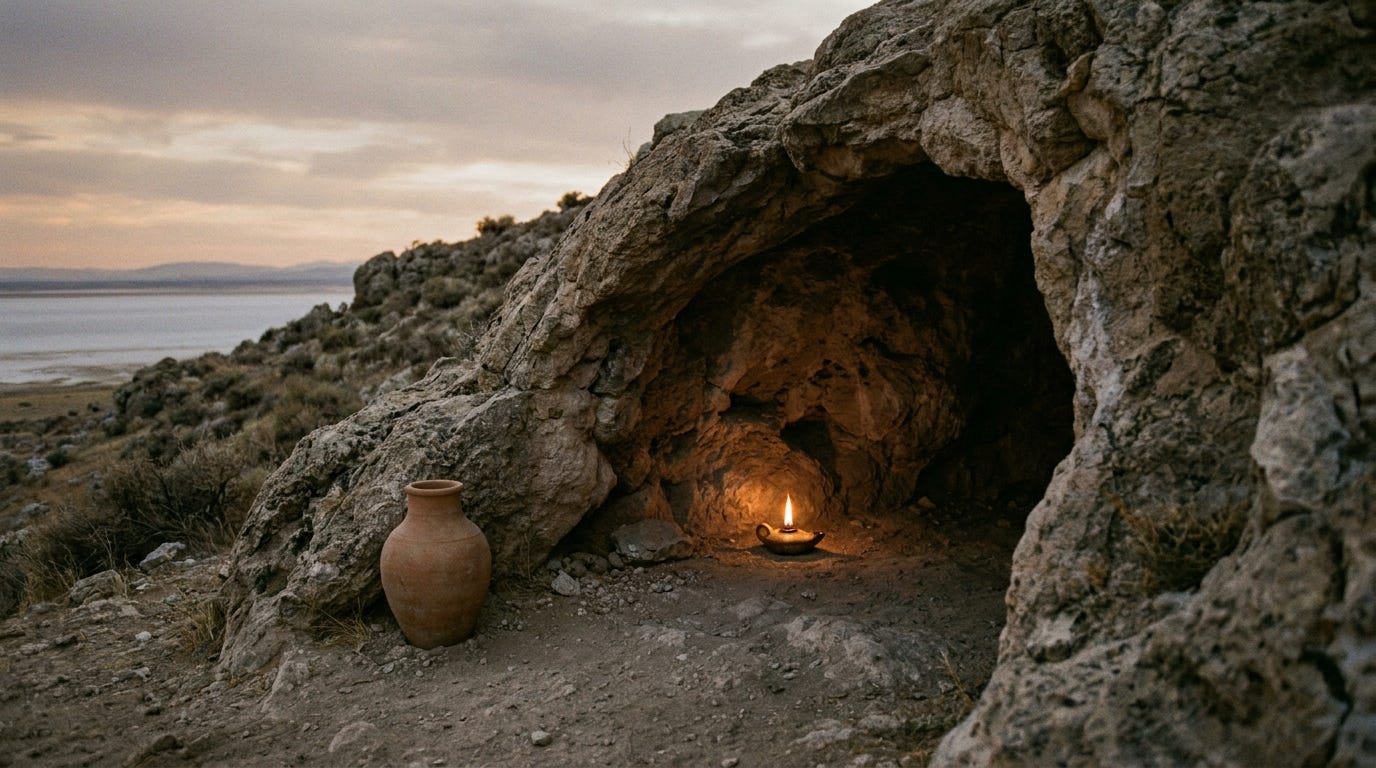
Lot does not stay long in Zoar. The small town he begged the angel for starts to frighten him, "for he was afraid to stay in Zoar" (Genesis 19:30), so he takes his two daughters up into the mountains, the same mountains he told the angel he could never reach, and the three of them live in a cave.
Not long ago he sat in the gateway of Sodom. Now he has a cave, two daughters and a supply of wine.
The older daughter does the thinking. "Our father is old, and there is no man in the land to sleep with us, as is the custom over all the earth" (Genesis 19:31). "Come, let us get our father drunk with wine so we can sleep with him and preserve his line" (Genesis 19:32).
These are the daughters Lot offered to the crowd at his door in Sodom.
What happened to Lot after Sodom?
Nobody in these nine verses asks God anything, and God is never named. Abraham, who had pleaded with the LORD for this family, was still in the land. The God who "led them safely out of the city, because of the LORD's compassion for them" (Genesis 19:16) had held their hands on the way out of Sodom. The plan gets made in a cave, out of fear, with that rescue not long behind them.
Twice Genesis says the same thing about Lot: "he was not aware when she lay down or when she got up" (Genesis 19:33). The Hebrew behind "was not aware" is lo yada, he did not know, the ordinary verb for knowing a person and the one Scripture uses for knowing God. The last thing Genesis tells us about Lot is that he did not know what was happening in his own family. Genesis records nothing more that Lot said or did.
Hold that beside a psalm. "O LORD, You have searched me and known me" (Psalms 139:1). "You know when I sit and when I rise" (Psalms 139:2). Lot slept through the lying down and the getting up. God is awake to every one of yours.
How does Genesis 19 connect to Jesus?
Two sons are born. "He is the father of the Moabites of today" (Genesis 19:37), and the younger's son "is the father of the Ammonites of today" (Genesis 19:38). Centuries later a widow from Moab named Ruth follows her Israelite mother-in-law home and says, "your people will be my people, and your God will be my God" (Ruth 1:16). Matthew puts her in the family of Jesus: "Boaz the father of Obed by Ruth" (Matthew 1:5). A few generations on, King Solomon's son Rehoboam is on the same list (Matthew 1:7), and "His mother's name was Naamah the Ammonite" (1 Kings 14:21). Each of the sons from the cave has a descendant in the line of the Messiah. A Moabite woman who chose the God of Israel was carried into His Son's own family tree.
That is the whole difference between Lot's end and Ruth's beginning. One family planned in the dark and forgot the God who had just rescued it. Ruth heard about Him, took Him as her God, and was known by Him. Knowing God and being known by Him is the reason we keep what He says.
So when you are frightened and it feels like there is no one left in the land, read back what God has already said to you before you settle the plan. Get out the verse you underlined, or the encouragement someone shared that you wrote down with its date, and read it over the thing you are about to do. Then ask Him about it.
What plan are you making this week that you have not yet set beside what God has said to you?
Keep exploring. If this raised a question, or brought back something God has said to you, take it further. Ask Doxa. It answers from Scripture, real stories, and your own journey, free in your browser. No signup to start.
Download Doxa, the app for recording, weighing and remembering prophetic encouragement.
Also please feel free to read the Doxa Deeper Dive below where we delve into the original language and historical context.
The Doxa Deeper Dive
He Did Not Know: How Lot's Story Ends and Ruth's Begins
Originally published on the Doxa blog.
An English reader of Genesis 18 and 19 meets four different verbs: chosen, have relations, slept with and was not aware. The Hebrew has one. It is yada (H3045), to know, and it runs through both chapters.
Why does Genesis say Lot was not aware?
It starts with God speaking about Abraham. "For I have chosen him, so that he will command his children and his household after him to keep the way of the LORD by doing what is right and just" (Genesis 18:19). Chosen is yada. Read literally, God says, I have known him. The LORD's knowing comes first, and what it produces is a household that keeps His way.
Then the verb goes down to Sodom. The men at Lot's door shout, "Send them out to us so we can have relations with them!" (Genesis 19:5), and in Hebrew they are demanding to know the visitors. Lot answers with "two daughters who have never slept with a man" (Genesis 19:8), daughters who have not known a man. In the cave the word comes back twice more, both times with a negative: Lot "was not aware when she lay down or when she got up" (Genesis 19:33), and again in verse 35.
So the two chapters ask who knows whom. They open with the LORD knowing Abraham and close on Lot knowing nothing at all, in the last lines Genesis ever gives him.
Two more verbs sit beside it in verse 33. Lay down is shakab (H7901) and got up is qum (H6965). Israel heard that exact pair again in the command Moses gave them for every day: "And you shall teach them diligently to your children and speak of them when you sit at home and when you walk along the road, when you lie down and when you get up" (Deuteronomy 6:7). God's words were meant to fill a household's lying down and getting up. In Lot's cave that same lying down and getting up passed with no word from God in it, and the father of the house knew nothing. The psalm puts yada and qum side by side the other way round: "You know when I sit and when I rise" (Psalms 139:2).
Why did the daughters appeal to the way of all the earth?
The older daughter justifies the plan with a phrase: "as is the custom over all the earth" (Genesis 19:31). The Hebrew is kederek kol-ha'arets, literally according to the way of all the earth. The word for way is derek (H1870), the same word God used one chapter earlier when He said Abraham's household would "keep the way of the LORD" (Genesis 18:19). An English reader sees custom and way and never hears the echo. A Hebrew listener heard two ways laid side by side: the way of the LORD, taught by a man God knew, and the way of all the earth, reasoned out by a young woman in a cave.
Her appeal fails even on its own terms. The nations around Israel had written law codes, and the best known of them, the Laws of Hammurabi from Babylon, set out in law 154 that a man who lay with his daughter was to be driven out of his city. The way of all the earth did not allow what the daughters did. She reaches for a general rule to cover a private plan, which is how people reason when they have stopped asking God.
How did Israel first hear this story?
Twice the narrator steps out of the story and speaks to his listeners: Moab "is the father of the Moabites of today" (Genesis 19:37), and Ben-ammi "is the father of the Ammonites of today" (Genesis 19:38). The first hearers knew these people. Israel's last camp before the Jordan was "in the plains of Moab near the Jordan, across from Jericho" (Numbers 22:1), where "Moab dreaded the Israelites" (Numbers 22:3) and its king hired Balaam to curse them. At Shittim "the men began to indulge in sexual immorality with the daughters of Moab" (Numbers 25:1), who "also invited them to the sacrifices for their gods" (Numbers 25:2). Moses died "in the land of Moab" (Deuteronomy 34:5).
So this story reached Israel as the family history of the neighbours across the river, and it said two things. It explained a people whose daughters had once drawn Israel to other gods. It also told Israel that these were relatives. On the way through, God had said, "Do not harass the Moabites or provoke them to war, for I will not give you any of their land, because I have given Ar to the descendants of Lot as their possession" (Deuteronomy 2:9), and the same of Ammon (Deuteronomy 2:19). The same chapter had just said God "remembered Abraham, and He brought Lot out" (Genesis 19:29). The land of Lot's sons was more of that remembering.
What does ammi, my people, have to do with Ruth?
Both names the daughters chose point back into their own family. Moab sounds like me'ab, from father, and the Greek translation of Genesis adds the words from my father to spell it out. Ben-ammi (H1151) is son of my people, from am (H5971), people or kin. The younger daughter named her son for a line kept inside one family.
Now hear Ruth, a woman of Moab, standing on the road to Bethlehem: "your people will be my people, and your God will be my God" (Ruth 1:16). In Hebrew the middle of that line is ammek ammi, your people, my people. The syllable Lot's younger daughter put in her son's name, ammi, comes back in the mouth of Lot's descendant Ruth and now points outward, to Israel and to Israel's God. She joins a people by taking their God.
Hosea later uses that same word for the covenant itself. God tells him to name a child "Lo-ammi, for you are not My people" (Hosea 1:9), and then promises, "I will say to those called 'Not My People,' 'You are My people,' and they will say, 'You are my God'" (Hosea 2:23). Just before it He says, "you will know the LORD" (Hosea 2:20). Peter hands the promise to believers from the nations: "Once you were not a people, but now you are the people of God" (1 Peter 2:10).
Lot ended in a cave, not knowing. His descendant Ruth took the God of Israel as her God (Ruth 1:16) and became great-grandmother of David, and God's ammi now reaches everyone He calls His own through Jesus. To be known by God is to be named His people, and the way we stay in that knowing is the way Deuteronomy gave: His words spoken aloud in the house, when we lie down and when we get up. Say back to Him tonight what He has said to you, and read it again in the morning.
Keep exploring. If this raised a question, or brought back something God has said to you, take it further. Ask Doxa. It answers from Scripture, real stories, and your own journey, free in your browser. No signup to start.
Questions and comments are welcome below.
Download Doxa, the app for recording, weighing and remembering prophetic encouragement.