

Originally published on the Doxa blog.
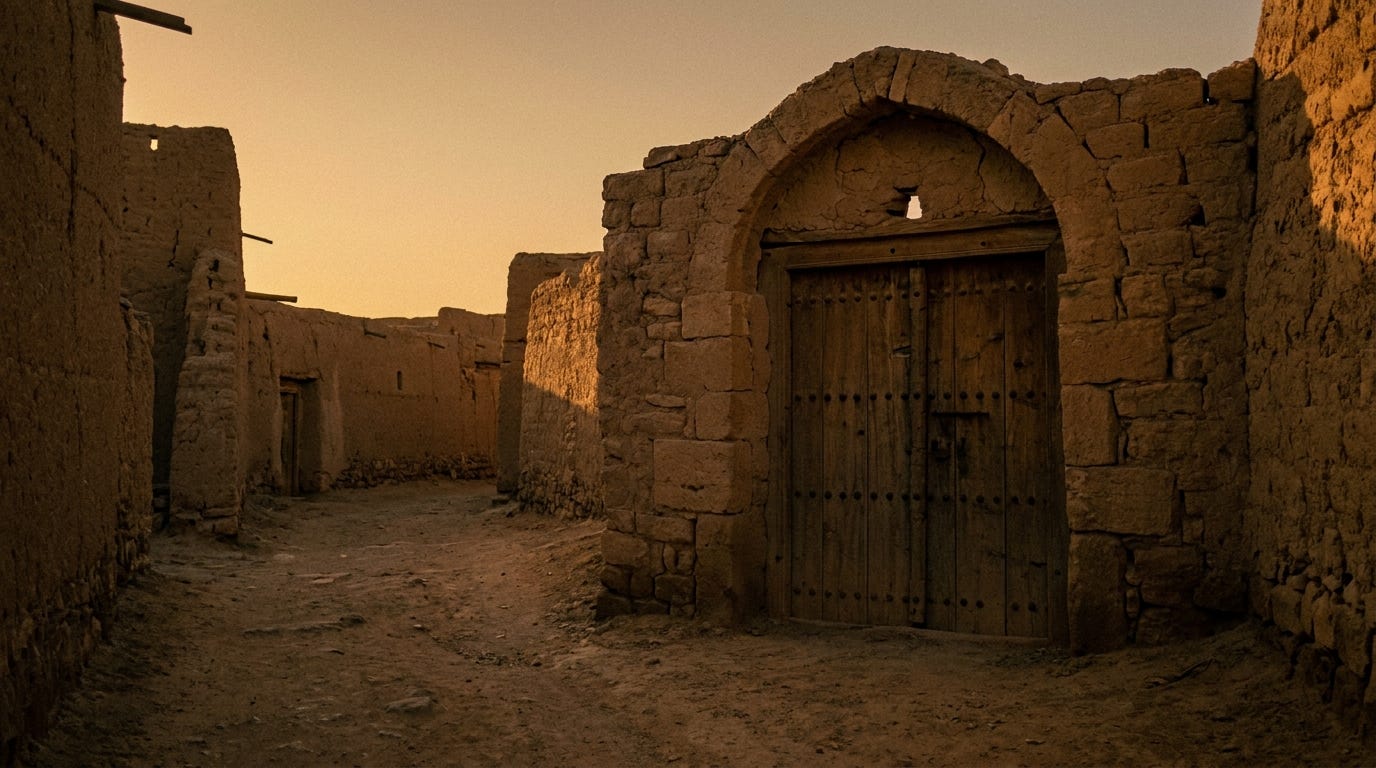
It is evening when the two strangers walk into Sodom, and Lot is sitting in the gateway of the city (Genesis 19:1). The gate was where a town's older men sat to settle disputes. Lot has lived here long enough to have a seat.
He does what his uncle Abraham did under the oak at Mamre. He gets up, bows to the ground, and begs the strangers to stay. "He prepared a feast for them and baked unleavened bread, and they ate" (Genesis 19:3).
Before anyone is in bed, the house is surrounded by "all the men of the city of Sodom, both young and old" (Genesis 19:4). They want the guests brought out. Lot steps outside, shuts the door behind him, and offers them his own two daughters instead. Genesis records it without comment. The crowd turns on him: "This one came here as a foreigner, and he is already acting like a judge!" (Genesis 19:9).
The strangers reach out, pull Lot inside, and shut the door. The guests strike the men outside with blindness, and they wear themselves out trying to find the door.
What did the angels tell Lot to do?
Now the guests say why they came. "Get them out of here, because we are about to destroy this place" (Genesis 19:12–13). For the first time in the story, Lot is carrying a message from the LORD.
He goes out into the dark to the men pledged to marry his daughters. "Get up," he said. "Get out of this place, for the LORD is about to destroy the city!" (Genesis 19:14).
"But his sons-in-law thought he was joking" (Genesis 19:14).
The Hebrew behind joking is tsachaq, the ordinary word for laughing. It is the same word from the tent at Mamre, when Sarah heard God promise her a son and "she laughed to herself" (Genesis 18:12). Sarah laughed at a promise, and God gave her the son and had him named Isaac, he laughs. The sons-in-law laughed at a warning, and they stayed where they were.
Why would they laugh? Look at what they knew of Lot. Years earlier he had seen that this plain was "well watered like the garden of the LORD, like the land of Egypt" (Genesis 13:10), and he chose it for that. He moved toward Sodom, then into it, then into its gate. Nothing in how he lived had looked like a man who listened to God, so when he said the LORD's name in the dark, it sounded like a bad joke.
This is what it costs to not know God. Those men had never known Him, so His warning meant nothing to them. Lot had once walked beside Abraham and heard what God said to him, and he had kept so little of it that his own family could not take him seriously.
How does Genesis 19 point to Jesus?
Jesus told this story Himself. "It was the same in the days of Lot: People were eating and drinking, buying and selling, planting and building. But on the day Lot left Sodom, fire and sulfur rained down from heaven and destroyed them all" (Luke 17:28–29). The warning came in the middle of ordinary days like those, and to the men who laughed it stayed a joke until the morning the fire fell.
He also stands at a door. In Sodom a crowd pushed at a door to break it. Jesus says, "Behold, I stand at the door and knock. If anyone hears My voice and opens the door, I will come in and dine with him, and he with Me" (Revelation 3:20).
So when God says something to you that sounds too big or too strange, weigh it before you laugh it off. Write it down the way you heard it, with the date, and read it again next week.
What has God said to you that you were tempted to laugh off?
Keep exploring. If this raised a question, or brought back something God has said to you, take it further. Ask Doxa. It answers from Scripture, real stories, and your own journey, free in your browser. No signup to start.
Download Doxa, the app for recording, weighing and remembering prophetic encouragement.
Also please feel free to read the Doxa Deeper Dive below where we delve into the original language and historical context.
The Doxa Deeper Dive
Unleavened Bread in Sodom: Why Israel Heard Passover in Genesis 19
Originally published on the Doxa blog.
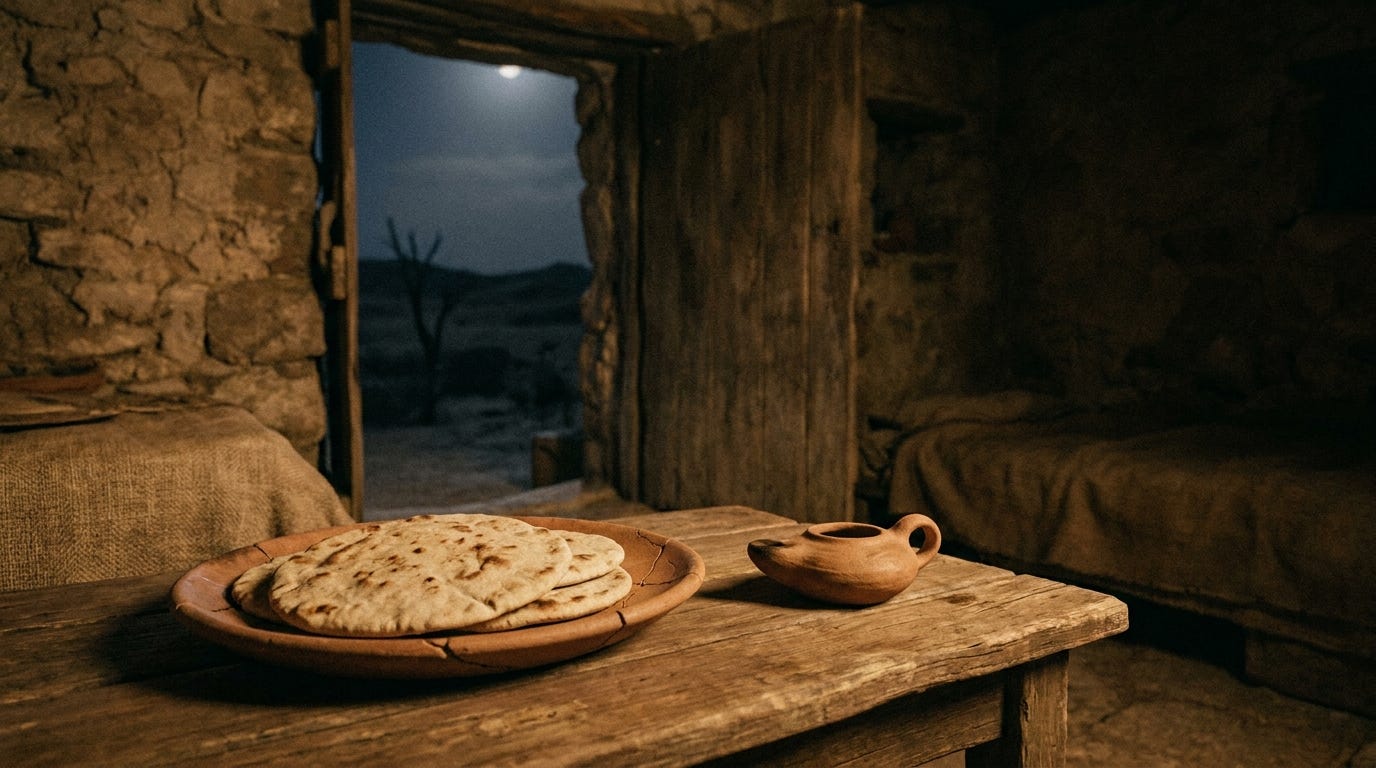
Lot bakes matsot for his guests. That is the word Israel used for the flat bread of Passover, and Genesis 19:3 is the first time it appears in the Bible. For a listener in ancient Israel, the bread was the first of several words in this passage that sounded like a night they kept every spring.
Why does Lot bake unleavened bread in Genesis 19?
The word is matsah (H4682), bread made without yeast. After Genesis 19:3 it next appears in Exodus 12, on the night the LORD struck Egypt. Israel was to eat the lamb "along with unleavened bread and bitter herbs" (Exodus 12:8), dressed for the road, because "You are to eat in haste; it is the LORD's Passover" (Exodus 12:11).
What does the door mean in Genesis 19?
Two Hebrew words carry the scene. petach (H6607) is the doorway, the opening itself; deleth (H1817) is the wooden door that swings shut across it. Lot goes out through the petach and shuts the deleth behind him (verse 6). The mob tries to break the deleth (verse 9). The guests shut the deleth (verse 10). The men at the petach are struck blind and cannot find the petach (verse 11). An English reader sees door and entrance and moves on. A Hebrew listener hears the storyteller come back to the same threshold again and again.
Follow petach back to its first appearance. God warned Cain before the first murder: "sin is crouching at your door; it desires you, but you must master it" (Genesis 4:7). Cain did not master it. By Genesis 19 what God described to one man has grown into a whole city, "both young and old," crowding a doorway and wanting what is inside.
How did Israel first hear Genesis 19?
Now follow petach forward into the night Israel never forgot. "None of you shall go out the door of his house until morning" (Exodus 12:22). The LORD "will pass over that doorway; so He will not allow the destroyer to enter your houses and strike you down" (Exodus 12:23).
The destroyer is shachath (H7843), in a form that means one who destroys. The angels in Lot's house use the same form of the same verb about themselves: "we are about to destroy this place" (Genesis 19:13), and Lot repeats it to his sons-in-law, "the LORD is about to destroy the city!" (Genesis 19:14). Genesis has used the word before. Before the flood "all living creatures on the earth had corrupted their ways," and God said, "I will destroy both them and the earth" (Genesis 6:12–13). Corrupted and destroy are both shachath, one verb for what people do to the world and for what God then does to them. Abraham had asked, "Will not the Judge of all the earth do what is right?" (Genesis 18:25), and here is the answer taking shape: He sends destroyers to a city that has destroyed itself, and He sends them first to pull Lot's family out.
Put these together and hear Genesis 19 as the tribes at Sinai or in the land would first have heard it. Bread baked with no time to wait. A household shut behind a door through a night of destruction. Destroyers in the city, and a family hurried out. Israel told every one of those details to their children each spring. They also knew why Lot was in Sodom at all: he chose its plain because it looked "like the land of Egypt" (Genesis 13:10). The place that looked like Egypt ended up with Egypt's night. And they knew what had brought their own households through that night. God told them what to do at the door, and they did it: they stayed inside until morning because He had said so.
Where does Jesus pick up the door of Genesis 19?
The New Testament picks up the same door. The Greek thura (G2374) is the word in Jesus' warning, "After the master of the house gets up and shuts the door, you will stand outside knocking" (Luke 13:25), and His answer to the ones outside is "I do not know where you are from." It is also the word when Jesus says, "I am the gate. If anyone enters through Me, he will be saved" (John 10:9).
In the same teaching He says what makes someone His: "I know My sheep and My sheep know Me" (John 10:14), and "the sheep listen for his voice" (John 10:3). Lot was saved by hands that reached out through the door and pulled him in. The men who laughed stayed in the city because they would not hear. The people who go in through that door are the ones He knows, and who know Him. He knows His own, and they recognise His voice because they have listened to it before. Keep what He has said to you where you can find it and read it back, so you know His voice the next time He speaks.
Keep exploring. If this raised a question, or brought back something God has said to you, take it further. Ask Doxa. It answers from Scripture, real stories, and your own journey, free in your browser. No signup to start.
Questions and comments are welcome below.
Download Doxa, the app for recording, weighing and remembering prophetic encouragement.
These articles are such a prophetic guidepost Garth. Keep up the important work.