

Originally published on the Doxa blog.
God had spoken to Laban in the night, and in the morning Laban had to say God's words out loud to the man he had chased for seven days.
Laban caught up in Gilead
Laban reached Jacob's camp after seven days, accused him of carrying off his daughters, told him what God had said the night before, and then asked about his gods. "Now Jacob had pitched his tent in the hill country of Gilead when Laban overtook him" (Genesis 31:25). Laban spoke first: "You have deceived me and carried off my daughters like captives of war!" (Genesis 31:26).
Then he said the sentence that held his own hand back: "I have power to do you great harm, but last night the God of your father said to me, 'Be careful not to say anything to Jacob, either good or bad'" (Genesis 31:29). Laban repeated God's warning word for word, in front of everyone. The God who speaks had reached Laban before Laban reached Jacob.
Sitting on the gods
Rachel hid her father's household idols in her camel's saddlebag and sat on them while Laban searched her tent. Laban asked, "why have you stolen my gods?" (Genesis 31:30), and Jacob, who knew nothing about it, swore, "If you find your gods with anyone here, he shall not live!" (Genesis 31:32).
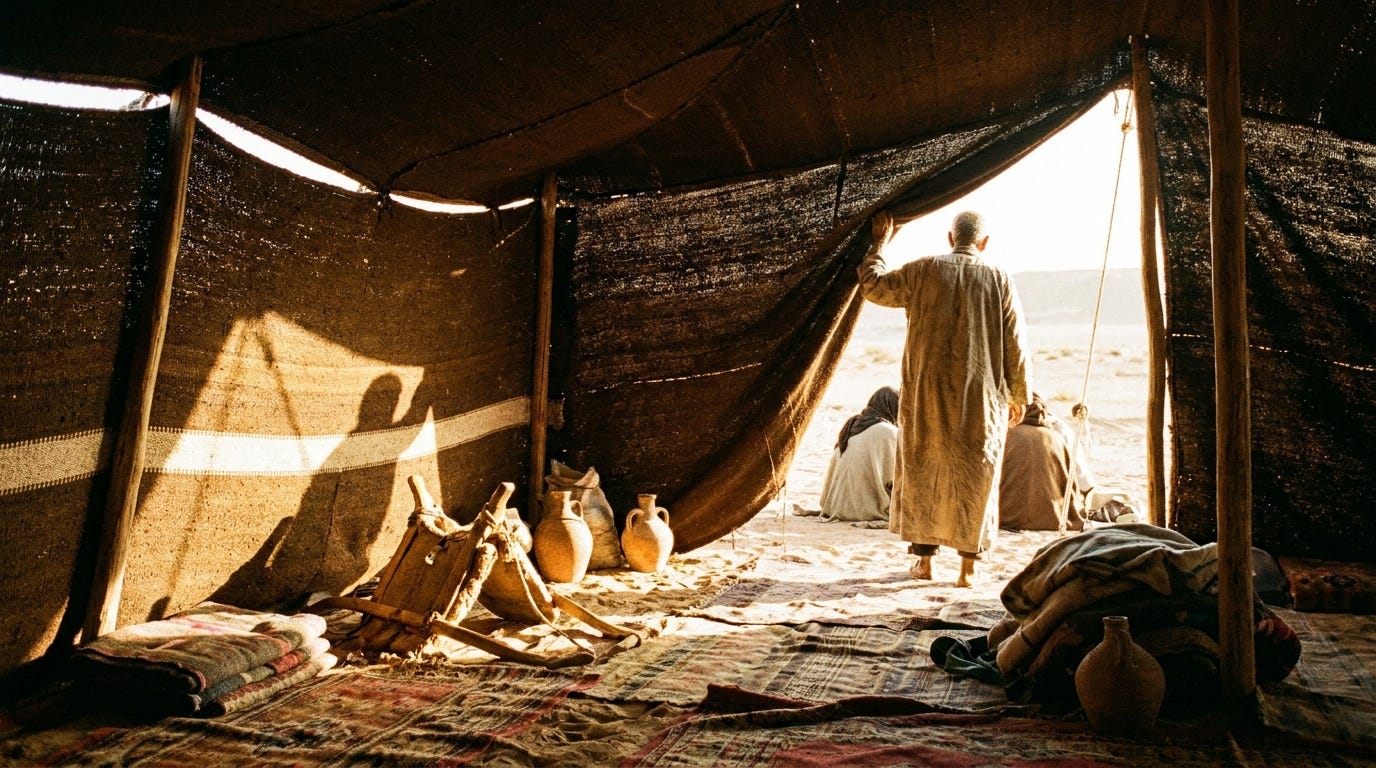
Laban went through Jacob's tent, then Leah's, then the tents of the two maidservants. "Now Rachel had taken Laban's household idols, put them in the saddlebag of her camel, and was sitting on them" (Genesis 31:34). She told her father she could not stand up because she was having her period, "So Laban searched but could not find the household idols" (Genesis 31:35).
Picture that tent. Laban's gods spent the whole search packed in a saddlebag under his daughter. The night before, the God of Jacob had spoken one clear sentence into Laban's sleep, and Laban had kept his hand back.
Twenty years in the heat and frost
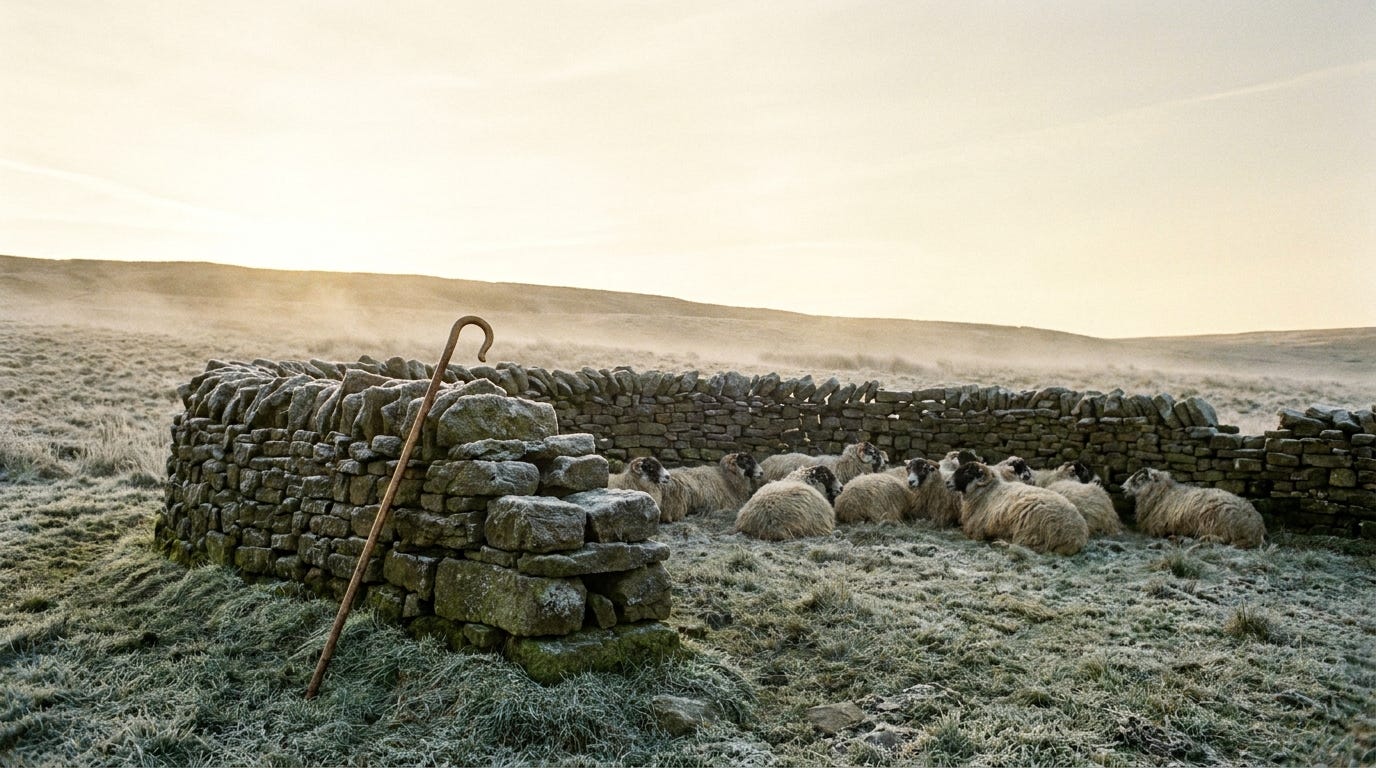
When the search turned up nothing, Jacob answered Laban by remembering twenty years of what he had suffered and what God had done. "What is my crime?" he said. "For what sin of mine have you so hotly pursued me?" (Genesis 31:36). Then the years came out of him: "the heat consumed me by day and the frost by night, and sleep fled from my eyes" (Genesis 31:40).
Jacob had kept count, and he ended on God: "If the God of my father, the God of Abraham and the Fear of Isaac, had not been with me, surely by now you would have sent me away empty-handed. But God has seen my affliction and the toil of my hands, and last night He rendered judgment" (Genesis 31:42). He named Laban's dream for what it was, God's verdict on twenty years.
A shepherd who bore the loss
Jacob's twenty years of night watches point to Jesus, the good shepherd who carried the loss of His sheep in His own body. Jacob told Laban, "I did not bring you anything torn by wild beasts; I bore the loss myself" (Genesis 31:39). Jesus said, "I am the good shepherd. The good shepherd lays down His life for the sheep" (John 10:11). Peter wrote of Him, "He Himself bore our sins in His body on the tree" (1 Peter 2:24). Jacob paid for torn sheep himself. Jesus paid for His people with His life, and He calls each of them by name.
Remember what He has seen
We are the people who remember what God has said and done. Jacob could tell Laban twenty years back because he knew where God had been in every one of them; he came to know God by remembering Him, season by season, and so do we. Write down what God has said to you, and what He has carried you through, in the Doxa app, with the date, and read it back on the day someone tells your story wrong. The God who saw Jacob in the frost sees you, knows you by name, and still speaks into the night.
What has God seen you through that you have never written down?
Keep exploring. If this raised a question, or brought back something God has said to you, take it further. Ask Doxa. It answers from Scripture, real stories, and your own journey, free in your browser. No signup to start.
Download Doxa, the app for recording, weighing and remembering prophetic encouragement.
Also please feel free to read the Doxa Deeper Dive below where we delve into the original language and historical context.
The Doxa Deeper Dive
Why Jacob Used the Word for Sin About Torn Sheep (Genesis 31:25–42)
Originally published on the Doxa blog.
Jacob's answer to Laban used the Hebrew word for sin to say he paid for every torn sheep himself.
I bore the loss myself
When Jacob said "I bore the loss myself" (Genesis 31:39), his Hebrew verb was chata (H2398), the ordinary word for sin, in a form that means to make good what was missed. The root picture is missing a mark. The left-handed slingers of Benjamin "could sling a stone at a hair without missing" (Judges 20:16), and without missing is that same verb. Jacob said anokhi achattennah, I myself made up its loss, three verses after he asked Laban, "For what sin of mine have you so hotly pursued me?" (Genesis 31:36). Sin there is chatta'ah (H2403), from the same root.
Israel's worship uses the same form of the verb. When Moses put the blood on the horns of the altar, "purifying the altar" (Leviticus 8:15), the verb was chata. David prayed, "Purify me with hyssop, and I will be clean" (Psalms 51:7), and purify me is techatte'eni, the same form again. An English reader hears a shepherd settling an account. A Hebrew hearer heard Jacob ask what his sin was, and then answer with the verb for taking sin's loss away, used for the dead sheep he had paid for himself.
Under the law Israel later received, Jacob would have owed nothing for those animals. A man keeping another man's animal owed nothing for one killed by a wild beast: "If the animal was torn to pieces, he shall bring it as evidence; he need not make restitution for the torn carcass" (Exodus 22:13). The laws of Hammurabi in Babylon, older than Moses, gave a herdsman the same protection when a lion took an animal from the fold. Jacob could have carried the remains to Laban and walked away clear. He said, "I did not bring you anything torn by wild beasts," and he paid for every one.
Last night He rendered judgment
"Last night He rendered judgment" (Genesis 31:42) is vayokach emesh, from yakach (H3198), to decide between two parties and set right the one who has been wronged. Jacob had used the same verb five verses earlier, when he told Laban to lay out anything he had found, "Put it here before my brothers and yours, that they may judge between the two of us" (Genesis 31:37). He asked for human arbiters. His closing line told Laban the case was already settled, the night before, by God, in a dream.
Job reached for the same verb when he longed for someone to stand between him and God: "Nor is there a mediator between us, to lay his hand upon us both" (Job 9:33). Mediator there is mokiach, the one who decides, from yakach. The LORD Himself used it to call His people back: "'Come now, let us reason together,' says the LORD" (Isaiah 1:18). Paul named the arbiter Job could not find: "there is one God, and there is one mediator between God and men, the man Christ Jesus" (1 Timothy 2:5). The God who decided between Jacob and Laban in a single night has put His own Son between Himself and us.
A wandering Aramean
The first readers of Genesis heard Jacob's words in Gilead echoed in their own worship, because every Israelite worshiper said words like his at the harvest. Bringing firstfruits to the LORD, each one declared, "My father was a wandering Aramean, and he went down to Egypt few in number" (Deuteronomy 26:5). The father who went down to Egypt was Jacob, the man who had served Laban the Aramean for twenty years. Then they said, "the LORD heard our voice and saw our affliction, toil, and oppression" (Deuteronomy 26:7).
The word for affliction there, oni (H6040), is the word Jacob used: "God has seen my affliction and the toil of my hands" (Genesis 31:42). Scripture uses it for the people God sees. The angel told Hagar, "the LORD has heard your cry of affliction" (Genesis 16:11). Leah named Reuben because "The LORD has seen my affliction" (Genesis 29:32). At the burning bush God told Moses, "I have indeed seen the affliction of My people in Egypt" (Exodus 3:7). A Hebrew hearer heard the same word used for a servant girl at a desert spring, for Jacob's nights in the frost, and for a nation making bricks for Pharaoh, and each year Israel spoke it back to God with the firstfruits in their hands.
They heard one more thing in Rachel's tent. Their law said of a woman in her period, "Anything on which she lies or sits during her menstruation will be unclean" (Leviticus 15:20). Rachel claimed that very condition while she sat on her father's gods. A people who had heard God's voice from the fire at Sinai heard Laban's gods sat on, hidden and unclean, and heard the scorn in it.
The God who saw
God sees the affliction of His people and speaks into it, and knowing that God, and being known by Him, is what Jacob had carried through twenty years. In the Hebrew, Jacob put his own hardship first and God last: my affliction and the toil of my hands, God saw, and then, He decided last night. Twenty years of heat, frost and changed wages ended on God's name and God's verdict. Jacob had watched God at work in those years closely enough to say it to Laban's face, and Israel spoke his word for affliction back to God at every harvest.
When God speaks to you through Scripture or through an encouragement someone shares, and when He carries you through a hard season, record it in the Doxa app with the date, and read it back when you are tempted to think nobody saw. The Fear of Isaac saw Jacob in the frost, settled his case in one night, and gave Israel words to remember it by. He still sees, and He still speaks.
Keep exploring. If this raised a question, or brought back something God has said to you, take it further. Ask Doxa. It answers from Scripture, real stories, and your own journey, free in your browser. No signup to start.
Questions and comments are welcome below.
Download Doxa, the app for recording, weighing and remembering prophetic encouragement.