

Originally published on the Doxa blog.
Rachel paid for a handful of mandrakes, and her son came years later, on the day God remembered her (Genesis 30:22).
Mandrakes from the wheat harvest
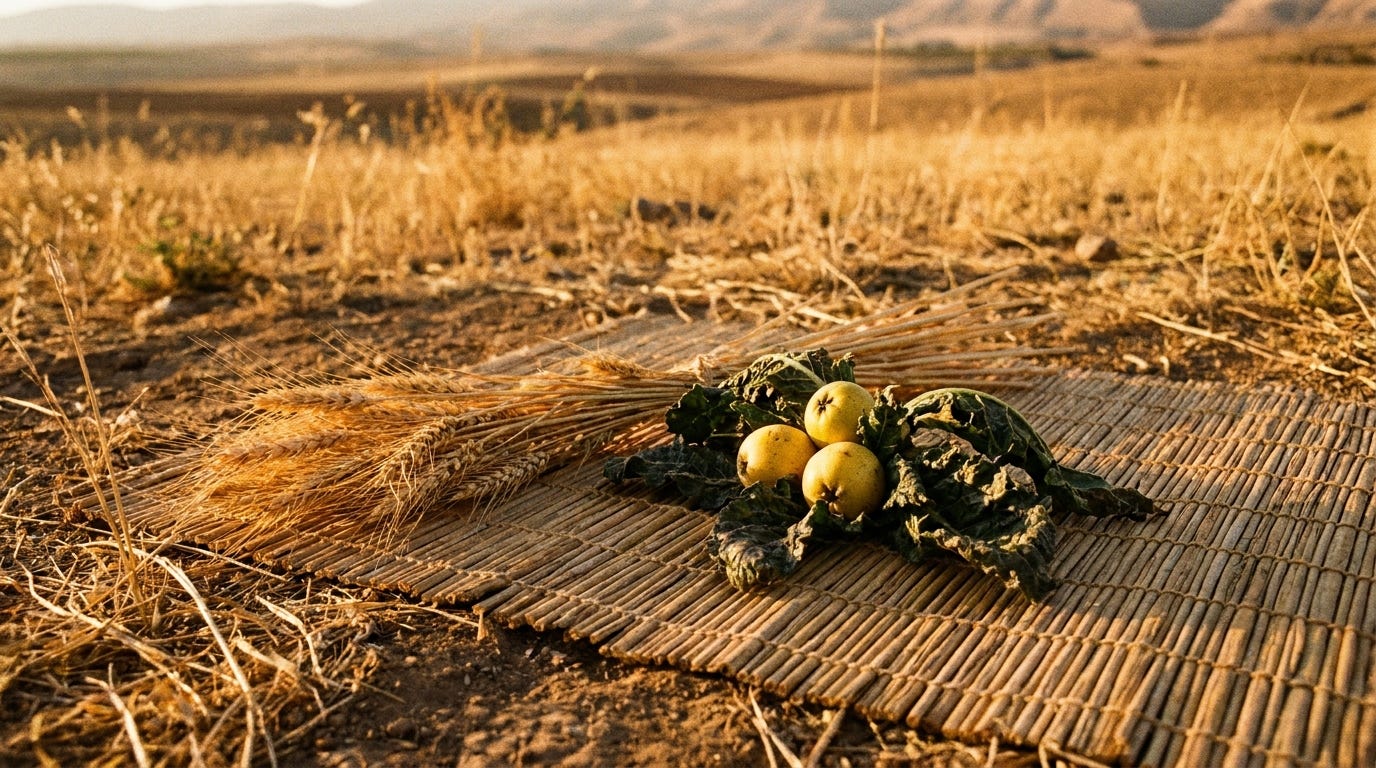
Mandrakes were a low plant with a forked root and small yellow fruit, and people in Rachel's world believed they helped a woman conceive. Reuben, Leah's eldest, found some in the field at the wheat harvest and carried them home to his mother. Rachel begged Leah, "Please give me some of your son's mandrakes" (Genesis 30:14).
Leah's answer had years of hurt in it: "Is it not enough that you have taken away my husband? Now you want to take my son's mandrakes as well?" (Genesis 30:15). So Rachel named a price. Jacob would sleep in Leah's tent that night.
Hired with mandrakes
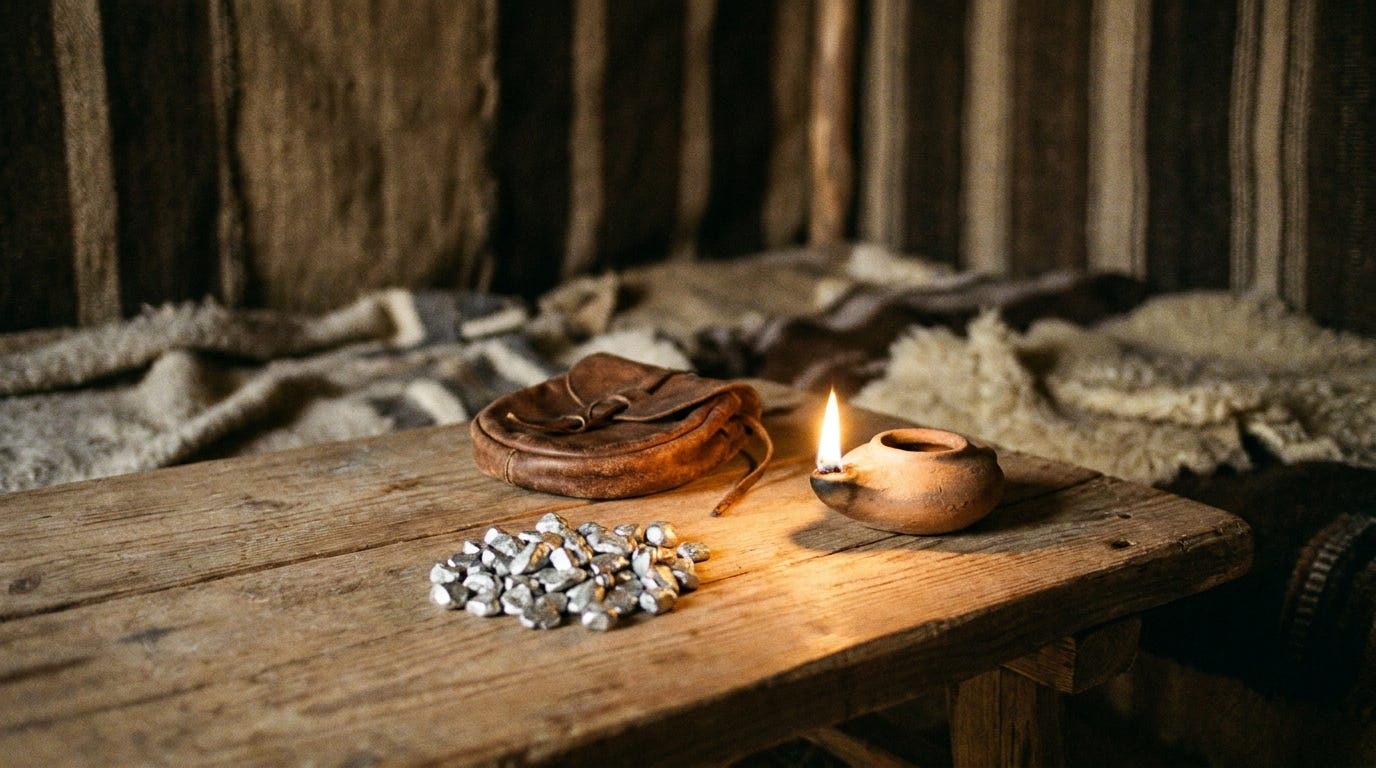
Leah told Jacob she had hired him because she had paid for his night with Reuben's mandrakes. She went out to meet him as he came in from the field that evening: "You must come with me, for I have hired you with my son's mandrakes" (Genesis 30:16).
What followed came from God: "And God listened to Leah, and she conceived and bore a fifth son to Jacob" (Genesis 30:17). God listened to Leah, so she had been asking Him while the two sisters bargained. The woman who gave the mandrakes away conceived, and went on to bear Issachar, Zebulun and a daughter, Dinah. Rachel kept the plant and kept waiting.
God remembered Rachel
When God remembered Rachel, He acted for her, because in Scripture God's remembering is God moving to do good to the one He remembers. "Then God remembered Rachel. He listened to her and opened her womb" (Genesis 30:22). God is the subject of all three verbs, and the mandrakes are nowhere in the verse.
God remembered Noah in the same words at the end of the flood: "But God remembered Noah and all the animals and livestock that were with him in the ark" (Genesis 8:1). Centuries after Rachel a barren woman named Hannah prayed at Shiloh, and "the LORD remembered her" (1 Samuel 1:19). Rachel had pleaded with God before (Genesis 30:6). He heard every year of her asking, and on the day He chose, He answered.
Remember me
The God who remembered Rachel came in Jesus, and on the cross Jesus remembered a dying thief who asked Him for exactly that. The man said, "Jesus, remember me when You come into Your kingdom!" (Luke 23:42). Jesus answered him at once: "Truly I tell you, today you will be with Me in Paradise" (Luke 23:43).
Rachel waited years for God to remember her. The thief was remembered the same day he asked, by the Son of God, who was dying beside him to open the way.
Add another son
Rachel named her son Joseph and made his name a prayer. "God has taken away my shame," she said (Genesis 30:23), and then, "May the LORD add to me another son" (Genesis 30:24). It was the first time she spoke God's covenant name, the LORD. Every time she said his name, she said her prayer again. God answered it on the road from Bethel, when the midwife told her, "Do not be afraid, for you are having another son" (Genesis 35:17).
Rachel kept asking, and she kept her prayer where she would hear it every day. We can hold what we have asked God for the same way, out loud and on record. Write down your prayer and the date in the Doxa app, and when He answers, write the answer beside it. Read it back on that day, and you will know Him better, the God who remembers His people by name.
We are the people who remember what God has said and done, because He remembered us first.
What have you asked God for that you will want to read back on the day He answers?
Keep exploring. If this raised a question, or brought back something God has said to you, take it further. Ask Doxa. It answers from Scripture, real stories, and your own journey, free in your browser. No signup to start.
Download Doxa, the app for recording, weighing and remembering prophetic encouragement.
Also please feel free to read the Doxa Deeper Dive below where we delve into the original language and historical context.
The Doxa Deeper Dive
Why Leah Named Her Son 'Wages' (Genesis 30:14–24)
Originally published on the Doxa blog.
Two English words in Genesis 30, hired and rewarded, stand for one Hebrew word, and God had already spoken that word to Abram about Himself.
Issachar, the son called Wages
Issachar sounds like there is a wage, and his name comes from sakar (H7936), to hire. Leah used the verb twice in one breath when she met Jacob that evening. Word for word she said hiring, I have hired you, which the BSB gives as "for I have hired you with my son's mandrakes" (Genesis 30:16). When the boy was born she said, "God has rewarded me for giving my maidservant to my husband" (Genesis 30:18), and rewarded there is the noun sakar (H7939), wages. Issachar (H3485) carries it in his name. An English reader sees two different words and misses that Leah used one word for the deal she struck with her sister and for the son God gave her.
That noun had already been spoken by God Himself. The word of the LORD came to Abram in a vision: "Do not be afraid, Abram. I am your shield, your very great reward" (Genesis 15:1). Reward there is sakar. Psalm 127 uses the same word for children: "Children are indeed a heritage from the LORD, and the fruit of the womb is His reward" (Psalms 127:3). Leah reckoned in wages, a servant for a son and mandrakes for a night. God had named the wage He gives, and it was Himself.
A plant named for love
Rachel wanted the mandrakes because in her world the plant was believed to help a woman conceive. Its forked root looks like a small human figure, and across the ancient Near East it was prized as a love charm and a cure for barrenness. The Hebrew name, duday (H1736), sounds like dod (H1730), love or beloved. The only other passage that names the plant, Song of Solomon 7:13, puts the two words in one verse: the mandrakes give off their fragrance, and the bride has stored up every delicacy for her beloved, dodi. A Hebrew listener heard Rachel ask for the love plant.
Rachel held the love plant, and her son came from God's remembering. Each time Genesis says God remembered a person, using zakar (H2142), God acted next. When the cities of the plain burned, "He remembered Abraham, and He brought Lot out of the catastrophe" (Genesis 19:29). Abraham's prayer for Sodom was answered in Lot's rescue, and Rachel's years of pleading were answered in Joseph.
Heard in a land of Baal
Israel heard, among nations whose gods were worshipped for rain, harvest and children, that Rachel, a mother of their tribes, held the famous love plant and conceived only when God remembered her. That was a live question for them. Through Hosea the LORD charged Israel with exactly this forgetting: "For she does not acknowledge that it was I who gave her grain, new wine, and oil" (Hosea 2:8).
The tribes of Issachar and Zebulun heard their own beginnings here too. They were born to Leah one after the other, and Moses blessed them in one breath before he died: "Rejoice, Zebulun, in your journeys, and Issachar, in your tents" (Deuteronomy 33:18). A man of Issachar learned that his tribe's name began as a mother's word for a bargain, and that God had answered her prayer inside it.
Zebulun, a place to dwell
Zebulun means dwelling or honour, and Leah heard two Hebrew words in it, a gift and a husband who would stay. "God has given me a good gift," she said. "This time my husband will honor me" (Genesis 30:20). Gift is zabad (H2064), used twice, God has endowed me with a good endowment. Honor is zabal (H2082), which older translations render as dwell. After six sons Leah still hoped Jacob would make his home with her.
The noun from that root, zebul (H2073), appears when Solomon dedicated the temple and said to God, "I have indeed built You an exalted house, a place for You to dwell forever" (1 Kings 8:13). Exalted house is beit zebul. Zebulun (H2074) was named for a wife's hope that her husband would live with her, and the word became Israel's word for the house where God lived among His people.
Then the land of Zebulun received God in the flesh. Isaiah promised that the LORD, who "humbled the land of Zebulun and the land of Naphtali" (Isaiah 9:1), would one day honour that region: "The people walking in darkness have seen a great light" (Isaiah 9:2). Matthew records that Jesus "went and lived in Capernaum, which is by the sea in the region of Zebulun and Naphtali" (Matthew 4:13). The Son of God came to live in the region that still carried Zebulun's name.
Taken away and added
Joseph means may He add, and Rachel's words at his birth put two Hebrew verbs side by side that his name echoes. "God has taken away my shame" (Genesis 30:23): taken away is asaph (H622), to gather up or remove, and shame is cherpah (H2781), public reproach. Then "May the LORD add to me another son" (Genesis 30:24): add is yasaph (H3254). Joseph (H3130) sounds like both. Centuries later Elizabeth, barren into old age, said the same of her son: the Lord "has shown me favor and taken away my disgrace among the people" (Luke 1:25).
Rachel said her prayer again each time she said her son's name, may He add. God remembered Rachel, listened to her and opened her womb, and the son Leah called Wages was God's answer to Leah's prayer as well. The word Leah used for her bargain was the word God had already used for Himself, and Leah's word for a husband who would stay became Israel's word for the house where God lived among His people. We hold what we have asked Him the way Rachel did, out loud and on record. Write the prayer and its date in the Doxa app, and when He answers, write that beside it, so that reading it back you come to know Him as your very great reward.
Keep exploring. If this raised a question, or brought back something God has said to you, take it further. Ask Doxa. It answers from Scripture, real stories, and your own journey, free in your browser. No signup to start.
Questions and comments are welcome below.
Download Doxa, the app for recording, weighing and remembering prophetic encouragement.