

Originally published on the Doxa blog.
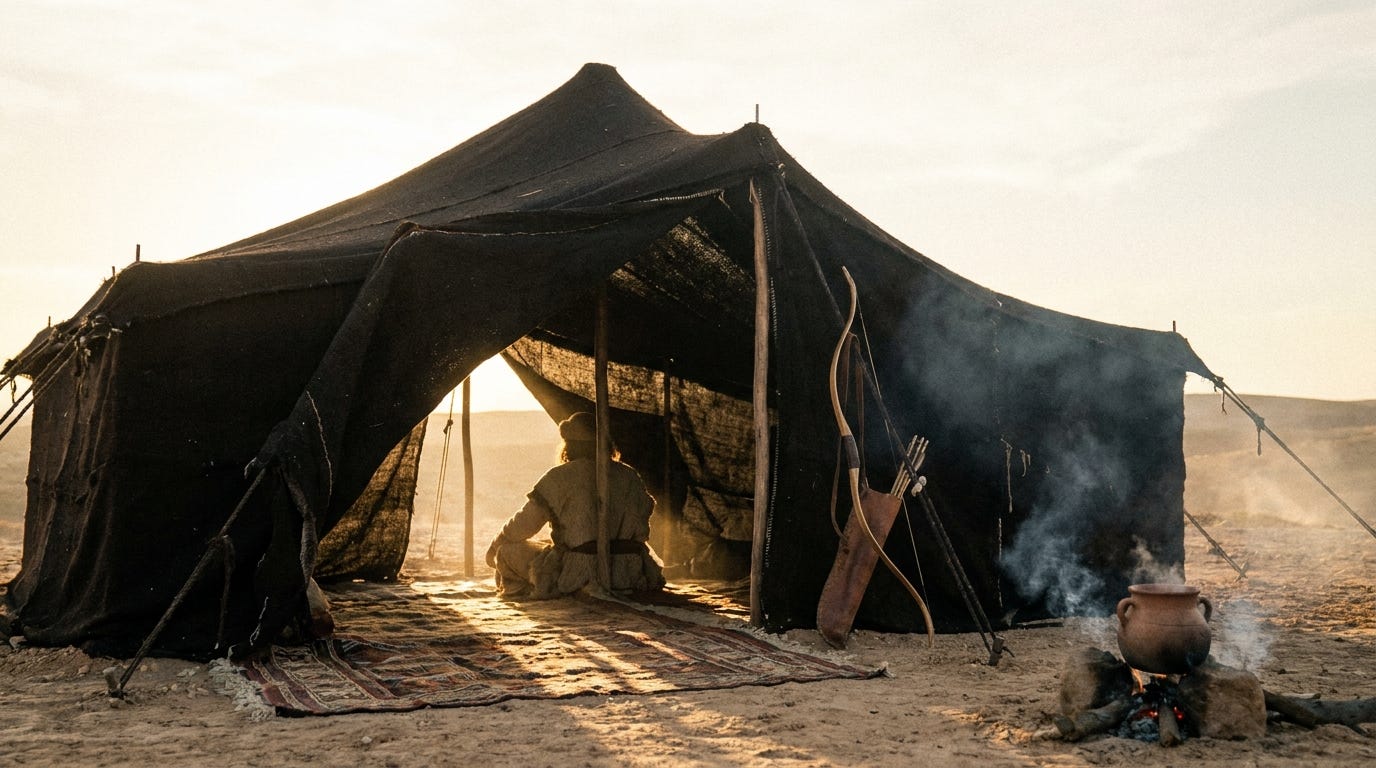
Isaac is old, and his eyes have gone dark. He calls his firstborn into the tent. "My son." "Here I am," Esau says (Genesis 27:1).
Outside the tent flap, Rebekah is listening.
Why did Isaac want to bless Esau?
Isaac wanted to bless Esau because he loved him, and he loved the meat Esau brought home. Genesis said it plainly two chapters back: "Because Isaac had a taste for wild game, he loved Esau; but Rebekah loved Jacob" (Genesis 25:28). So the old man sends him out with his quiver and bow, and asks for "a tasty dish that I love" (Genesis 27:4).
God had already spoken about these two boys. Before they were born He told Rebekah, "the older will serve the younger" (Genesis 25:23). Isaac plans the blessing of his life around his appetite, and nobody in the tent mentions what God said.
Why did Rebekah tell Jacob to deceive his father?
Rebekah told Jacob to deceive his father because she remembered what God had said, and she did not trust Him to bring it about while Isaac was handing the blessing to Esau. When the twins fought inside her, she "went to inquire of the LORD" (Genesis 25:22). This time she asks nobody. She calls Jacob and says, "Now, my son, listen to my voice and do exactly as I tell you" (Genesis 27:8).
Listen to the way she repeats Isaac's request. She adds a phrase he never said: "so that I may bless you in the presence of the LORD before I die" (Genesis 27:7). She knows the blessing belongs to God. She plans it anyway, with two young goats and a cooking pot.
What was Jacob afraid of?
Jacob was afraid of getting caught. He raised no objection to the lie. "What if my father touches me? Then I would be revealed to him as a deceiver, and I would bring upon myself a curse rather than a blessing" (Genesis 27:12).
His mother had an answer ready: "Your curse be on me, my son" (Genesis 27:13). She dressed him in "the finest clothes in the house that belonged to her older son Esau" and laid goat skins on his hands and the smooth part of his neck (Genesis 27:15–16). A family that had heard from God was now running on goat hair and borrowed clothes.
How does Genesis 27 point to Jesus?
Genesis 27 points to Jesus because He did openly what this family tried to fake. Rebekah offered to carry a curse she could never lift. "Christ redeemed us from the curse of the law by becoming a curse for us" (Galatians 3:13). Jacob wore his brother's clothes to fool a blind father. In Christ, the Father gives us His Son's own clothing: "all of you who were baptized into Christ have clothed yourselves with Christ" (Galatians 3:27). We come to the Father in the open, by His invitation, and He blesses us with His eyes wide open.
And Jesus says what this tent was missing. "My sheep listen to My voice; I know them, and they follow Me" (John 10:27). His voice is the one to listen to, and to be known by Him is the reason we listen.
Let Him keep what He said
God's promise to Rebekah held. It held through Isaac's appetite and through her scheme, because, as the psalm says, "The counsel of the LORD stands forever" (Psalms 33:11). When God has said something to you, in Scripture or in an encouragement someone shared, write it down in the Doxa app with the date and His exact words. Then on the day you are tempted to arrange its fulfilment yourself, read it back, and let Him keep it. We are the people who remember what God has said, and we come to know Him as the God whose word stands.
What has God said to you that you have been tempted to make happen on your own?
Keep exploring. If this raised a question, or brought back something God has said to you, take it further. Ask Doxa. It answers from Scripture, real stories, and your own journey, free in your browser. No signup to start.
Download Doxa, the app for recording, weighing and remembering prophetic encouragement.
Also please feel free to read the Doxa Deeper Dive below where we delve into the original language and historical context.
The Doxa Deeper Dive
Whose Voice Did Jacob Obey? The Words That Echo Eden

Originally published on the Doxa blog.
Rebekah's command to Jacob is a Hebrew phrase that every Israelite who heard it read aloud had heard before, on the lips of God.
What does "listen to my voice" mean in Genesis 27:8?
"Listen to my voice" (Genesis 27:8) means obey me, and in Genesis the phrase marks the moments when someone decides whose word they will act on. The Hebrew is shama (H8085), to hear, with qol (H6963), voice: to hear into a voice, which in Hebrew is to do what it says. English needs two verbs, hear and obey. Hebrew uses one.
Follow the phrase back through the book. In Eden God said to Adam, "Because you have listened to the voice of your wife and have eaten from the tree" (Genesis 3:17). When Sarai proposed Hagar as a way to the promised son, "Abram listened to the voice of Sarai" (Genesis 16:2). Then on the mountain the phrase turns toward God: "all nations of the earth will be blessed, because you have obeyed My voice" (Genesis 22:18), and one chapter before ours God tells Isaac He will bless him "because Abraham listened to My voice" (Genesis 26:5).
Then Rebekah says it twice in six verses. "Listen to my voice and do exactly as I tell you" (Genesis 27:8). "Just obey my voice and go get them for me" (Genesis 27:13). The phrase can point the right way: God Himself told Abraham, "Listen to everything that Sarah tells you" (Genesis 21:12). Each time, the question is whether the voice being obeyed carries what God said. Rebekah's voice carried His promise, the older will serve the younger, inside a plan He never gave her. The family was working toward God's promise and had stopped asking Him.
Jacob's reply shows what he thought the plan would make him. "I would be revealed to him as a deceiver" (Genesis 27:12) uses taa (H8591), to mock. The only other place the root appears is the last chapter of Chronicles, where Judah's people kept "scoffing at His prophets" until there was no remedy (2 Chronicles 36:16). The word for posing as a father's son is the word for treating God's messengers as a joke, by a people who had stopped listening to His voice.
The plan ran on food, and the word for that food has a history of its own.
What does the tasty dish in Genesis 27 tell us?
The tasty dish tells us the blessing was being steered by appetite, and the only other place Scripture names that dish, it calls it food that deceives. The word is matammim (H4303), from taam (H2938), to taste. Isaac asks for it, and Rebekah cooks it and hands it to Jacob (Genesis 27:4, 9, 17).
Outside Genesis 27 it appears in one passage. Proverbs warns a guest at a ruler's table, "Do not crave his delicacies, for that food is deceptive" (Proverbs 23:3). The Hebrew of verse 3 calls it bread of lies. Genesis 25:28 had already said, in Hebrew, that Isaac loved Esau because the game was in his mouth. An Israelite who knew both texts heard Isaac's request with the proverb attached: the dish he loved most was the very thing used to deceive him.
Why did Isaac's blessing matter so much?
Isaac's blessing mattered because in his world a father's last spoken words over his sons were binding, and nobody could take them back. Clay tablets from Nuzi in northern Mesopotamia record a court upholding a son's claim on the strength of what his father said to him on his deathbed. Isaac's "so that I may bless you before I die" (Genesis 27:4) is that kind of act, a spoken testament. Rebekah's phrase "in the presence of the LORD" (Genesis 27:7) names its witness, and once Isaac had spoken it, nobody in the family could take it back. Yet God had already given His own word about these two sons, "the older will serve the younger" (Genesis 25:23), and a word from God stood long before any father opened his mouth.
The disguise belonged to that same world. Goat hair was coarse enough to pass for a man's, and David's wife used it the same way: Michal "placed some goat hair on its head, and covered it with a garment" (1 Samuel 19:13) so that a household idol in the bed would pass for David while he escaped.
Years later the same two things fooled Jacob. His sons "took Joseph's robe, slaughtered a young goat, and dipped the robe in its blood" (Genesis 37:31). The father who had once worn his brother's clothes to deceive was handed his son's robe and a young goat's blood, and he mourned for Joseph as dead for many years.
How did Israel first hear Genesis 27?
Israel first heard Genesis 27 as a question put to them: whose voice would they obey? They were a people who had stood at Sinai and been told, "if you will indeed obey My voice and keep My covenant, you will be My treasured possession" (Exodus 19:5). So when they heard their ancestor Jacob told to listen to his mother's voice (Genesis 27:8), they heard their own covenant question in his tent.
They also heard it as a nation named Jacob. The prophets used his story against them: "In the womb he grasped his brother's heel" (Hosea 12:3). Jeremiah warned, "do not trust any brother, for every brother deals craftily" (Jeremiah 9:4), and the Hebrew there is a play on the name: every brother is a Jacob. Israel heard Genesis 27 as the family likeness they still carried.
Hosea follows Jacob out of the tent. "He wept and sought His favor; he found Him at Bethel and spoke with Him there" (Hosea 12:4).
The voice he came to know
Jacob went in to his father obeying his mother's voice. A few nights later, running for his life, he heard God's: "I will not leave you until I have done what I have promised you" (Genesis 28:15). God kept the promise He had given Rebekah, and He kept it on His own terms, "in order that God's plan of election might stand" (Romans 9:11). Even Isaac's blessing, given in the dark to the son he did not intend, is remembered as faith: "By faith Isaac blessed Jacob and Esau concerning the future" (Hebrews 11:20).
Write down what God has promised you in the Doxa app, dated and in His words, and read it back before you reach for a goatskin. The God who met Jacob at Bethel is the God who later called the whole family of Jacob to Sinai and said, "if you will indeed obey My voice and keep My covenant, you will be My treasured possession" (Exodus 19:5). His voice is the one to obey, and the people who obey it come to know Him and are known by Him.
Keep exploring. If this raised a question, or brought back something God has said to you, take it further. Ask Doxa. It answers from Scripture, real stories, and your own journey, free in your browser. No signup to start.
Questions and comments are welcome below.
Download Doxa, the app for recording, weighing and remembering prophetic encouragement.