

Originally published on the Doxa blog.
The sky over Sodom is only just turning grey when the angels start pushing. "Get up! Take your wife and your two daughters who are here, or you will be swept away in the punishment of the city" (Genesis 19:15).
Lot has known since last night; he carried the warning to his sons-in-law himself. Now it is morning, and he stands in his own house and stays where he is.
"But when Lot hesitated, the men grabbed his hand and the hands of his wife and his two daughters. And they led them safely out of the city, because of the LORD's compassion for them" (Genesis 19:16).
Four people leave Sodom each held by a stranger's hand. Genesis gives the reason in one plain phrase, the LORD's compassion, and says nothing about anything Lot did.
Jesus reaches out the same way. On a lake at night, Peter is sinking and cries, "Lord, save me!" (Matthew 14:30). "Immediately Jesus reached out His hand and took hold of Peter" (Matthew 14:31). Lot hesitated and Peter doubted, and in both stories the LORD's hand took hold of them before the fire or the water did.
Why did Lot hesitate to leave Sodom?
Outside the gate the orders are short. "Run for your lives! Do not look back, and do not stop anywhere on the plain! Flee to the mountains, or you will be swept away!" (Genesis 19:17).
Lot argues for a town close by: "is it not a small place?" (Genesis 19:20). The angel lets him have it, and the town keeps his plea as its name, Zoar, small.
Years before, Lot had looked out over this plain and seen it "well watered like the garden of the LORD, like the land of Egypt" (Genesis 13:10), all the way to Zoar. He has chosen by what looked good ever since, and even now he wants to pick the place himself.
The sun is up when he reaches Zoar. "Then the LORD rained down sulfur and fire on Sodom and Gomorrah" (Genesis 19:24).
"But Lot's wife looked back, and she became a pillar of salt" (Genesis 19:26). She had been led out by the hand. She heard the same order as Lot, do not look back, and she turned toward the city anyway.
What did Jesus mean by "Remember Lot's wife"?
Jesus used her to warn His disciples about the day He returns: "let no one in the field return for anything he has left behind" (Luke 17:31). Then three words: "Remember Lot's wife!" (Luke 17:32). And the reason: "Whoever tries to save his life will lose it, but whoever loses his life will preserve it" (Luke 17:33).
He asks us to remember her. She heard what God said and kept her eyes on what she was leaving.
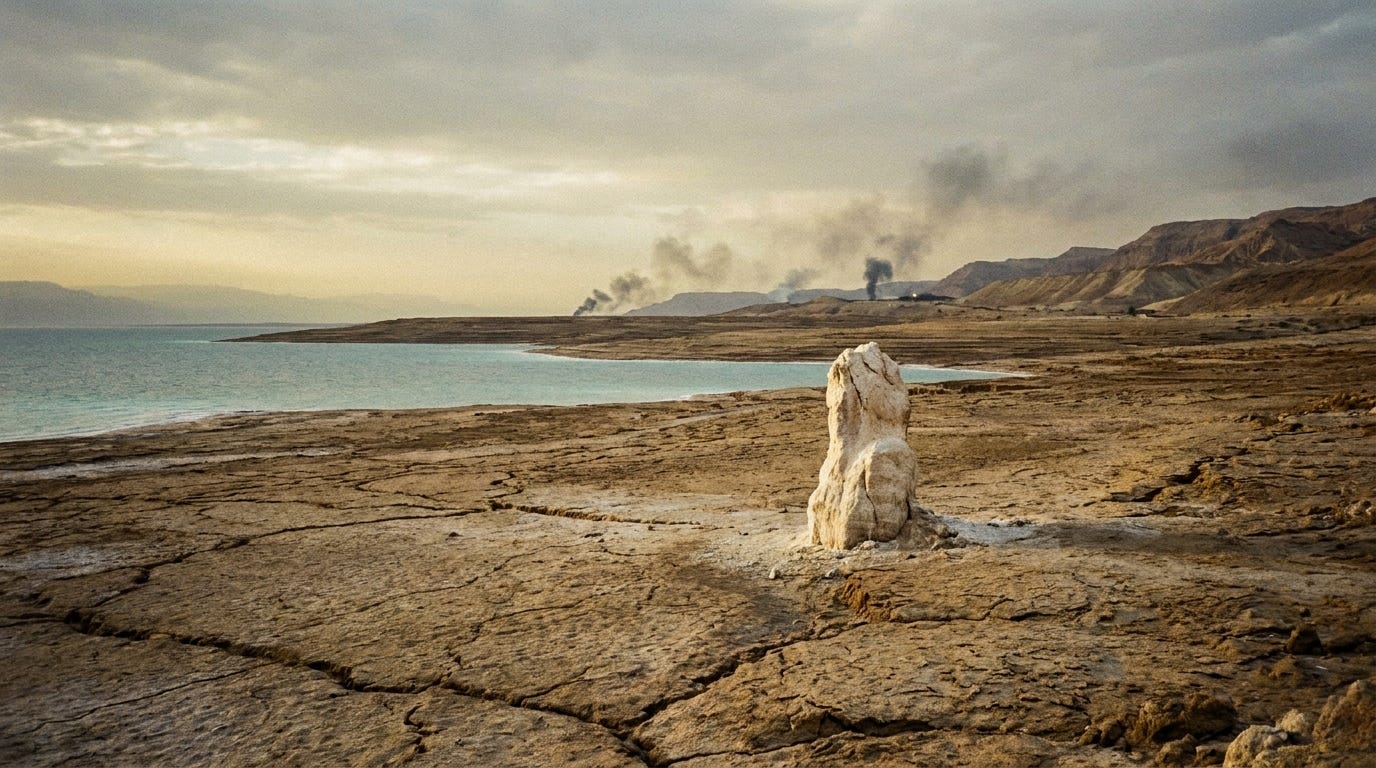
Someone else was looking at Sodom that morning. "Early the next morning, Abraham got up and returned to the place where he had stood before the LORD" (Genesis 19:27). The day before, on that ground, he had pleaded for the city and heard God answer him six times. He goes back there first, and from there he sees "the smoke rising from the land like smoke from a furnace" (Genesis 19:28).
Then Genesis says what had been true all night. "So when God destroyed the cities of the plain, He remembered Abraham, and He brought Lot out of the catastrophe that destroyed the cities where he had lived" (Genesis 19:29). Abraham had stood before the LORD and talked with Him, and God kept hold of the man and of everything said between them, which is what it means to know God and be known by Him.
So go back to the place where God has spoken with you. For most of us it is a page: a verse underlined in pencil, an encouragement someone shared that you wrote down with the date. Read it again this morning.
Where is the place you go back to, where God has spoken with you before?
Keep exploring. If this raised a question, or brought back something God has said to you, take it further. Ask Doxa. It answers from Scripture, real stories, and your own journey, free in your browser. No signup to start.
Download Doxa, the app for recording, weighing and remembering prophetic encouragement.
Also please feel free to read the Doxa Deeper Dive below where we delve into the original language and historical context.
The Doxa Deeper Dive
Lot Lingered, God Remembered: How Israel First Heard Genesis 19
Originally published on the Doxa blog.
The Hebrew verb for Lot's hesitation repeats itself. In Genesis 19:16 it is vayitmahmah, from mahah (H4102), and the form doubles part of the root, mah-mah, so that a listener hears the delay in the sound of the word. Scripture uses the verb only a handful of times, and three of them change how this verse reads.
What does Lot's hesitation mean in Hebrew?
The first is Israel's own night of leaving. On the night of the Passover the people baked flat loaves from dough with no leaven, "For when they had been driven out of Egypt, they could not delay" (Exodus 12:39). Could not delay is the same verb in the same doubled form. Egypt pushed Israel out as the angels pushed Lot out of Sodom, and one word covers the man who dragged his feet and the nation that had no time to.
The second is a promise. "I hurried without hesitating to keep Your commandments" (Psalms 119:60). The psalmist uses Lot's word to describe the thing he refuses to do.
The third turns the verb around. Habakkuk had waited on his watchtower to hear what God would say, and the answer came with an instruction: "Write down this vision and clearly inscribe it on tablets, so that a herald may run with it" (Habakkuk 2:2). Then, "Though it lingers, wait for it, since it will surely come and will not delay" (Habakkuk 2:3). Lingers is mahah again, and this time the one lingering is the promise. God's answer to that kind of delay is a tablet: write what He said, and wait.
Set those three beside Genesis 19:16 and a pattern shows. When God says go, His people hurry, as Israel did and as the psalmist vowed to. When what He has promised seems slow, His people write it down and wait. Lot had both halves the wrong way round. The word he carried would come true before the sun was fully up, and he stood in his house.
Why did Israel see Sinai in the smoke over Sodom?
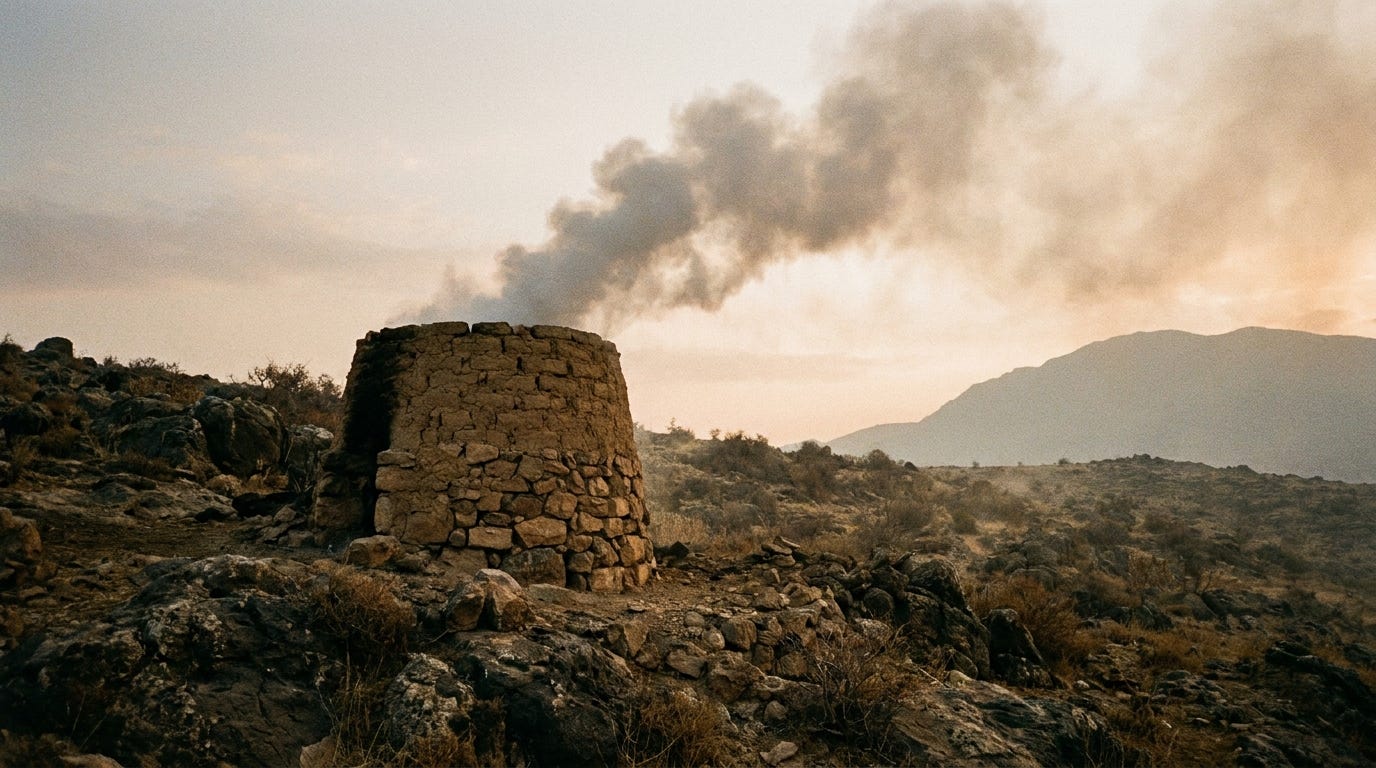
When Abraham looked toward the plain he saw smoke "like smoke from a furnace" (Genesis 19:28). The furnace is kibshan (H3536), a kiln, the kind used to burn lime or fire pottery. The Old Testament uses the word four times, and all four sit in the story Israel told about itself. Twice in Egypt, Moses takes "soot from the furnace" (Exodus 9:10) and throws it into the air before Pharaoh to bring the plague of boils. The fourth is the mountain: "Mount Sinai was completely enveloped in smoke, because the LORD had descended on it in fire. And the smoke rose like the smoke of a furnace, and the whole mountain quaked violently" (Exodus 19:18).
Genesis was first read aloud to the people who had stood at the foot of that mountain, or to their children. When they heard that Abraham got up early and went to "the place where he had stood before the LORD" (Genesis 19:27) and saw furnace smoke, they had seen that smoke themselves. At Sinai God came down in it to speak to them. And they had said to Moses, "Speak to us yourself and we will listen," and then, "But do not let God speak to us, or we will die" (Exodus 20:19).
Moses told them why the fire had come: "God has come to test you, so that the fear of Him may be before you, to keep you from sinning" (Exodus 20:20). Over Sodom the furnace smoke was the end of a city that had stopped listening. Over Sinai it was God arriving to be heard. Israel heard Genesis 19:28 and knew that the same fire hung over both, and that what they did with His voice decided which it would be for them.
They also knew the ground. The south end of the Dead Sea is a waste of salt and sulfur, with a ridge of solid rock salt several miles long on its western shore, still called Mount Sodom, and salt columns standing along its face. Josephus, in the first century, claimed to have seen the pillar of Lot's wife. Moses used that landscape as a warning to Israel about their own land if they forgot the covenant: "All its soil will be a burning waste of sulfur and salt, unsown and unproductive, with no plant growing on it, just like the destruction of Sodom and Gomorrah, Admah and Zeboiim, which the LORD overthrew in His fierce anger" (Deuteronomy 29:23). The first hearers heard Genesis 19 as their own possible future, told in a view they could walk to.
Why does Genesis say God remembered Abraham?
The chapter ends by explaining itself. "So when God destroyed the cities of the plain, He remembered Abraham, and He brought Lot out of the catastrophe that destroyed the cities where he had lived" (Genesis 19:29). The verb is zakar (H2142). When God is its subject, remembering leads straight into action. "But God remembered Noah" (Genesis 8:1), and the waters began to go down. Here He remembers Abraham, and the name is Abraham's. Lot is rescued on account of the man who had stood before the LORD and pleaded for him.
Israel's own history turned on the same sentence. In Egypt, "God heard their groaning, and He remembered His covenant with Abraham, Isaac, and Jacob" (Exodus 2:24). At Sinai, after the golden calf, Moses stood where Abraham had stood, between the LORD and a people who deserved the fire, and he prayed God's own promise back to Him: "Remember Your servants Abraham, Isaac, and Israel, to whom You swore by Your very self" (Exodus 32:13). "So the LORD relented from the calamity He had threatened to bring on His people" (Exodus 32:14). Every Israelite who sat listening to Genesis 19:29 was alive because God remembered Abraham. They were Lot, brought out of a catastrophe by a promise made to someone else.
The pattern is complete in Jesus, who "is able to save completely those who draw near to God through Him, since He always lives to intercede for them" (Hebrews 7:25). Abraham stood before the LORD one afternoon. Jesus always lives to do it, and God remembers His people because He knows them in the One who prays for them.
Moses could pray that way because he knew God and knew what He had sworn, word for word, and could say it back. Being known by Him looks like that from both sides: God keeps hold of the people He has spoken with, and they keep hold of what He said. Habakkuk was told to put it on a tablet. So when God speaks to you, hurry to do what He says, and write down what He has promised, so that when it seems slow you still have His words to read back to Him while you wait.
Keep exploring. If this raised a question, or brought back something God has said to you, take it further. Ask Doxa. It answers from Scripture, real stories, and your own journey, free in your browser. No signup to start.
Questions and comments are welcome below.
Download Doxa, the app for recording, weighing and remembering prophetic encouragement.