

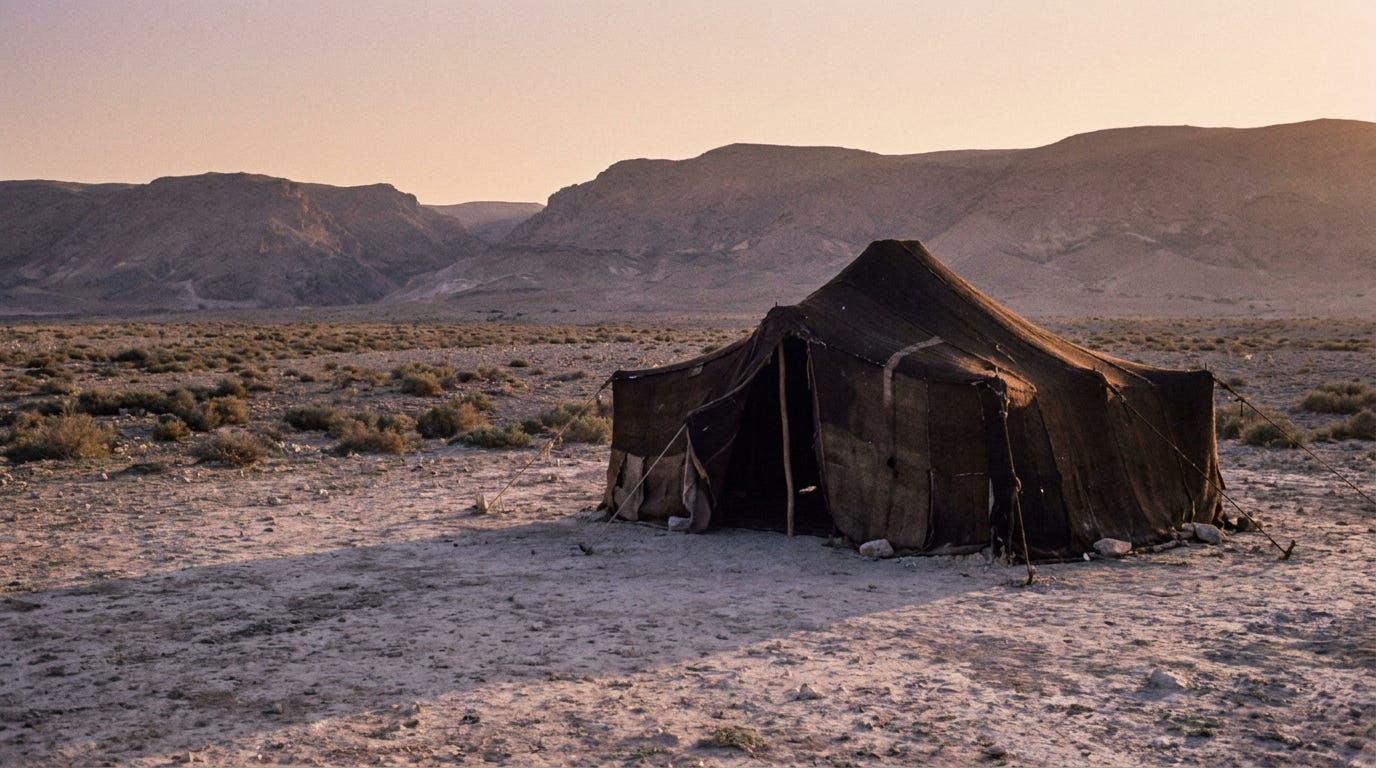
Ten years is a long time to hold a promise.
Abram had counted the stars. God had told him his children would be that many, and he believed it, and God credited his belief as righteousness (Genesis 15:5-6). Then the years went by. Sarai stayed barren. The tent stayed quiet. And a promise you cannot see moving starts to feel like a promise that needs your help.
So Sarai does the sensible thing. "Look now, the LORD has prevented me from bearing children. Please go to my maidservant; perhaps I can build a family by her" (Genesis 16:2). She has an Egyptian slave named Hagar, and in that world this was the ordinary, legal fix for a barren wife: give your servant to your husband, and her child counts as yours. Sarai is being reasonable. That is what makes the moment so easy to miss.
Then one line turns the whole story. "And Abram listened to the voice of Sarai" (Genesis 16:2). Hold that phrase. To listen to the voice of is the very thing Scripture asks us to do with God, and it is what Abram had been doing since chapter twelve, when he heard the LORD and went. Here he hears a different voice, a voice he loved, and he follows it instead of waiting on the One who had made the promise. He had God's own word about this very thing. He set it down and picked up a plan.
The plan works, and it wounds everyone it touches. Hagar conceives and looks at her mistress with contempt. Sarai turns on Abram: "May the LORD judge between you and me" (Genesis 16:5). Abram steps back and lets Sarai deal harshly with the pregnant woman, who runs into the desert alone (Genesis 16:6). Three people tried to shortcut a promise, and a whole household is left in grief.
Paul later reads this exact scene and names what went wrong. Ishmael was "born according to the flesh" (Galatians 4:23), and Isaac "born through the promise" (Galatians 4:23). One son came from waiting on God. The other came from helping God, and helping God is its own quiet kind of unbelief. The child of the promise was still coming. Abram just could not see him yet.
The danger for us looks ordinary. It comes as a reasonable plan, at the ten-year mark, when the thing God said still has not happened and a good voice offers a faster road. To know the God who speaks is to keep holding what He actually said when the waiting gets long, instead of trading it for a plan you can make happen this year.
So go back to what He said. Write down the promise you are tempted to hurry, the exact words, with the date. Read them again before you reach for the shortcut, and let them be louder than the sensible voice telling you God needs your help.
Where are you tempted to build with your own hands what God said He would build, and what exactly did He say that you could write down again today?
The Doxa Deeper Dive
Sarai's Shortcut to a Son: The House Only God Builds (Genesis 16)
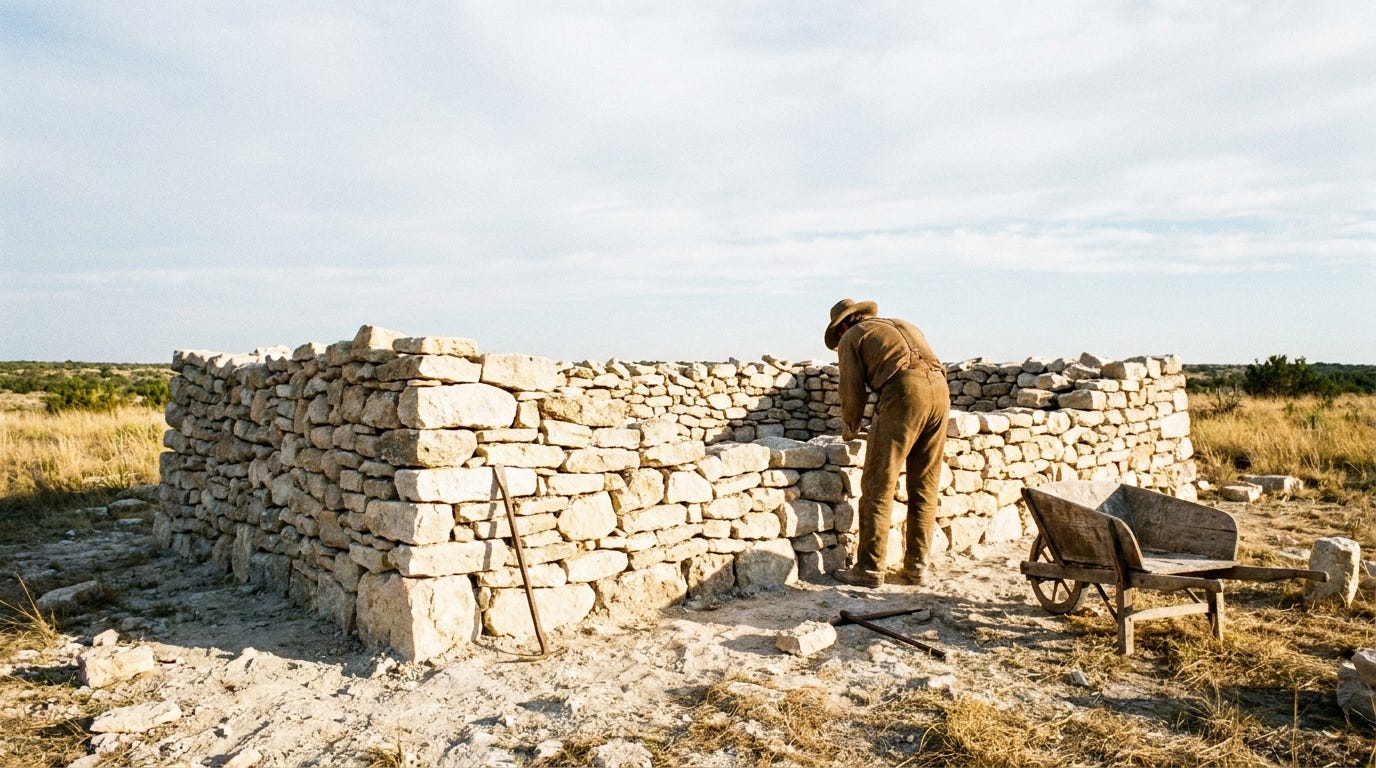
Genesis 16 opens with a decade of silence and a reasonable plan to end it. God had promised Abram a son from his own body (Genesis 15:4). Ten years on, Sarai is still barren, and she does what a woman of her world might have done. The scene is short, but almost every line sits on a Hebrew word that carries more than the English lets through.
What did Sarai mean by "build a family"?
Sarai's plan in the BSB reads, "perhaps I can build a family by her" (Genesis 16:2). The verb underneath is banah (H1129), the ordinary word for building a house, a wall, a city. Hebrew hears a pun in it that English cannot. The word for son is ben (H1121), and to build, banah, sounds like the making of sons. To be given a child, in this idiom, is to be built up. Sarai is saying, quite literally, that she hopes to be built through Hagar.
That one verb reaches across the whole Old Testament. Centuries later a psalm picks up the same word and turns it into a warning: "Unless the LORD builds the house, its builders labor in vain" (Psalms 127:1). Two lines on it names what that house is: "Children are indeed a heritage from the LORD, and the fruit of the womb is His reward" (Psalms 127:3). The psalm is about exactly Sarai's situation, and it says the building of a family is God's work, not a project we manage. Sarai chose the right word and aimed it at the wrong builder. She set out to build with her own hands the one house Scripture says only the LORD can raise.
Was giving her servant to Abram normal in that world?
To a modern reader the plan looks like an act of desperation. To Abram's neighbours it was the sanctioned legal remedy for a barren marriage. Law codes and family archives from the ancient Near East, the Code of Hammurabi and the Nuzi tablets among them, describe the same arrangement: a childless wife could give her slave-girl to her husband, and the child born would be reckoned the wife's own. Hagar is called Sarai's shiphchah (H8198), a female slave attached to her mistress, precisely the servant such a custom used. Genesis even notes the ten years in Canaan (Genesis 16:3), the decent interval before a wife was expected to try this route.
This is the quiet warning in the passage. Sarai's plan was the culturally correct thing, the move everyone around her would have nodded at. And it still stepped outside the promise. God had not told them how the son would come; He had only said that he would. The reasonable, everyone-does-it solution was still unbelief, only in respectable clothes.
Why does "Abram listened to the voice of Sarai" echo the Fall?
The hinge of the passage is a single Hebrew phrase. "Abram listened to the voice of Sarai" (Genesis 16:2) is shama (H8085), to hear and to heed, joined to qol (H6963), voice. Shama b'qol, to listen to the voice of, is the covenant phrase for obeying God: hear the voice of the LORD your God. It is what Abram did in chapter twelve when he heard and went.
There is one earlier place in Genesis where a man listens to the voice of his wife against a word from God. In the garden, God says to Adam, "Because you have listened to the voice of your wife and have eaten from the tree" (Genesis 3:17), the same verb and the same construction. Genesis is telling us, in its grammar, that Abram is standing where Adam stood: a real word from God on one side, a trusted human voice on the other, and a choice about which to obey. This is the practice failing in real time. Abram had heard God and held the promise for years. Now he hears another voice, sets the promise down, and acts.
Where is Christ in Hagar and Sarai?
Paul takes this whole episode and reads it as a picture (Galatians 4:22-24). Two sons: Ishmael, "born according to the flesh" (Galatians 4:23), and Isaac, "born through the promise" (Galatians 4:23). Ishmael is what the flesh produces when it tries to secure God's promise on its own timetable. Isaac is what God produces when His people wait for Him to speak the son into being, which He does in chapter twenty-one, in His own time. The line that runs to Christ runs through the son Abram and Sarai could not manufacture and could only receive.
So Genesis 16 teaches the practice by showing it break. To know the God who speaks is to keep His actual word when the waiting outlasts your patience, rather than trading it for a reasonable plan that gets there sooner. Abram had the promise in hand. The whole grief of this chapter grows from a decade of silence, a good voice, and a man who stopped waiting on the God who had already told him the truth. Write down what God has said. Hold it past the ten-year mark. The house you are straining to build may be the one only He can raise.
Keep exploring. If this raised a question, or brought back something God has said to you, take it further. Ask Doxa. It answers from Scripture, real stories, and your own journey, free in your browser. No signup to start.
Questions and comments are welcome below.
Download Doxa, the app for recording, weighing and remembering prophetic encouragement.