

Originally published on the Doxa blog.
Then God said to Jacob, "Arise, go up to Bethel, and settle there" (Genesis 35:1). Those words came straight after fourteen verses of bargains, swords, plunder and blame, and in all of them nobody spoke to God. Knowing God means bringing Him what has happened before we answer it, and Genesis 34:18–31 records what a family did when it settled a wrong with no word from Him.
The whole city was circumcised
The men of Shechem agreed to be circumcised because Hamor and Shechem told them that Jacob's wealth would become theirs. Shechem "did not hesitate to fulfill this request, because he was delighted with Jacob's daughter" (Genesis 34:19). At the city gate Hamor asked the men, "Will not their livestock, their possessions, and all their animals become ours?" (Genesis 34:23).
Every male of the city was circumcised (Genesis 34:24). They took the sign God had given Abraham to win a bargain, and Jacob's sons had offered it to them as a trap.
Two brothers with swords
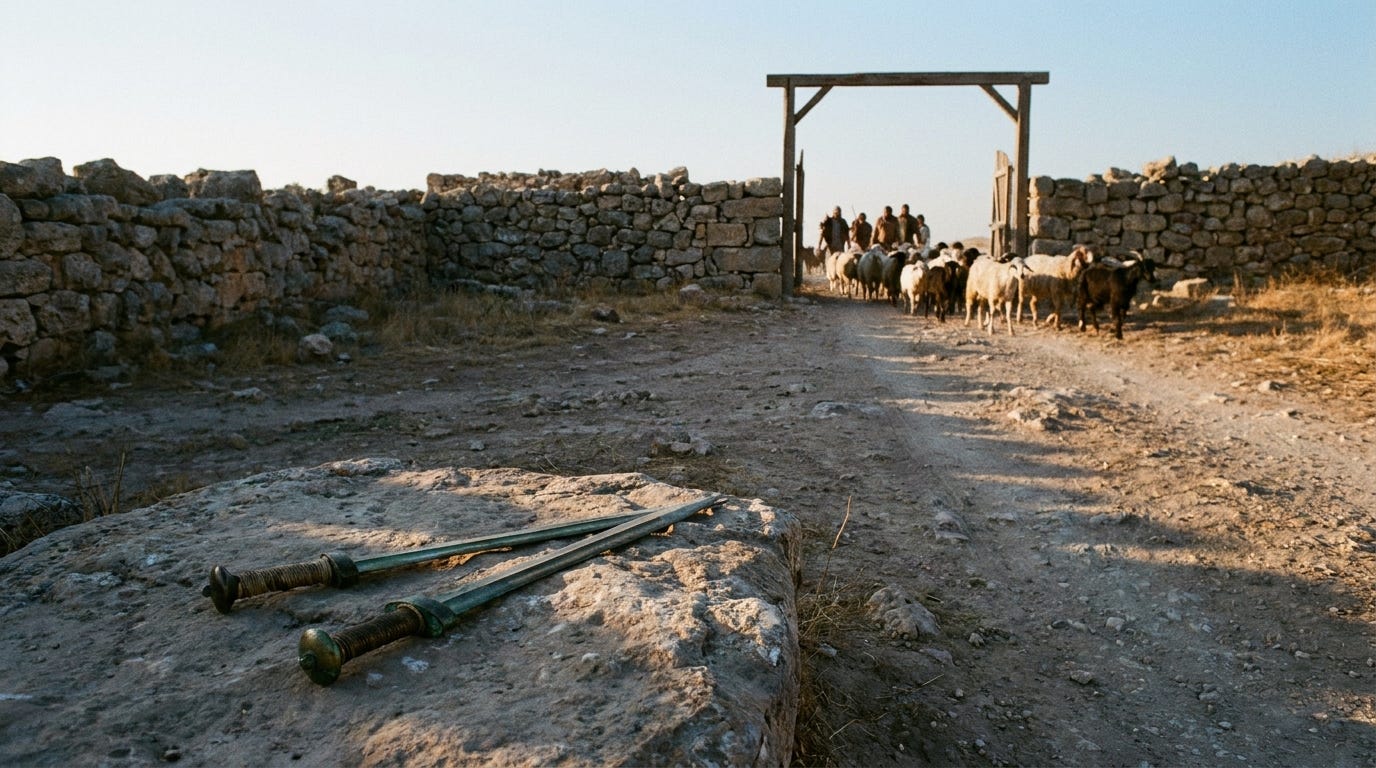
Simeon and Levi killed every man in Shechem on the third day after the circumcision, when the men of the city could not fight back. Dinah's brothers "took their swords, went into the unsuspecting city, and slaughtered every male" (Genesis 34:25). They killed Hamor and Shechem and took Dinah out of Shechem's house.
Then the other brothers came and looted the city. They took the flocks and the herds, and they carried off "all their possessions and women and children" (Genesis 34:29). One man had wronged Dinah, and a whole city paid for it.
Jacob feared for himself
Jacob was angry with Simeon and Levi because their attack put his household in danger from the peoples of the land. He said, "You have brought trouble upon me by making me a stench to the Canaanites and Perizzites, the people of this land" (Genesis 34:30). He said nothing about the dead men of Shechem, about Dinah or about God.
His sons answered him with a question: "Should he have treated our sister like a prostitute?" (Genesis 34:31). The chapter ended there, with a father thinking about his safety and sons thinking about their honour, and nobody asked what God would say.
What Jacob said at the end of his life
At the end of his life Jacob spoke a prophecy over Simeon and Levi, and he had not forgotten Shechem. "Cursed be their anger, for it is strong, and their wrath, for it is cruel" (Genesis 49:7), he said, and then, "I will disperse them in Jacob and scatter them in Israel." It came true. Simeon's inheritance lay inside the land of Judah (Joshua 19:1), and Levi received no territory of its own.
God made even that scattering a place of grace. At Sinai, when Moses called, "Whoever is for the LORD, come to me," all the Levites gathered around him (Exodus 32:26), and Moses later wrote of Levi, "the LORD is his inheritance" (Deuteronomy 10:9). The tribe that drew the sword in anger became the tribe that served at His altar.
The One who entrusted Himself
Genesis 34 points to Jesus, who suffered the worst wrong ever done and answered it by trusting His Father to judge. Peter wrote, "When they heaped abuse on Him, He did not retaliate; when He suffered, He made no threats, but entrusted Himself to Him who judges justly" (1 Peter 2:23). On the night He was arrested He told Peter, "Put your sword back in its place" (Matthew 26:52).
Simeon and Levi made themselves the judges of Shechem. Jesus left judgment with the Father, and through His cross He made a way for the guilty and the wronged to come home to God.
Bring the wrong to Him first
When someone wrongs you or someone you love, tell God what happened before you decide what to do. Paul told the believers in Rome, "Do not avenge yourselves, beloved, but leave room for God's wrath" (Romans 12:19). Write down what you brought Him and what He gave you back, a verse or an encouragement weighed with others, in the Doxa app, and read it again when anger starts to make the plan.
The chapter closed on a question from angry men, and in the next verse God spoke to Jacob in the ruins of that week. He still speaks to His people.
What wrong are you ready to bring to God before you answer it?
Keep exploring. If this raised a question, or brought back something God has said to you, take it further. Ask Doxa. It answers from Scripture, real stories, and your own journey, free in your browser. No signup to start.
Download Doxa, the app for recording, weighing and remembering prophetic encouragement.
Also please feel free to read the Doxa Deeper Dive below where we delve into the original language and historical context.
The Doxa Deeper Dive
Why Jacob Called His Sons' Revenge a Stench (Genesis 34:18–31)
Originally published on the Doxa blog.
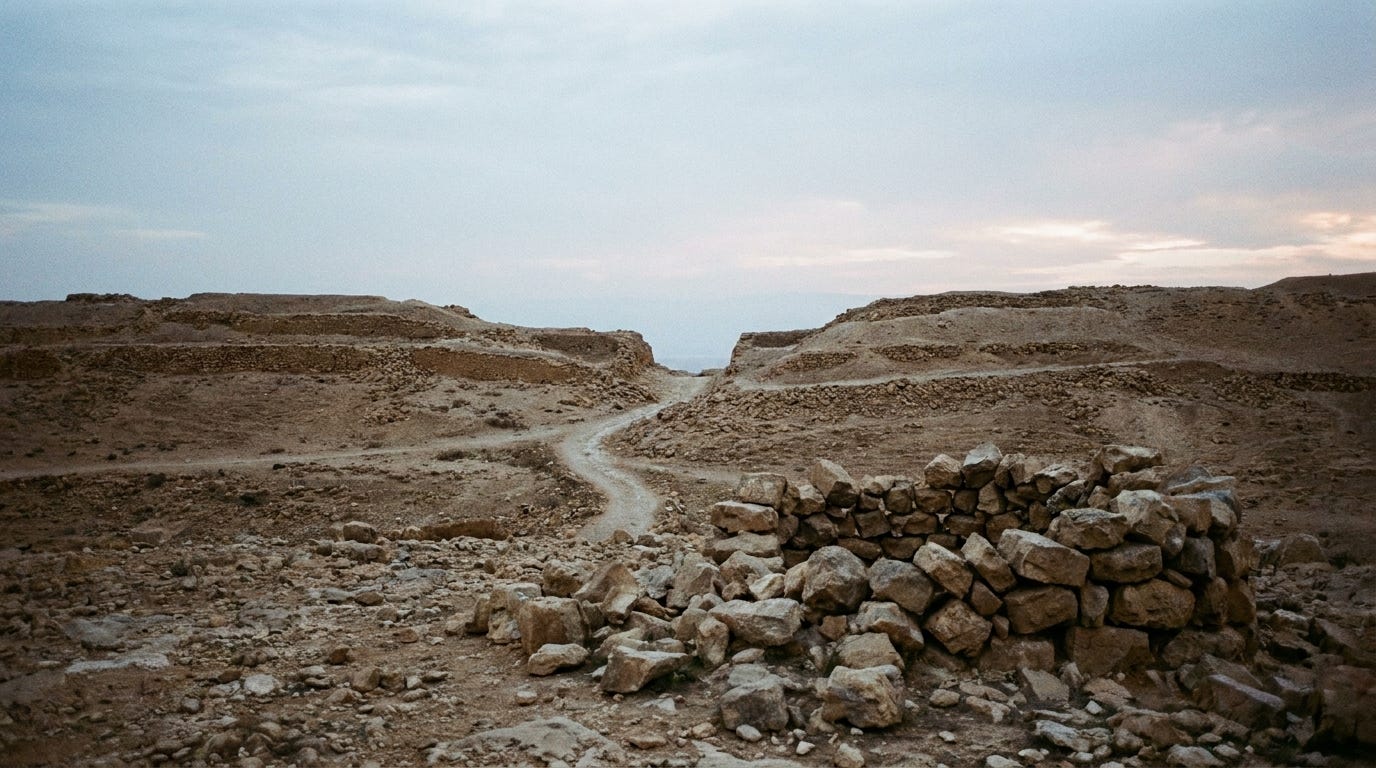
God promised His wandering people, "There I will give back her vineyards and make the Valley of Achor into a gateway of hope" (Hosea 2:15). Achor means trouble, and its root is the verb Jacob used at Shechem when he told his sons, "You have brought trouble upon me" (Genesis 34:30). Nobody at Shechem asked God anything, and Israel heard three words from verses 25 and 30 again in its own history: in the security God promised, at the Valley of Achor and in Egypt.
A city that felt secure
Unsuspecting translates betach (H983), security or ease, a city living with no guard up. Simeon and Levi "went into the unsuspecting city" (Genesis 34:25), and translators differ on who the Hebrew word describes: some read the city as feeling secure, and others read the brothers as coming in boldly.
The same word names the security God promised Israel: "You are to keep My statutes and carefully observe My judgments, so that you may dwell securely in the land" (Leviticus 25:18). Moses' last blessing over the tribes said, "So Israel dwells securely" (Deuteronomy 33:28), and David prayed, "for You alone, O LORD, make me dwell in safety" (Psalms 4:8). In each of those lines the security comes from God.
The word also names the ease of a city with no one to defend it. The Danite spies came to Laish and "saw that the people were living securely" (Judges 18:7), and later the Danites came "to a quiet and unsuspecting people, and they struck them with their swords" (Judges 18:27). Shechem and Laish both fell to the sword while they felt safe, and the safety David prayed for came from God alone. Jacob gave what his sons had done a name of his own.
Trouble, the word behind Achor
Jacob's word for trouble is akar (H5916), to stir up disaster that falls on a whole community, and it is the root of the place name Achor (H5911). Jacob said to Simeon and Levi, "You have brought trouble upon me" (Genesis 34:30), and he meant the whole household would pay for what two sons had done.
Israel heard the verb again at Jericho. Achan took plunder God had forbidden, and Joshua said, "Why have you brought this trouble upon us?" (Joshua 7:25). Then he said, "Today the LORD will bring trouble upon you." The place was called "the Valley of Achor to this day" (Joshua 7:26). Achan and Jacob's sons both took plunder, and both brought trouble on all their people.
Centuries later God named that valley again in Hosea 2:15 and promised to make it a gateway of hope. The God whose people kept bringing trouble on themselves promised to turn the place of trouble into the way back to Him. Jacob's other word in Genesis 34:30 was older still in Israel's memory.
A stench to the peoples of the land
Jacob said his sons had made him "a stench to the Canaanites and Perizzites" (Genesis 34:30), with ba'ash (H887), to stink, to become hateful to the people around you. Only a short time before, Jacob "arrived safely at the city of Shechem" (Genesis 33:18), and now every city around him had reason to hate his name.
The first readers of Genesis knew that verb from their own story. In Egypt, Israel's foremen said to Moses and Aaron, "you have made us a stench before Pharaoh and his officials; you have placed in their hand a sword to kill us" (Exodus 5:21). The verb is the same, and a sword is in it again. A people who had once said those words to Moses heard their father Jacob say them at Shechem.
They also heard what came next. God spoke to Jacob, "Arise, go up to Bethel" (Genesis 35:1), and as the family set out, "a terror from God fell over the surrounding cities, so that they did not pursue Jacob's sons" (Genesis 35:5). The God who brought Israel out of Egypt past Pharaoh's sword had brought Jacob's house out from among the Canaanites first.
Shechem, where Israel promised to obey
Shechem became the place where all Israel renewed its covenant with God, and the first readers of Genesis knew it as that place. "Joshua assembled all the tribes of Israel at Shechem" (Joshua 24:1), and there "they presented themselves before God." The people said, "We will serve the LORD our God and obey His voice" (Joshua 24:24), and Joseph's bones were buried "in the plot of land that Jacob had purchased from the sons of Hamor, Shechem's father" (Joshua 24:32).
Jacob's sons had used the sign of God's covenant to make a false covenant at Shechem, and nobody there listened for God's voice. Generations later Israel stood on the same ground and promised to obey His voice. Every Israelite who heard Genesis 34 read in the land heard it as the story of the city where their own covenant was renewed.
The God who speaks first
To know God is to bring Him the wrong and hear what He says, and Jacob's house learned it after the swords. Jacob had nothing to say to God in Genesis 34, and God spoke to him first. Then Jacob told his household, "Get rid of the foreign gods that are among you" (Genesis 35:2), and he remembered "God, who answered me in my day of distress" (Genesis 35:3).
We are the people who remember what God has said. When He answers you in a day of distress, write down what He said with the date in the Doxa app, and read it back the next time trouble comes. The God who promised to make the Valley of Achor a gateway of hope still speaks first to His people.
Keep exploring. If this raised a question, or brought back something God has said to you, take it further. Ask Doxa. It answers from Scripture, real stories, and your own journey, free in your browser. No signup to start.
Questions and comments are welcome below.
Download Doxa, the app for recording, weighing and remembering prophetic encouragement.