

The spiritual practice the church forgot. And why it might be the one we need most.
I was sitting at my desk last Tuesday, scrolling through a Word, now Google Doc I started in 2001. It’s a long document. Headers and dates and sources, hundreds of entries, typed up from voice recordings of people praying over me, things God had spoken into my life, moments where something broke through and I knew I had to write it down before it evaporated.
Some of those entries are almost twenty years old now. And here’s what gets me: the ones that hit hardest today aren’t the fresh ones. They’re the old ones. The words spoken over me in a small room in Cape Town in 2006 that I didn’t fully understand at the time, but that describe my life right now with uncanny precision. The prayer someone offered in passing at a church weekend away that I nearly forgot to record. The encouragement that felt generic then and feels surgical now.
Encouragements compound. Like interest. Like kilometres on the bike. Like trust in a marriage. They accumulate meaning over time, and the ones you recorded fifteen years ago can be the very thing that keeps you standing when the road gets impossibly steep.
But only if you remember them.
The Gap No One Noticed
I’ve been thinking a lot about spiritual disciplines lately, which is probably inevitable when you’re building an app designed to help people record and recall what God has promised them and what He has done.
And something has been bothering me.
Pick up any of the major books on spiritual disciplines published in the last fifty years and look at the table of contents. Richard Foster’s Celebration of Discipline, published in 1978, has sold millions of copies and is widely considered the definitive modern work on the subject. His twelve disciplines are meditation, prayer, fasting, study, simplicity, solitude, submission, service, confession, worship, guidance, and celebration. Dallas Willard’s The Spirit of the Disciplines organises his into disciplines of abstinence (solitude, silence, fasting, frugality, chastity, secrecy, sacrifice) and disciplines of engagement (study, worship, celebration, service, prayer, fellowship, confession, submission). Donald Whitney’s Spiritual Disciplines for the Christian Life, which has sold over 600,000 copies, covers Bible intake, prayer, worship, evangelism, serving, stewardship, fasting, silence and solitude, journaling, and learning. John Mark Comer’s Practicing the Way, a recent New York Times bestseller, centres on Sabbath, Scripture, prayer, community, simplicity, generosity, and what he calls “the practices of Jesus.”
These are excellent books. I’ve read most of them. I’ve benefited from them deeply.
But not one of them includes remembering.
Not one of them treats the deliberate, intentional practice of recording and recalling what God has promised and what God has done as a standalone spiritual discipline. Some touch on it obliquely, usually under “journaling” or “meditation” or “gratitude.” But the discipline itself? The act of stacking stones? Of building a personal record of God’s faithfulness? Of going back to what was spoken, what was seen, what was experienced, and letting it fuel you for the next climb?
It’s not there.
And that strikes me as a glaring omission, because when you open the Bible, remembering isn’t a footnote. It’s everywhere. It might be the most commanded spiritual act in all of Scripture.
In fact, you could argue that Scripture itself exists because of remembering. Would we know what God has said and done if it hadn’t been faithfully recorded? The Bible is, in a very real sense, the ultimate record of God’s faithfulness, the greatest remembering document ever assembled. And every time we practise communion, we are remembering Jesus. He told us to. It’s built into the architecture of the faith.
What Scripture Actually Says About Remembering
Consider the evidence.
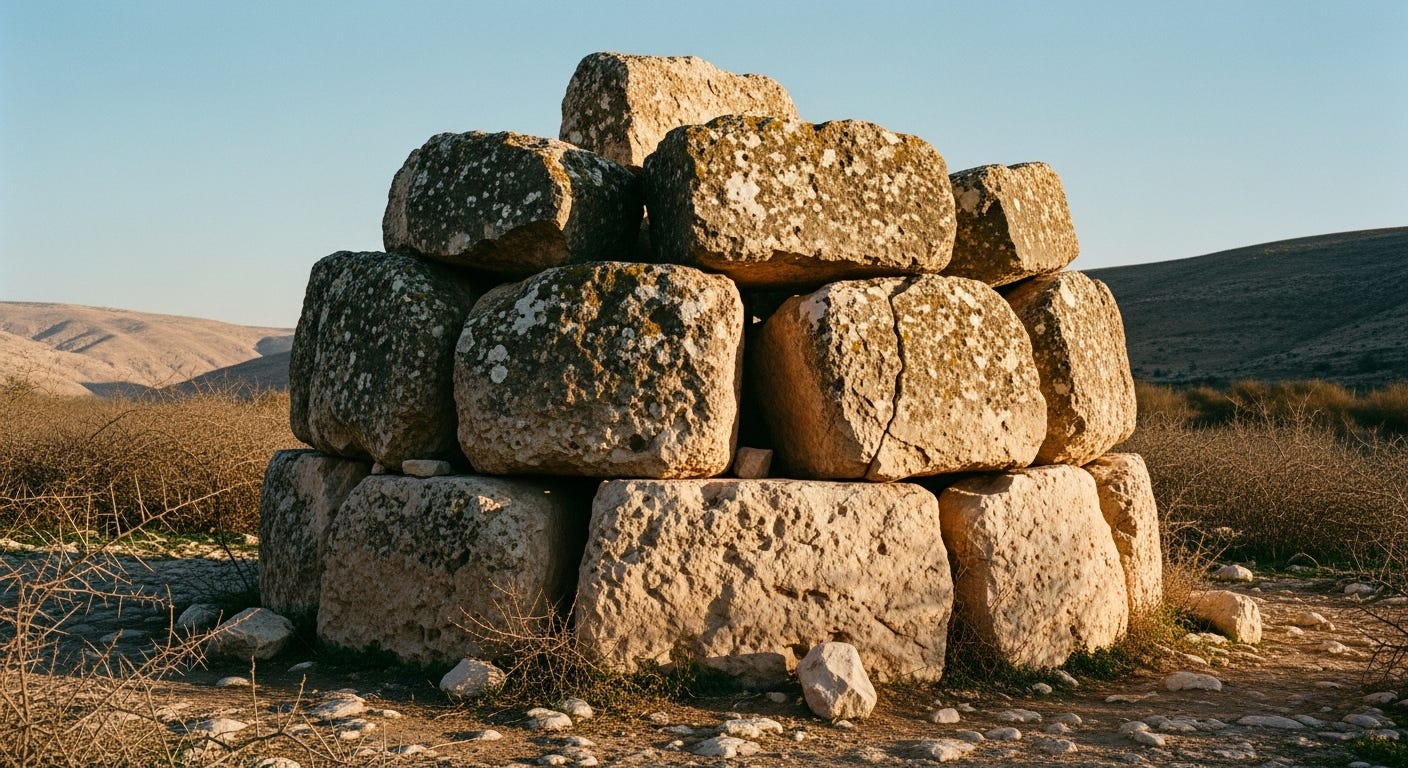
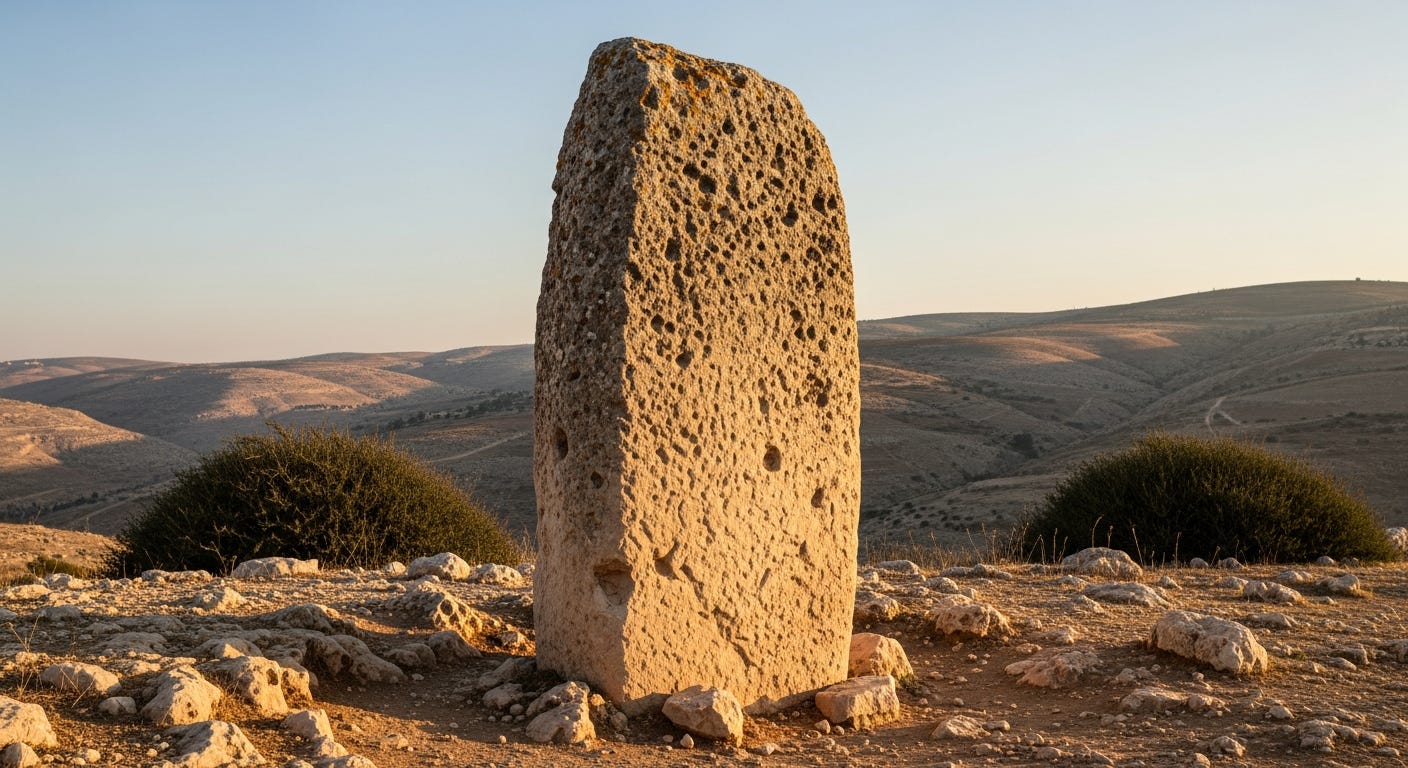
When the Israelites crossed the Jordan into the Promised Land, God didn’t say, “Great job, carry on.” He told Joshua to appoint twelve men, one from each tribe, to haul twelve stones out of the middle of the riverbed and stack them on the bank. Why? So that when their children asked, “What do these stones mean?” they could say, “This is where God stopped the river and brought us through on dry ground.” Those stones were physical, tangible, heavy reminders of something God had done that was too important to leave to memory alone. (Joshua 4:1–7)
When Samuel defeated the Philistines at Mizpah, he took a stone and set it up between Mizpah and Shen and named it Ebenezer, “the stone of help,” saying, “Thus far the Lord has helped us.” That stone wasn’t decorative. It was a stake in the ground. A line drawn in the sand of history that said: up to this point, God has been faithful. Don’t forget it. (1 Samuel 7:12)
When Jesus sat with His disciples at that last meal, He took bread, broke it, and said, “Do this in remembrance of me.” Every time the church gathers around the communion table, we are practising a discipline of remembering. But how often do we recognise it as such? (Luke 22:19)
The Psalms are saturated with the command to remember. Psalm 77 records Asaph in crisis, his faith nearly collapsed, until he says, “I will remember the Lord’s works; yes, I will remember your ancient wonders.” And from that moment, the psalm pivots from despair to worship. The act of remembering changed everything.
Psalm 78 is even more direct. Asaph writes that the stories of God’s faithfulness must be passed to the next generation “so that they should set their hope in God and not forget the works of God.” The purpose of remembering isn’t nostalgia. It’s survival.