

Originally published on the Doxa blog.
The LORD saw the wife Jacob did not love. Over the next few years Leah bore four sons, and she gave the fourth a name that means praise.
The LORD saw Leah
God opened Leah's womb because He saw that her husband did not love her. Genesis says it in one line: "When the LORD saw that Leah was unloved, He opened her womb; but Rachel was barren" (Genesis 29:31).
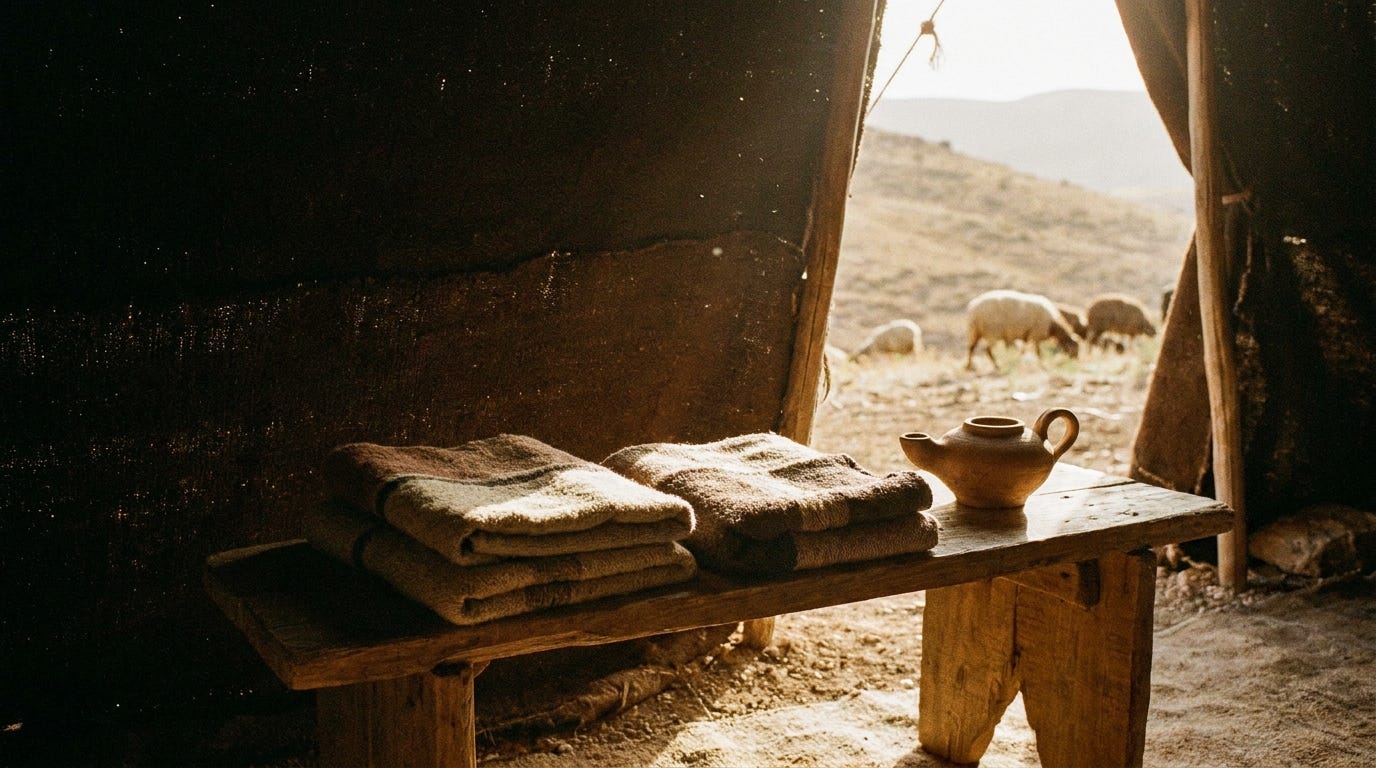
Jacob had served seven years for Rachel and owed Laban seven more. Leah was the bride Laban slipped into the tent in the dark, the wife Jacob found beside him at dawn and never wanted. In a camp of tents and goat-hair walls, everyone knew which tent Jacob went to at night. The LORD knew too, and He moved first. At Bethel He had told Jacob, "Your descendants will be like the dust of the earth" (Genesis 28:14), and He began to keep that promise through the wife Jacob passed by.
Three names and one hope
Reuben means see, a son, Simeon means heard, and Levi means joined; the first two names told what the LORD had done for Leah, and the third told only what she hoped from Jacob. At Reuben's birth she said, "The LORD has seen my affliction. Surely my husband will love me now" (Genesis 29:32). At Simeon's: "Because the LORD has heard that I am unloved, He has given me this son as well" (Genesis 29:33). At Levi's: "Now at last my husband will become attached to me, because I have borne him three sons" (Genesis 29:34).
Those first two names were a record. Each time Leah called Reuben by name, she said out loud that the LORD had seen her. Each time she called Simeon, she said that He had heard. She was writing down what God had done in the only book she had, the names of her children. By the third son, God had dropped out of her words, and she was still waiting for Jacob to turn to her.
This time I will praise
Leah named her fourth son Judah because, at his birth, she turned her words to the LORD. "This time I will praise the LORD" (Genesis 29:35). Judah sounds like the Hebrew for praise. Jacob is absent from that sentence. Leah had come to know the God who saw her and heard her, and knowing Him gave her a reason to praise.
The son of Judah
Jesus came from the tribe of Judah, the son Leah named for praise. The writer of Hebrews put it plainly: "For it is clear that our Lord descended from Judah" (Hebrews 7:14). The King of Israel and the Saviour of the world came from the line of the wife Jacob never chose.
Centuries later, a young woman from Nazareth sang about the child she carried and said what Leah learned in that tent: "For He has looked with favor on the humble state of His servant" (Luke 1:48).
Name what He has done
Leah kept a record of God's kindness in the names she spoke every day. You can keep one too. When the LORD sees you in a hard season, when He answers a prayer or speaks to you through Scripture or an encouragement someone shares, write down what He did and the date in the Doxa app. Read it back on the days you are waiting for someone to notice you.
We are the people who remember what God has done, and as we remember, we praise Him. The LORD sees you, and He hears.
What has the LORD seen in your life that you could name today?
Keep exploring. If this raised a question, or brought back something God has said to you, take it further. Ask Doxa. It answers from Scripture, real stories, and your own journey, free in your browser. No signup to start.
Download Doxa, the app for recording, weighing and remembering prophetic encouragement.
Also please feel free to read the Doxa Deeper Dive below where we delve into the original language and historical context.
The Doxa Deeper Dive
Leah's Two Words Israel Said Over Every Harvest (Genesis 29:31–35)
Originally published on the Doxa blog.
Two Hebrew verbs sit inside the names of Leah's first two sons, see in Reuben and hear in Simeon, and an English reader passes them in a breath. Israel heard them as the words of its own rescue from Egypt, and every one of Leah's four names became a word Israel kept on saying.
Seen my affliction
When Leah said "The LORD has seen my affliction" (Genesis 29:32), she used the words Scripture uses for God noticing His people's suffering and coming down to act. The first verb is ra'ah (H7200), to see, and Reuben's name is built on it: Reuben (H7205), re'u ben, see, a son. At the next birth she used the second verb, shama (H8085), to hear, and Simeon (H8095) is built on that. With both verbs goes the noun oni (H6040), affliction, the low and pressed-down state of someone who cannot lift themselves.
Follow those words out of Genesis. At the burning bush God said to Moses, "I have indeed seen the affliction of My people in Egypt" (Exodus 3:7). Same verb, same noun, and in the same breath God said He had heard them crying out. The angel who met Hagar in the wilderness put oni beside shama: "the LORD has heard your cry of affliction" (Genesis 16:11). Years later, at the end of his twenty years with Laban, Jacob himself said it: "God has seen my affliction and the toil of my hands" (Genesis 31:42). The husband who would not look at Leah ended up using her words. The word Genesis used for Leah herself went further still, into Israel's law.
The unloved wife
The Hebrew behind unloved is senu'ah, from sane' (H8130), the ordinary verb for hate, and in a household with two wives it named the one who ranked second. In that world a second wife's place and her future rested on her sons. That is why Leah's hope climbed with each birth: a son was security, and three sons might win a husband.
Moses later wrote a law for exactly this house. "If a man has two wives, one beloved and the other unloved, and both bear him sons, but the unloved wife has the firstborn son" (Deuteronomy 21:15), the father may not hand the firstborn's right to the favourite's boy. "Instead, he must acknowledge the firstborn, the son of his unloved wife, by giving him a double portion of all that he has" (Deuteronomy 21:17). Unloved there is the same word God saw in Genesis 29:31. The God who saw Leah wrote her protection into Israel's law. Her third son's name went into Israel's worship.
Joined to the house of God
The root of the name Levi is lavah (H3867), to join or be attached, and Leah gave the name hoping Jacob would finally be joined to her. The verb came back in the wilderness. When God set the tribe of Levi beside Aaron to serve at the tabernacle, He told Aaron to bring them "that they may join you and assist you and your sons before the Tent of the Testimony" (Numbers 18:2). Join there is lavah, a play on Levi's name.
The tribe named for Leah's hope to be joined to her husband became the tribe joined to the LORD's service. Levi's inheritance was the LORD Himself: "the LORD is his inheritance, as the LORD your God promised him" (Deuteronomy 10:9). Leah asked to be joined to a man. God joined her son's whole house to Himself. Her fourth son's name became the name of the whole people.
Praise that comes from God
The root of the name Judah is yadah (H3034), to praise or give thanks, and the name never left the people. Judah (H3063), Yehudah, gave the tribe its name, then the southern kingdom, and finally the word Jew. On his deathbed Jacob blessed his fourth son with the same root: "Judah, your brothers shall praise you" (Genesis 49:8).
Paul, a Jew of the tribe of Benjamin who read Hebrew, wrote to the church in Rome about who a true Jew is and ended on Leah's word: "Such a man's praise does not come from men, but from God" (Romans 2:29). Leah gave her praise to God. Paul turned the name around: the true Jew receives his praise from God.
Words said at the altar
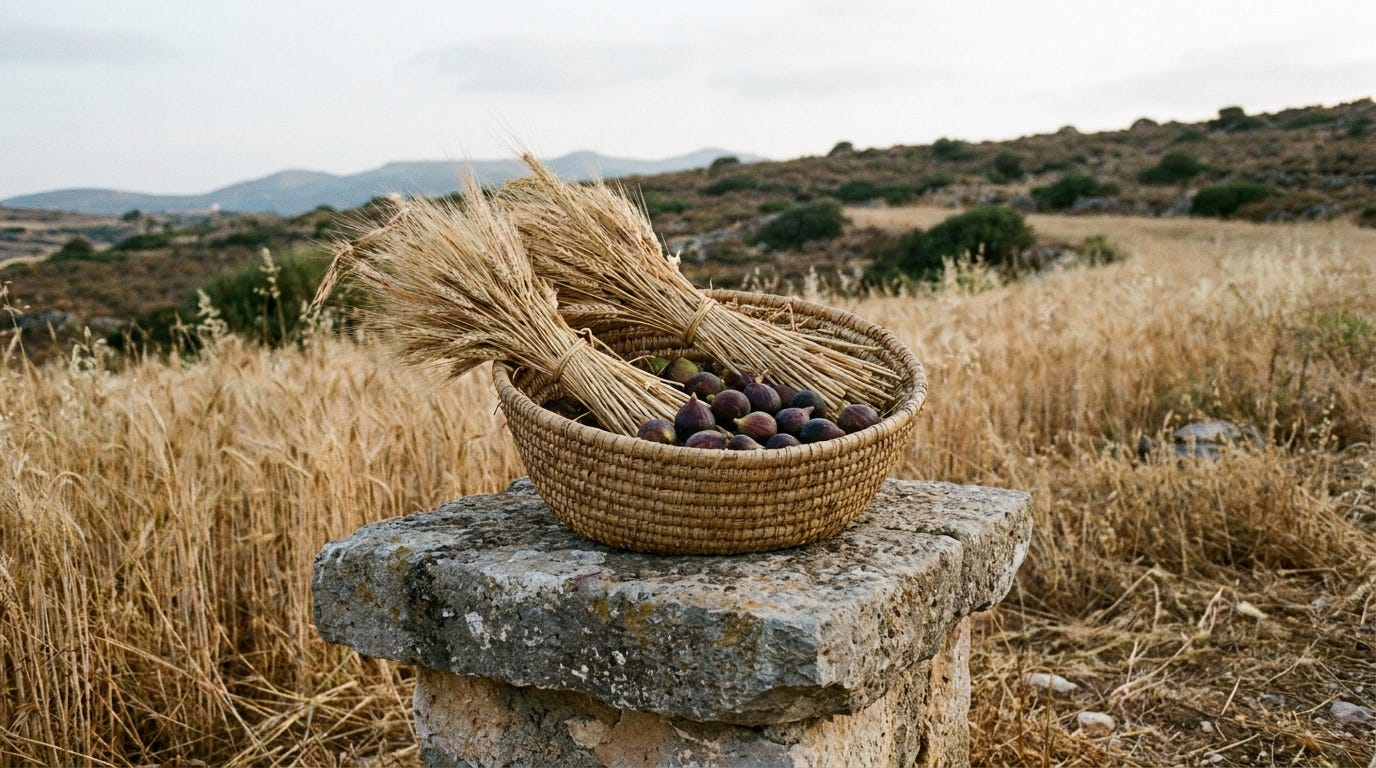
The first readers of Genesis heard Leah's words as their own, because every Israelite farmer said the same two words, heard and saw, over his harvest. Moses commanded each farmer of that people, brought out of Egypt and settled in the land, to carry his first basket to the priest and say: "My father was a wandering Aramean" (Deuteronomy 26:5). That father was Jacob, living in Aram in Laban's house. Then came the line Moses gave every farmer to say: "and the LORD heard our voice and saw our affliction, toil, and oppression" (Deuteronomy 26:7).
Heard. Saw. Affliction. A farmer from the tribe of Reuben or Simeon standing at that altar said his own father's name in his creed. Leah recorded what God had done in her sons' names, Israel recorded it in words said aloud every harvest, and both came to know the LORD as the God who sees and hears.
That is the practice still. We write down what God has seen and heard in our own lives, with the date, in the Doxa app, and when the harvest comes we read it back and praise Him by name. "This time I will praise the LORD" (Genesis 29:35).
Keep exploring. If this raised a question, or brought back something God has said to you, take it further. Ask Doxa. It answers from Scripture, real stories, and your own journey, free in your browser. No signup to start.
Questions and comments are welcome below.
Download Doxa, the app for recording, weighing and remembering prophetic encouragement.