

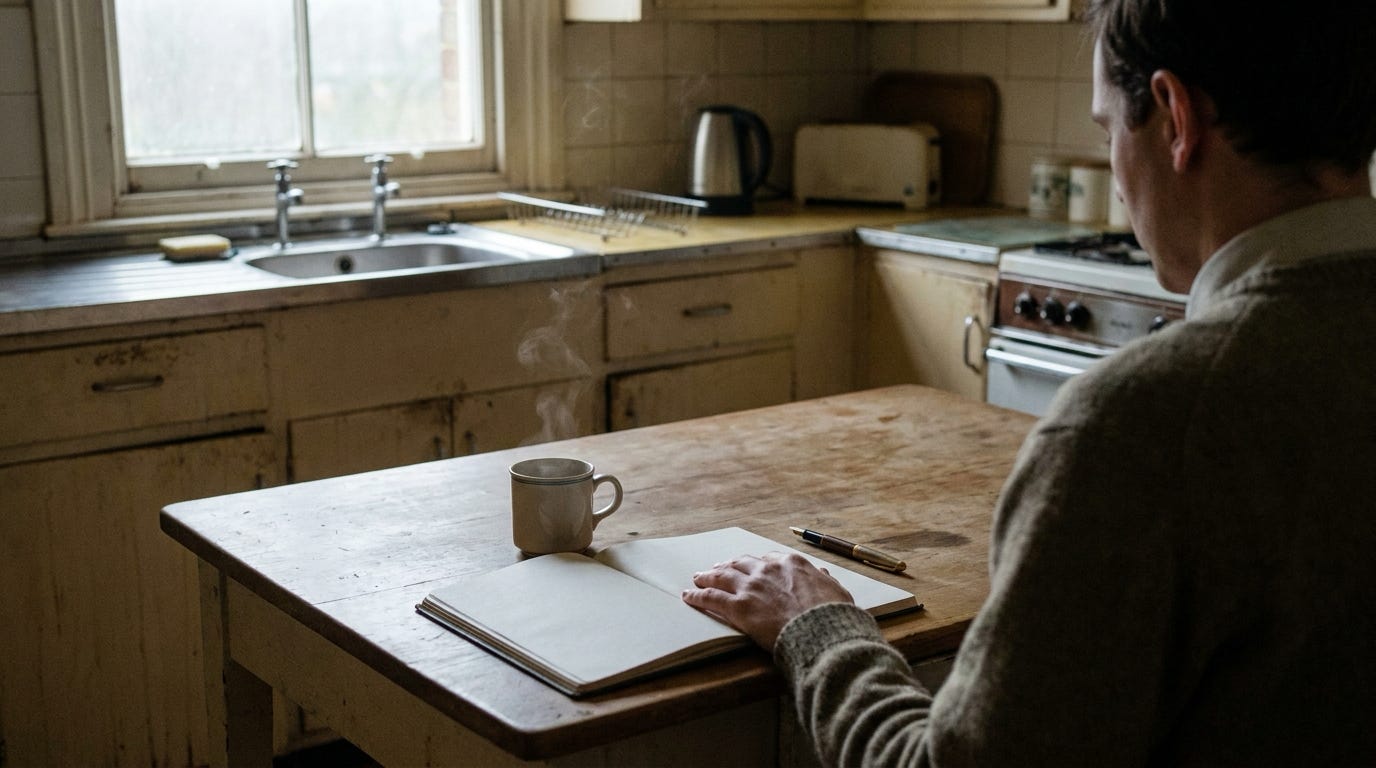
There is a particular kind of week where God feels less like a presence and more like a rumor. You know the verses. You could recite them to a friend without missing a word. But said to yourself, in your own kitchen, on your own hard morning, they land flat. The words are true. They just do not reach.
Most people wait for the feeling to come back before they do anything with what God has said. They set the promise down until it feels warm again. And that is exactly how promises get lost. Not thrown away. Filed. Set on a shelf during the cold stretch and quietly forgotten by the time the warmth returns, so that when the next hard week arrives you are starting from nothing, reaching for words you can no longer quite remember.
Lamentations is written from the bottom of one of those weeks. A city in ruins, the writer's own hope poured out on the ground. And in the middle of it comes a hinge sentence: "Yet I call this to mind, and therefore I have hope. Because of the loving devotion of the LORD we are not consumed, for His compassions never fail. They are new every morning; great is Your faithfulness."
Read the order slowly. Hope did not arrive first and make the remembering possible. The writer chose to call something to mind, deliberately, against everything in front of him, and hope followed after. Remembering was the act. Hope was the result.
This matters because most of us have the sequence backwards. We assume we will remember once we feel like praising again, that the good record can wait for a good day. But the good day is built out of the records kept on the bad ones. The remembering is not the reward for hope returning. It is the road hope travels back to you on.
That is the discipline underneath the whole faith journey. Not a mood you manage to summon, but something you do with your memory and your hands. You call to mind. And you can only call to mind what you actually kept. The mercies that are new every morning are the easiest of all to lose, precisely because they are daily and small and unremarkable in the moment. Written down, they become a record you can read back on the morning that feels nothing like mercy.
So here is the practice, plainly.
When God says something to you, or does something you did not earn, write it down that same day. Not the tidy version you would tell from a stage. The real one, while it is still fresh, before memory rounds off the edges and turns it into a nice general feeling. The Doxa app is built to hold it, dated and easy to find again.
Date it. A dated word reads completely differently a year later, when you can finally see what the waiting was quietly doing.
Keep the hard ones too. The promise you are still holding with empty hands belongs in the record right next to the ones already answered. It is not one bit less real for being unfinished.
Then read it back in the next dark week. That is the whole point of keeping it. Not a scrapbook to admire. A supply line to draw from.
The words you write in the dark are the ones you will need most in the next hard stretch, and they will only be waiting there for you if you kept them. Hope followed the remembering. It has always been that order.
What is one thing God has said or done that you have never actually written down?