

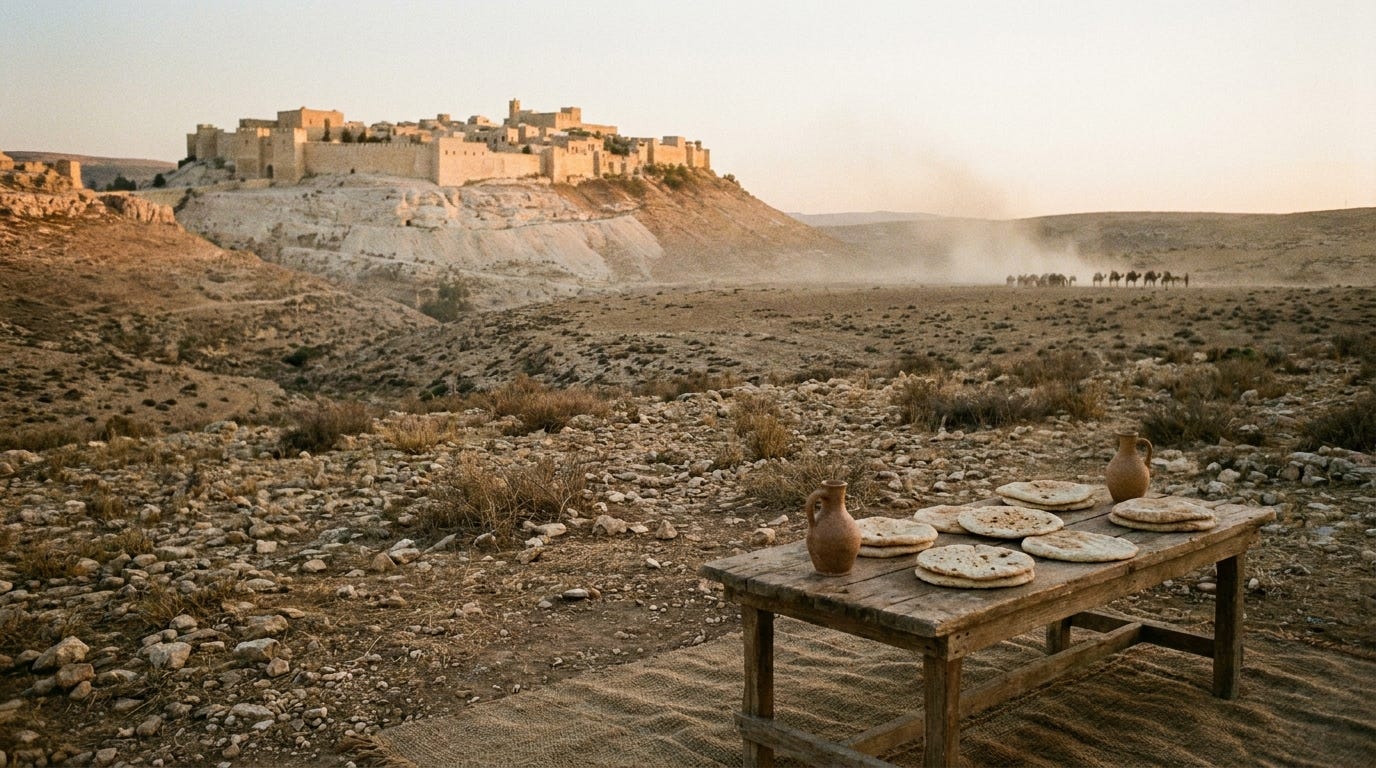
Abram is coming home from a battle he had no business winning.
Behind him are the freed captives and the plunder of five cities. Ahead of him, two kings come out to meet him in the Valley of Shaveh. One is the king of Sodom, and everyone can guess what he wants. The other is a man Genesis has not named once before and will not name again. "Then Melchizedek king of Salem brought out bread and wine" (Genesis 14:18). A priest of God Most High, come with a blessing for a tired soldier.
The first thing that happens after the victory is a blessing. "Blessed be Abram by God Most High, Creator of heaven and earth" (Genesis 14:19), and he keeps going, "blessed be God Most High, who has delivered your enemies into your hand" (Genesis 14:20). A stranger names the God Abram serves. The One who made everything there is. The One who just handed him the battle. Abram takes it in and answers with his hands. "Then Abram gave Melchizedek a tenth of everything" (Genesis 14:20). A tenth of all he is carrying, given away before he has said a word, to the God he has just heard named.
Then the king of Sodom makes his offer, and it sounds generous. "Give me the people, but take the goods for yourself" (Genesis 14:21). By every custom of the day the spoil was Abram's to keep. He turns it down flat. "I have raised my hand to the LORD God Most High, Creator of heaven and earth" (Genesis 14:22), he says, "that I will not accept even a thread, or a strap of a sandal, or anything that belongs to you, lest you should say, 'I have made Abram rich'" (Genesis 14:23).
They are almost Melchizedek's own words. God Most High, Creator of heaven and earth. Abram heard God named an hour ago by a stranger, and now that name is on his own lips as an oath. He held onto what he heard, and it set what he did next. If the God he serves owns heaven and earth, a king of Sodom cannot make him rich. He would rather stay poor and let God do the providing.
That is what it looks like to know the God who speaks. A true word about who God is, taken in and held, changes what your hand reaches for. And this priest who steps out of nowhere with bread and wine, king of righteousness and king of peace, with no father or mother named in the record, points past himself. Generations later the Scriptures say of the coming King, "You are a priest forever in the order of Melchizedek" (Psalms 110:4). The bread, the wine, the blessing, a priest who was also a king. Abram met a small early picture of Jesus on the road home, long before anyone could have known it.
So do what Abram did. When someone reminds you who God is, and the reminder holds true to Scripture, write it down and keep it where you can find it again. Then let it set your next decision, the way Melchizedek's blessing set Abram's.
What has God shown you about who He is that you could stand on the next time an easier offer comes along?
The Doxa Deeper Dive
Melchizedek and Jesus: The Priesthood That Outranks the Law (Genesis 14)
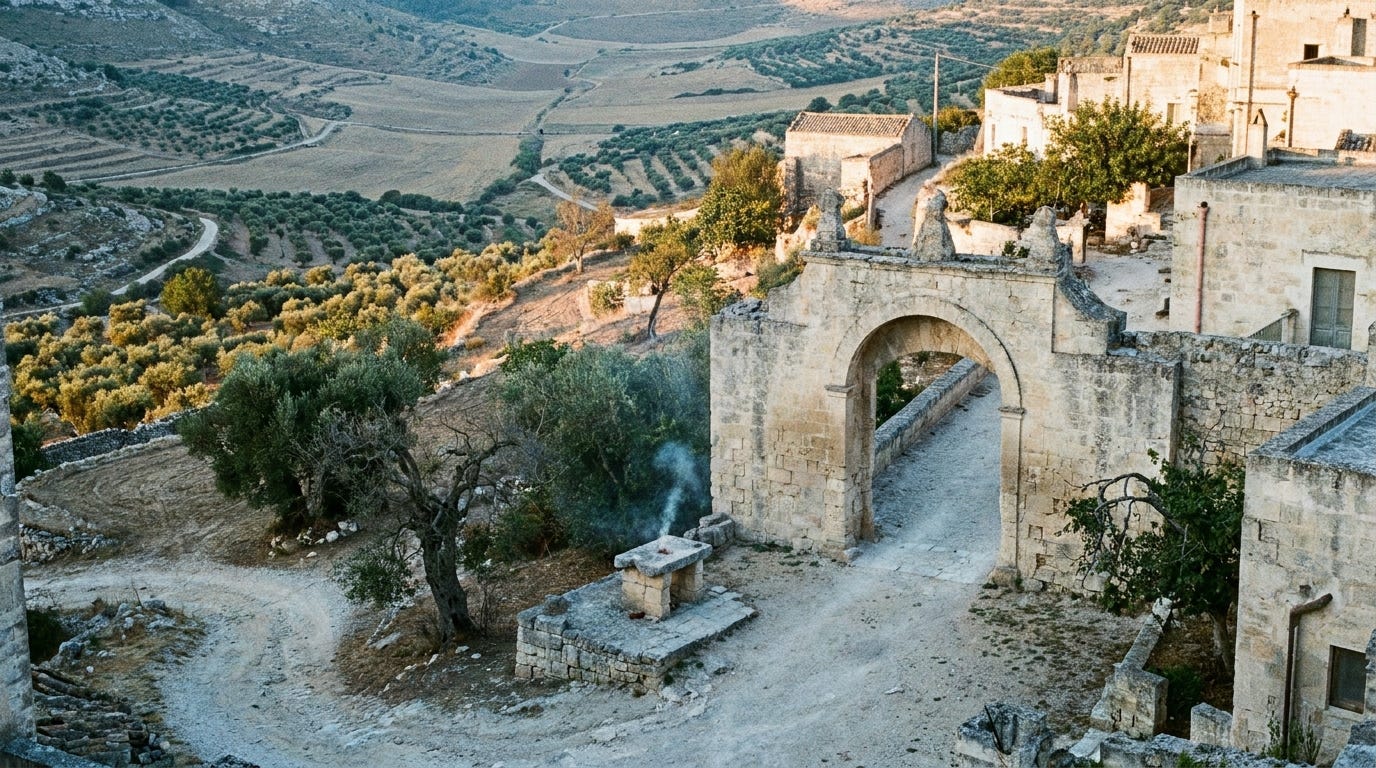
Genesis is careful with names. It gives us genealogies, fathers and sons, whole chapters of who begot whom. So it is strange that the most important stranger in Abram's story arrives with almost nothing attached to him.
Who is Melchizedek, the king of Salem?
He steps into the account for four verses and is gone. "Then Melchizedek king of Salem brought out bread and wine" (Genesis 14:18), and the text adds that he was priest of God Most High. No father is named, no mother, no line before him and none after.
His name is a small sermon on its own. Melchizedek, malki-tsedeq (H4442), means 'my king is righteousness', built on tsedeq (H6664), what is right and just. And he is king of Salem, shalem (H8004), the old name for Jerusalem and the root of shalom, peace. King of righteousness, then king of Salem, king of peace. The order matters. Righteousness comes first and peace follows it, the same order the whole Bible keeps to the end.
He brings out bread and wine. In the ancient world a king met a returning army with food, ordinary provisioning after a long march. This king is a priest, and what he carries is a blessing. He has come to say something true about God over a tired man.
What does it mean that God is Most High, Creator of heaven and earth?
"Blessed be Abram by God Most High, Creator of heaven and earth" (Genesis 14:19). 'God Most High' is El Elyon (H5945), the first time in Scripture God is called the Most High. A Canaanite king says it, and he says it rightly. Above every power that has just marched across the map, there is One higher.
The phrase 'Creator of heaven and earth' translates a Hebrew wording built on qanah (H7069). Nearly everywhere else in the Old Testament qanah means to acquire, to buy, to take into your possession. It is the verb Eve reaches for at the birth of Cain in Genesis 4:1, the sense of having gained something into her own hands. So when Melchizedek calls God the qanah of heaven and earth, he is naming God the owner of it all, the one whose hand made it and whose hand holds it still. Every field, every city, every king in the valley below is His to give.
Abram is about to be offered a fortune.
Why did Abram give a tenth, then refuse a fortune?
Two responses come out of Abram, and both of them start with what he has just heard about God.
First, "Abram gave Melchizedek a tenth of everything" (Genesis 14:20). This is the first tithe in the Bible, ma'aser (H4643), and it comes centuries before the Law will ever require one. In the ancient Near East a victorious soldier commonly gave a tenth of his plunder to the god who handed him the win. Abram keeps the custom and aims it true, at the God Most High he has just been told about.
Then the king of Sodom makes his move. "Give me the people, but take the goods for yourself" (Genesis 14:21). Abram had every right to the spoil. He refuses all of it. "I have raised my hand to the LORD God Most High, Creator of heaven and earth" (Genesis 14:22), he swears, "that I will not accept even a thread, or a strap of a sandal, or anything that belongs to you, lest you should say, 'I have made Abram rich'" (Genesis 14:23).
Read his oath against Melchizedek's blessing. They are the same words. God Most High, Creator of heaven and earth. Abram heard God named an hour before, and now that naming is the ground he swears on. If God is the qanah of everything, the owner of heaven and earth, then a king of Sodom cannot make Abram rich. To take the goods would be a lie about where his wealth comes from. So he lets it go and waits for the God who owns it all to provide. The very next verse proves him right: "I am your shield, your very great reward" (Genesis 15:1).
How does Melchizedek point to Jesus?
A priest-king with no recorded beginning, who blesses Abram and receives his tithe, is too large a figure for four verses to hold, and Scripture knows it. A thousand years later David writes of the coming King, "You are a priest forever in the order of Melchizedek" (Psalms 110:4). The book of Hebrews then spends a whole chapter on it, and the argument is startling. Since Abraham paid a tenth to Melchizedek, and Levi was still unborn in the body of his forefather, Levi in a sense paid the tithe too (Hebrews 7:9-10). The priesthood that would one day run the whole temple system bowed, before it existed, to this one man at a roadside.
That is the point of the whole meeting. Melchizedek's priesthood is older and higher than Aaron's, and it is the pattern Christ fulfils: a priest who is also a king, of righteousness and then of peace, who does not inherit his office and never hands it on, because He holds it forever. Even the bread and the wine wait for their meaning. Abram met, on the road home from battle, a small early sketch of the One who would one day take bread and wine and call them His body and His blood.
This is why the passage is finally about knowing God and being known by Him. Abram was told the truth about who God is, through an unlikely mouth, and he held it tightly enough to let it govern his money and his pride. Knowing God means letting the fact that He owns heaven and earth settle what you will and will not take from anyone else. Hear who He is. Write it where you will find it again. Then hold it the next time an easier offer comes for it.
Keep exploring. If this raised a question, or brought back something God has said to you, take it further. Ask Doxa. It answers from Scripture, real stories, and your own journey, free in your browser. No signup to start.
Questions and comments are welcome below.
Download Doxa, the app for recording, weighing and remembering prophetic encouragement.