

Originally published on the Doxa blog.
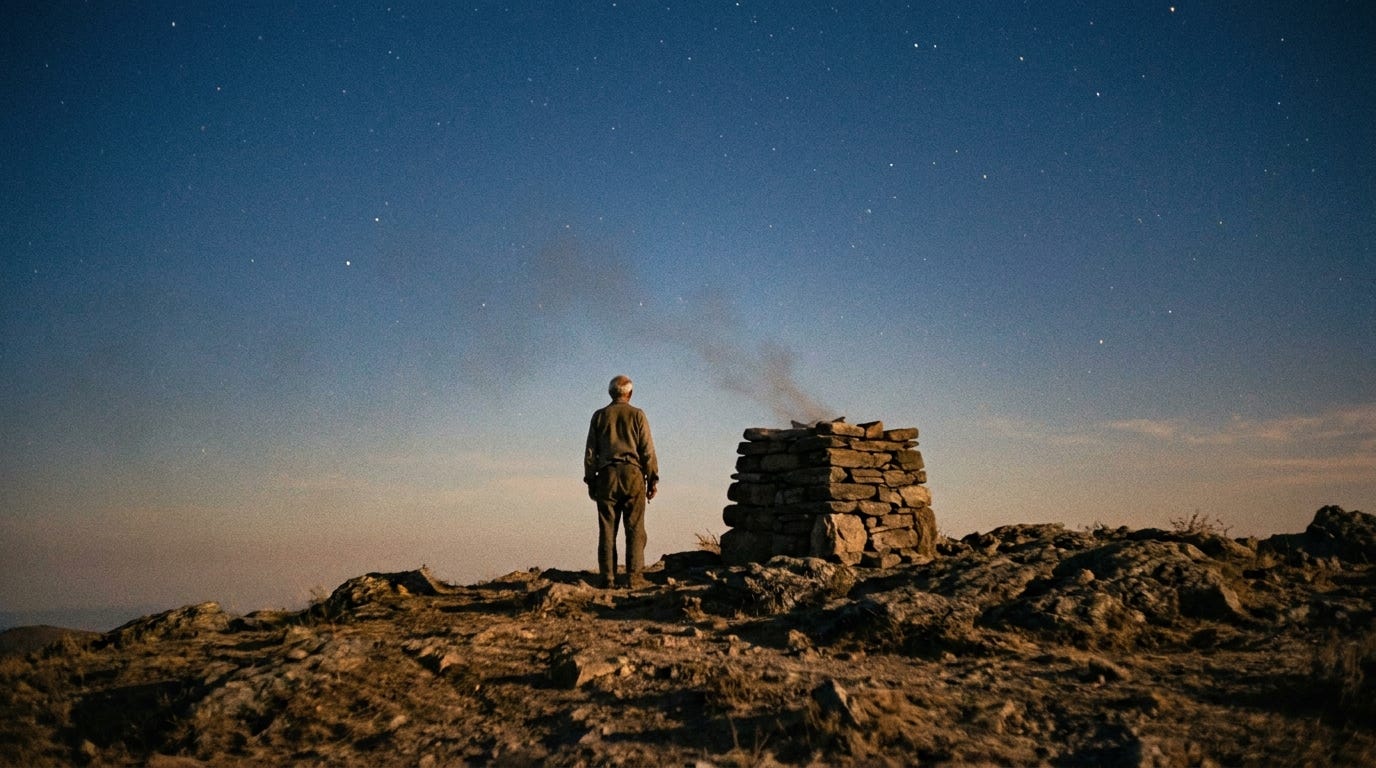
The ram was still burning when the voice came again. "And the angel of the LORD called to Abraham from heaven a second time" (Genesis 22:15).
Abraham had already heard God on this journey, first the command three days earlier and then his own name, called twice while the knife was in his hand. He had named the mountain. God had more to say.
What did God promise Abraham in Genesis 22:15–18?
"By Myself I have sworn, declares the LORD, that because you have done this and have not withheld your only son" (Genesis 22:16). Then the promise itself: "I will surely bless you, and I will multiply your descendants like the stars in the sky and the sand on the seashore. Your descendants will possess the gates of their enemies" (Genesis 22:17).
Most of these words were old. Abraham had stood outside his tent years before and been told to count the stars (Genesis 15:5). The blessing for every nation went back to the first call in Haran (Genesis 12:3). What was new was the oath. This is the first time Genesis shows God swearing, and with no one higher to call as witness, He swore by Himself. The letter to the Hebrews puts it plainly: "since He had no one greater to swear by, He swore by Himself" (Hebrews 6:13).
God's word was already true, and Hebrews gives the reason for the oath. "So when God wanted to make the unchanging nature of His purpose very clear to the heirs of the promise, He guaranteed it with an oath" (Hebrews 6:17). The oath was for Abraham, and for everyone who would hold the same promise after him, so that we "may be strongly encouraged" (Hebrews 6:18).
What does "because you have obeyed My voice" mean?
The oath ends on Abraham's part in it: "because you have obeyed My voice" (Genesis 22:18). The Hebrew verb is shama', to hear. Hebrew uses the same word for hearing and for obeying, so to hear God's voice properly is to act on it. Abraham had heard, and walked three days on what he heard. God made Himself known to a man who listened, and Abraham came to know Him as the God who keeps His word with an oath.
How does Genesis 22:18 point to Jesus?
"And through your offspring all nations of the earth will be blessed" (Genesis 22:18). Paul noticed that the promise speaks of one offspring, a single seed, "meaning One, who is Christ" (Galatians 3:16). The blessing sworn on Moriah reaches the nations through the Son God did not withhold.
Some two thousand years after Moriah, Zechariah held his newborn son John and sang that God had remembered "the oath He swore to our father Abraham" (Luke 1:73). The Messiah was about to be born, and a priest was still singing about the oath God swore on that mountain.
Who is Rebekah in Genesis 22?
Abraham walked home to Beersheba (Genesis 22:19). Some time later a report came about his brother Nahor's family: eight sons, a list of names, and one granddaughter. "And Bethuel became the father of Rebekah" (Genesis 22:23). Abraham could not have known what that line meant. The girl who would marry Isaac was already alive in his brother's household, and God was keeping the oath before Abraham saw how.
God spoke to Abraham twice on that mountain, and the second time He confirmed what He had already said. When God says something to you and then says it again, through Scripture, a friend or a quiet moment of prayer, record both times in the Doxa app with the dates. You will want to find them both on the day the promise looks furthest away.
What has God said to you more than once?
Keep exploring. If this raised a question, or brought back something God has said to you, take it further. Ask Doxa. It answers from Scripture, real stories, and your own journey, free in your browser. No signup to start.
Download Doxa, the app for recording, weighing and remembering prophetic encouragement.
Also please feel free to read the Doxa Deeper Dive below where we delve into the original language and historical context.
The Doxa Deeper Dive
Moses Prayed This Verse to Save Israel: God's Oath in Genesis 22
Originally published on the Doxa blog.
The Hebrew verb for swearing an oath is shaba' (H7650). It is spelled with the same three letters as sheba' (H7651), the number seven, and Genesis plays on the pair in the chapter just before this one.
Why does Beersheba matter after God's oath?
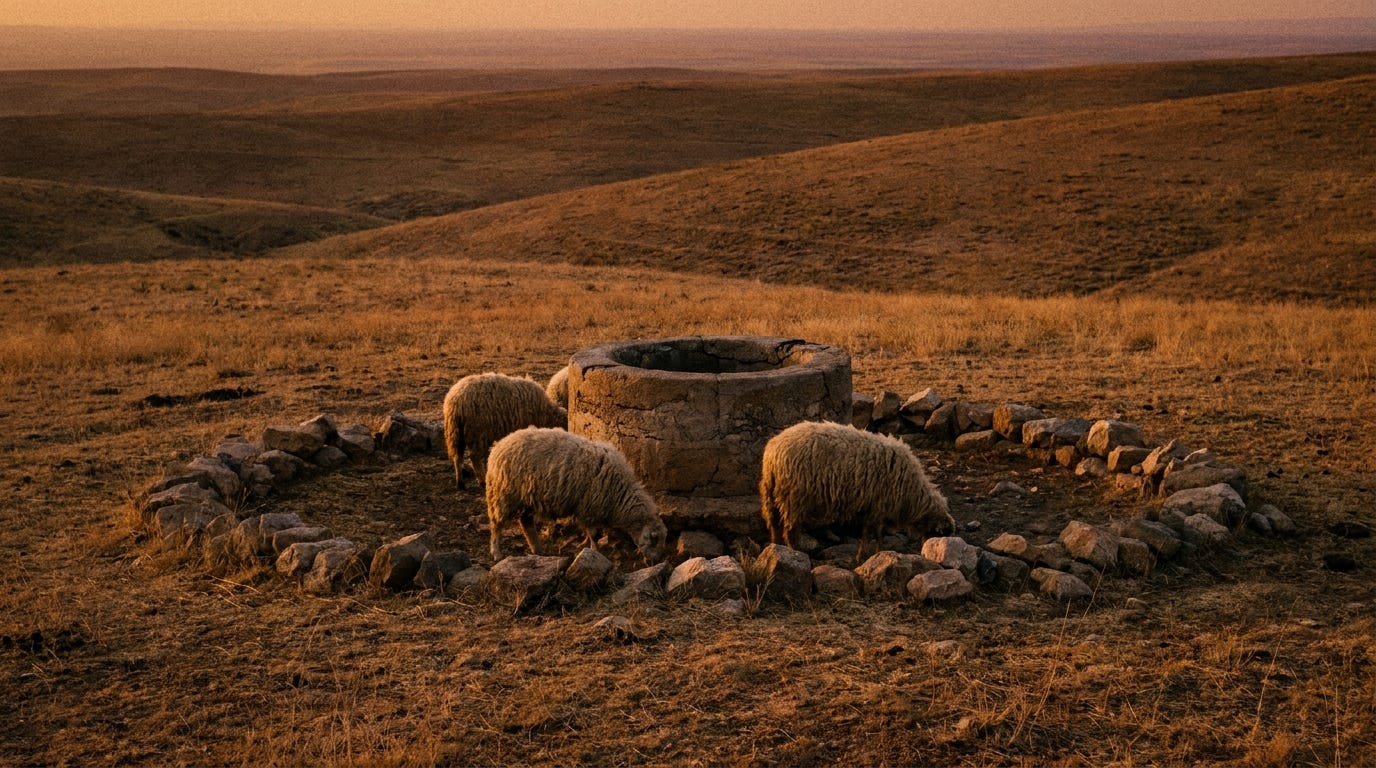
In Genesis 21 Abraham dug a well, and a Philistine king named Abimelech asked him for a sworn agreement. Abraham set apart seven ewe lambs as his witness, and "that place was called Beersheba, because it was there that the two of them swore an oath" (Genesis 21:31). The name Beersheba (H884) means the well of seven, and in the same breath the well of the oath. Abraham gave seven lambs and swore one oath at one well.
One chapter later the oath comes from the other side. "By Myself I have sworn, declares the LORD" (Genesis 22:16), and the next thing the narrator tells us is where Abraham went: "Abraham went back to his servants, and they got up and set out together for Beersheba. And Abraham settled in Beersheba" (Genesis 22:19). An English reader sees a town on a map. A Hebrew listener heard that the man who had just received God's oath went home to live at the well of the oath. Abraham had sworn to a king at that well, and now he lived there under an oath that God had sworn to him.
Why did God swear by Himself?
In the ancient Near East an oath called a god as witness and enforcer. Treaties between kings ended with long lists of gods who would punish the party that broke them. Hebrews states the custom simply: "Men swear by someone greater than themselves, and their oath serves as a confirmation to end all argument" (Hebrews 6:16). God had no greater name to invoke, so He named Himself as the guarantee.
The phrase "declares the LORD" is ne'um YHWH, from ne'um (H5002), an utterance spoken with authority. The prophets would use it hundreds of times to mark a word as God's own. Its first appearance in the Bible is here, inside the oath on Moriah. Before any prophet stood up in Israel, the formula that would sign their messages was used by God about His own promise to Abraham.
What did the gates of their enemies mean?
"Your descendants will possess the gates of their enemies" (Genesis 22:17). The word is sha'ar (H8179), the city gate. In a walled town the gate was the one way in and the place where public life happened. Elders sat there to hear cases: a rebellious son was brought "to the elders of his city, to the gate of his hometown" (Deuteronomy 21:19), and Boaz settled his claim to Ruth by sitting down at the gate (Ruth 4:1). Whoever held the gate held the city, its courts and its trade.
Two chapters on, Rebekah's family sends her off to marry Isaac with the same words: "May your offspring possess the gates of their enemies" (Genesis 24:60). The blessing God swore to Abraham was being spoken over the girl named at the end of this chapter. Jesus picks up the picture when He says of His church, "the gates of Hades will not prevail against it" (Matthew 16:18).
How did Israel first hear God's oath in Genesis 22?
Israel heard Genesis as a people who had stood at Sinai, and three details in this passage spoke straight to them.
The first is the reason God gives: "because you have obeyed My voice" (Genesis 22:18). The Hebrew is shama'ta beqoli, from shama' (H8085), to hear, and qol (H6963), voice. At Sinai God offered Israel His covenant in the same words: "Now if you will indeed obey My voice and keep My covenant, you will be My treasured possession out of all the nations" (Exodus 19:5). Hebrew has one verb for hearing and obeying, so Israel heard their own calling in Abraham's story. Their father had heard God's voice and acted on it, and they were being asked to do the same.
The second is the oath itself. After the golden calf, God's anger burned against the people, and Moses prayed. His argument was this passage: "Remember Your servants Abraham, Isaac, and Israel, to whom You swore by Your very self when You declared, 'I will make your descendants as numerous as the stars in the sky'" (Exodus 32:13). The next verse reads, "So the LORD relented from the calamity He had threatened to bring on His people" (Exodus 32:14). The generation that first heard Genesis 22 read aloud was alive because Moses remembered what God had sworn on Moriah and spoke it back to Him.
The third is the list of Nahor's sons. Kemuel is named "the father of Aram" (Genesis 22:21), and Rebekah, and later Rachel and Leah, came from this Aramean branch of the family. Every Israelite farmer bringing firstfruits was told to say, "My father was a wandering Aramean" (Deuteronomy 26:5). The names that look like filler to us were Israel's own grandmothers' household.
Why does Paul say the seed is Christ?
"And through your offspring all nations of the earth will be blessed" (Genesis 22:18). The Hebrew zera' (H2233), seed, is a singular noun that can mean one child or a whole people. Paul reads it with the Greek sperma (G4690) and presses the singular: "The promises were spoken to Abraham and to his seed. The Scripture does not say, 'and to seeds,' meaning many, but 'and to your seed,' meaning One, who is Christ" (Galatians 3:16). Then he widens it again: "if you belong to Christ, then you are Abraham's seed and heirs according to the promise" (Galatians 3:29). Paul holds both readings together, the one Seed and everyone who belongs to Him.
Israel kept this oath in memory for the whole of its history. Moses prayed it at Sinai. Zechariah sang it over his newborn son, praising God "to remember His holy covenant" (Luke 1:72), "the oath He swore to our father Abraham" (Luke 1:73). The oath was remembered, repeated and prayed back for generations, and God kept it in Christ. That is how He wants to be known, as the God who binds Himself to what He says, and how He knows His people, as those who hear His voice and hold Him to it. When God confirms something He has said to you, record it in the Doxa app with the date and the words, so that on a hard day you can pray it back to Him the way Moses did.
Keep exploring. If this raised a question, or brought back something God has said to you, take it further. Ask Doxa. It answers from Scripture, real stories, and your own journey, free in your browser. No signup to start.
Questions and comments are welcome below.
Download Doxa, the app for recording, weighing and remembering prophetic encouragement.